

What is a Negroni? The Cocktail’s Origins and the Best Negroni Recipe
By Andrew Tardif
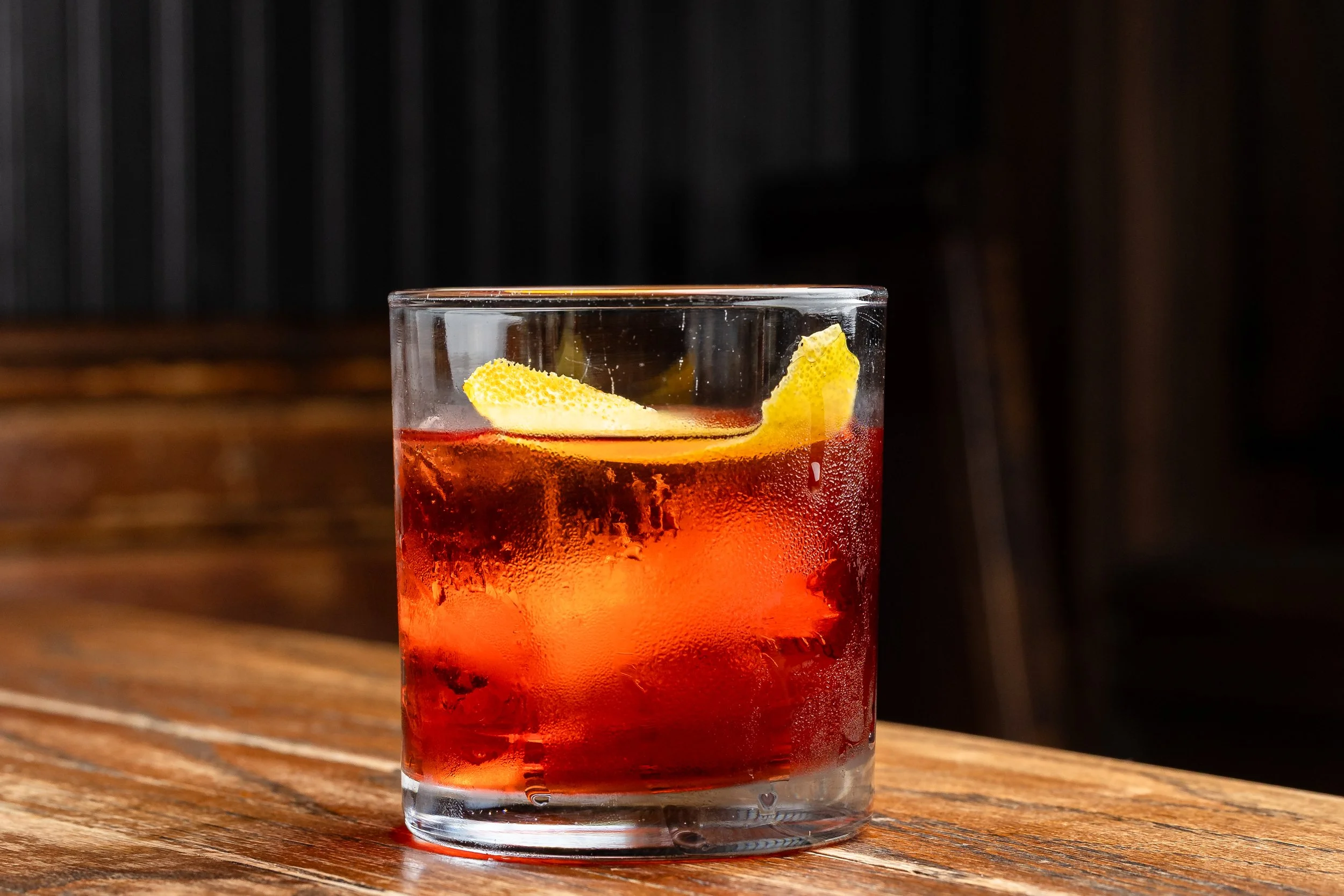
With Negroni Week wrapping up (September 21–27), we at Chemist Spirits wanted to take a moment to explore this popular cocktail. A bright red beacon for those who love the melding of bitter and sweet, the Negroni is a go-to cocktail for gin lovers like ourselves.
But where did the Negroni emerge from, and how did it become so popular that it commandeered an entire week in September?
What is a Negroni?
The Negroni is a cocktail from the early 20th century that regained popularity at the turn of this century. It’s simple:
1 oz. gin
1 oz. Campari
1 oz. sweet vermouth
It’s stirred, strained into a rocks glass, and garnished with an orange peel or orange wedge. Although it’s simply made, the flavors of the Negroni are layered and complex because of the balance of its ingredients.
The Ingredients of the Negroni
At its core, the Negroni is a gin cocktail, so it requires a high-quality gin. At its inception, the Negroni used a London Dry Gin, which was far more potent than many modern gins available today. Our Chemist American Gin, for instance, is more floral and citrus-forward, lending itself to a brighter Negroni.
Campari, a red Italian bitter from Milan, gives the cocktail its bitter edge. Today, many different types of bitters exist on the market, including Select, Bitter Tooth, and Luxardo Bitter, and you can easily substitute Campari for another bitter liqueur.
The sweet component is sweet vermouth, typically a red vermouth, which mellows the bitter edge of the Campari and adds depth and richness. Much like bitter liqueurs, sweet vermouths vary, and there are plenty of different red vermouths that differ not only by country, but even by region within a country.
The interchangeability of different gins, bitter liqueurs, and sweet vermouths allows for a cocktail that can vary while still staying true to its personality.
The History of the Negroni
As with many cocktails, the Negroni has a somewhat disputed origin. The most reputable tale credits the Negroni to Fosco Scarselli, a bartender at Caffè Casoni in Florence. One day, a regular patron of his, Count Camillo Negroni (notice the name?), came in asking for a stronger version of the Milano-Torino cocktail.
The Milano-Torino, also called the Americano cocktail, was simply Campari and sweet vermouth topped with soda water. To make it stronger, Negroni requested replacing the soda water with gin, and so a famous cocktail was born…allegedly.
Where this tale finds itself in a bind is the fact that the Negroni family opened their own distillery, which is still open today. And what does a distillery need? Publicity. This story is believed by some to have been fabricated for publicity’s sake.
The alternate story involves a French brigadier general by the name of Count Pascal Olivier de Negroni. The Count was stationed in Senegal at the time and reportedly created the cocktail for his wife. This story also has issues, since the dates associated with it were either before the creation of Campari or after Count Pascal’s death.
Regardless of its origins, the Negroni became popular and even saw a resurgence at the turn of the century, aligning with the cocktail renaissance. In 2013, Campari launched Negroni Week, a week in September that highlights the cocktail and has since raised millions of dollars for charitable causes.
What are the Variations of the Negroni?
As mentioned earlier, the ingredients of a Negroni can vary. There are myriad brands of sweet vermouth and bitters with different ingredients and flavor profiles, which can significantly alter the flavor of the Negroni.
That being said, cocktails like the Boulevardier take the Negroni build and switch the gin for whiskey. Another popular variation uses mezcal instead of gin, adding a smoky agave profile to the cocktail.
Alongside that, the White Negroni is a popular option, which uses a white bitter, such as Luxardo Bitter, instead of Campari, along with a white vermouth. The result is a clear, more citrus-forward Negroni perfect for the warmer months.
Another cocktail to try is the predecessor to the Negroni, the Milano-Torino, or Americano cocktail. Perfect for after dinner, this cocktail mixes equal parts vermouth and Campari, is topped with soda water, and is garnished with an orange wedge.
1:1:1 vs. 2:1:1
One of the typical debates regarding the Negroni recipe is the ratio of gin to Campari to sweet vermouth. Back in the day, the Negroni used gins that were more potent, so a 1:1:1 ratio made more sense; the gin was still going to be the star of the show.
With time, different gins took a more mellow approach, introducing ingredients that amplified floral and/or citrus notes. Although this made gin more approachable for many, it also softened the gin’s presence in a Negroni. The answer for some is a 2:1:1 ratio, where the gin is more dominant.
In our opinion, the ratio you choose doesn’t come down to right or wrong, but simply to the situation. With such a wide variety of gins, sweet vermouths, and bitters, the ratio you choose is ultimately up to your particular taste.
How to Make a Negroni
The Negroni is a simple cocktail that only requires a few ingredients and is great to batch ahead of time for parties and events. Here is your how-to for making a basic Negroni:
Ingredients
1 oz. Chemist American Gin
1 oz. Campari
1 oz. sweet vermouth (Carpano Antica, Cocchi di Torino, etc.)
Orange peel
Instructions
Place the gin, Campari, and sweet vermouth in a mixing glass.
Fill the mixing glass with ice.
Stir for at least 30 seconds or until thoroughly chilled.
Strain over ice into a rocks glass.
Express the orange oil and garnish with an orange peel, or serve with an orange wedge.
Where to Celebrate Negroni Week
All this talk about Negronis may have you ready to take a sip of that beautiful red concoction. So, grab yourself a bottle of Chemist American Gin, Campari, and a quality sweet vermouth and stir up this classic cocktail.
And if you want to properly celebrate Negroni Week, stop into Antidote Cocktail Lounge to try one of the Negronis from our Negroni menu, including the Asheville Negroni, featuring Chemist Gin, Eda Rhyne’s Bitter Tooth, and Burial Beer Co.’s Sweet Vermouth.
