

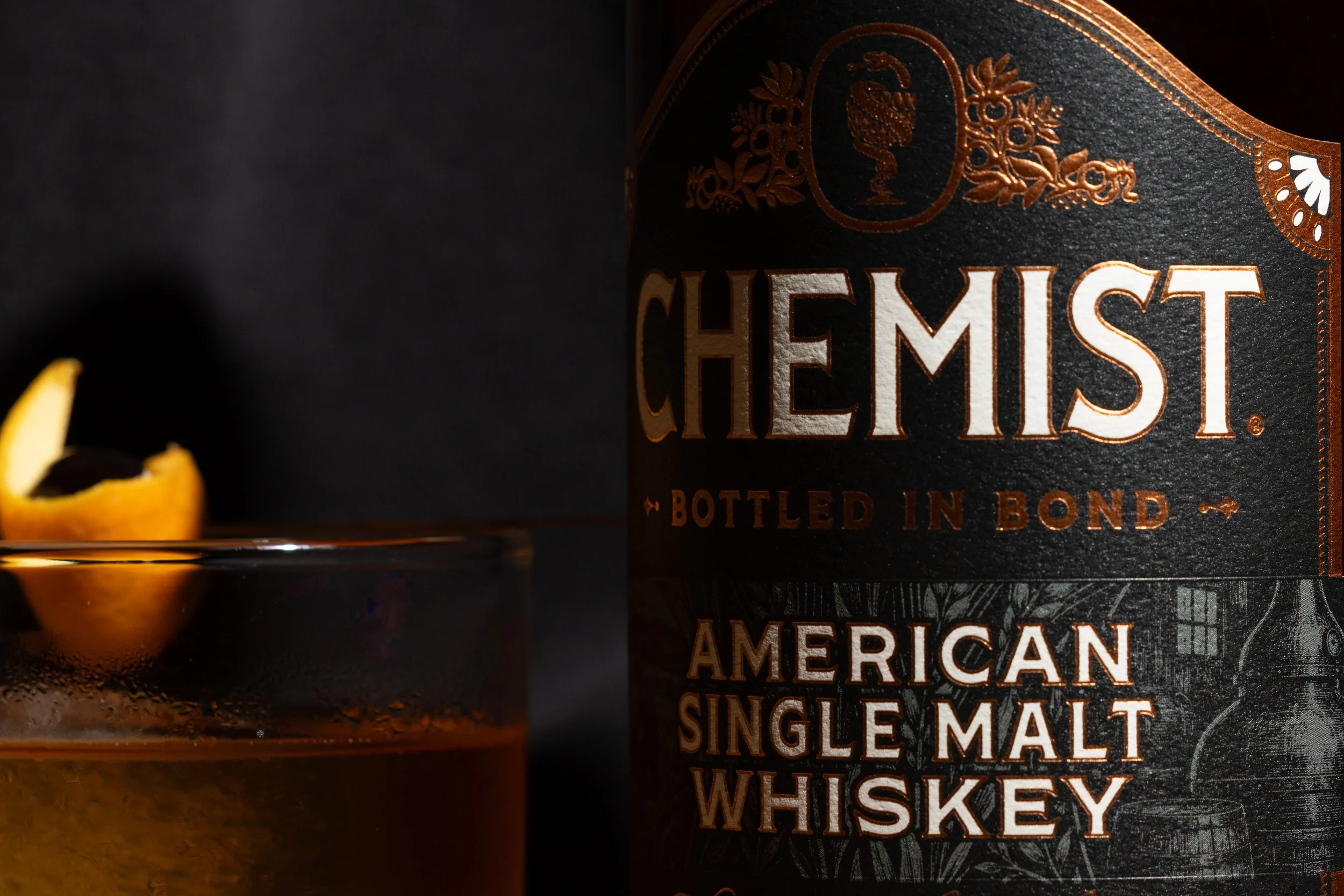
What is Bottled-in-Bond Whiskey: The Rules, History, and Taste
By Andrew Tardif
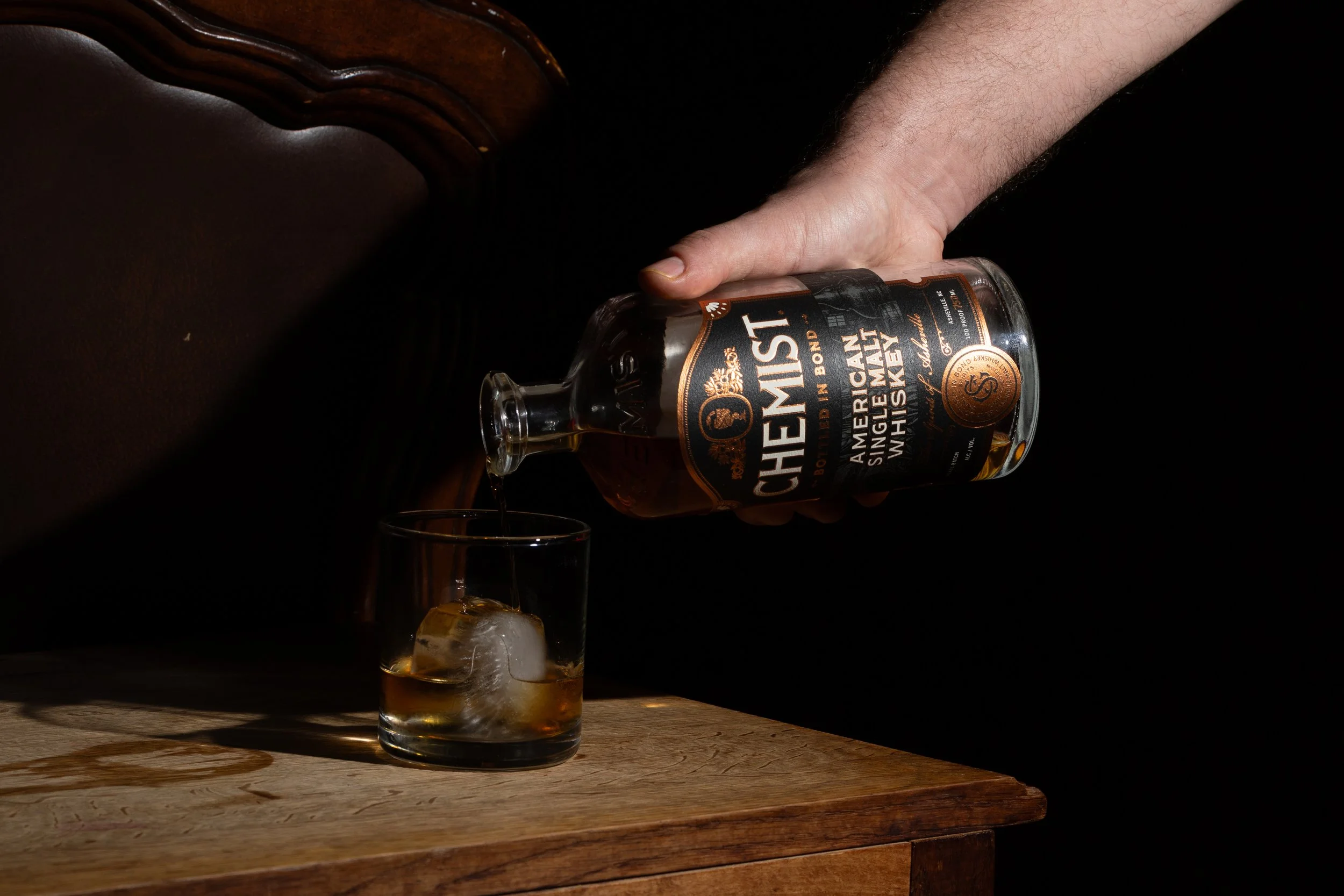
The history of American whiskey is riddled with moments of deception, dodging the law, and great risk. But before Prohibition, the American government moved to incentivize transparency and high-quality whiskey.
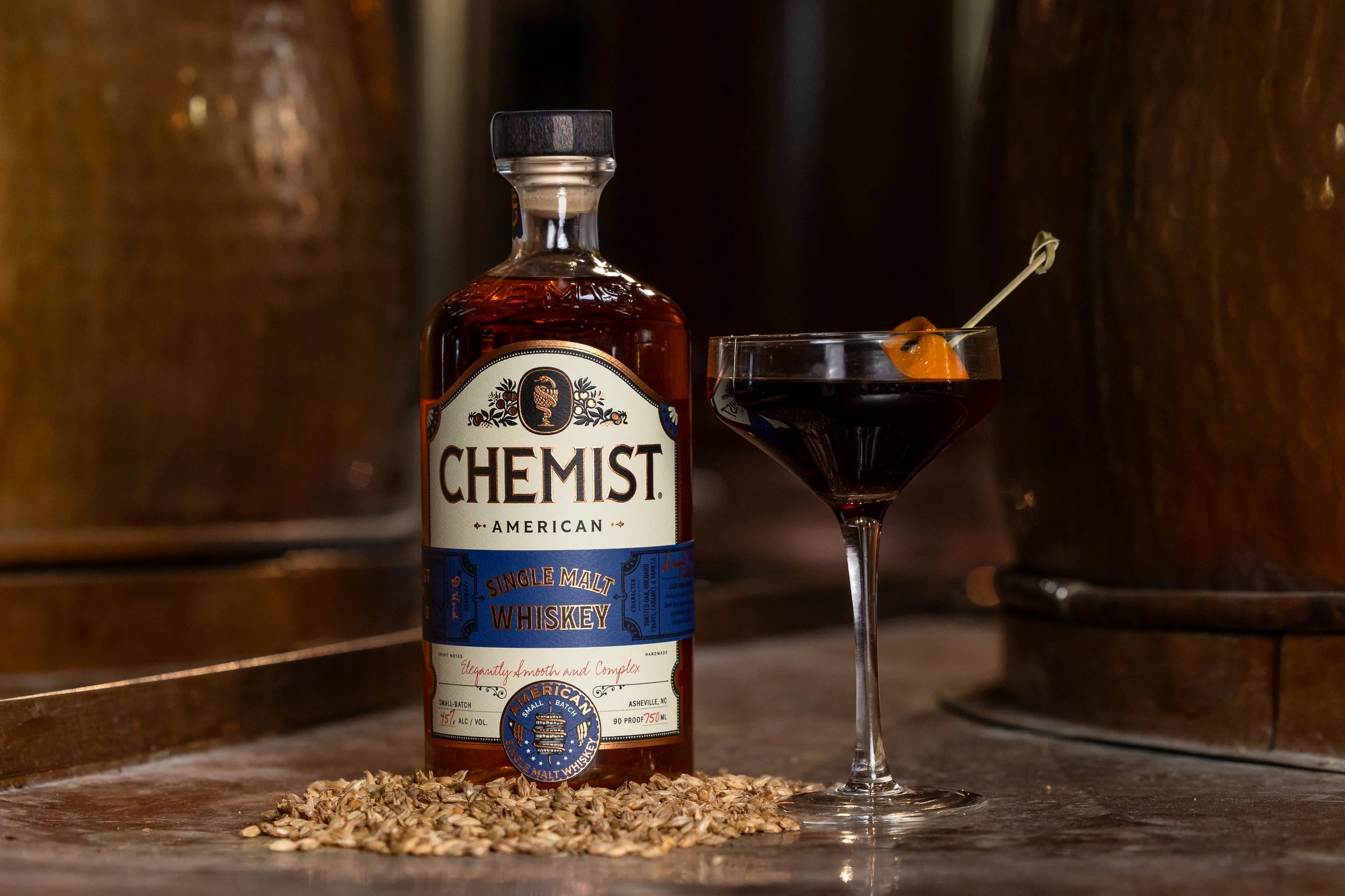
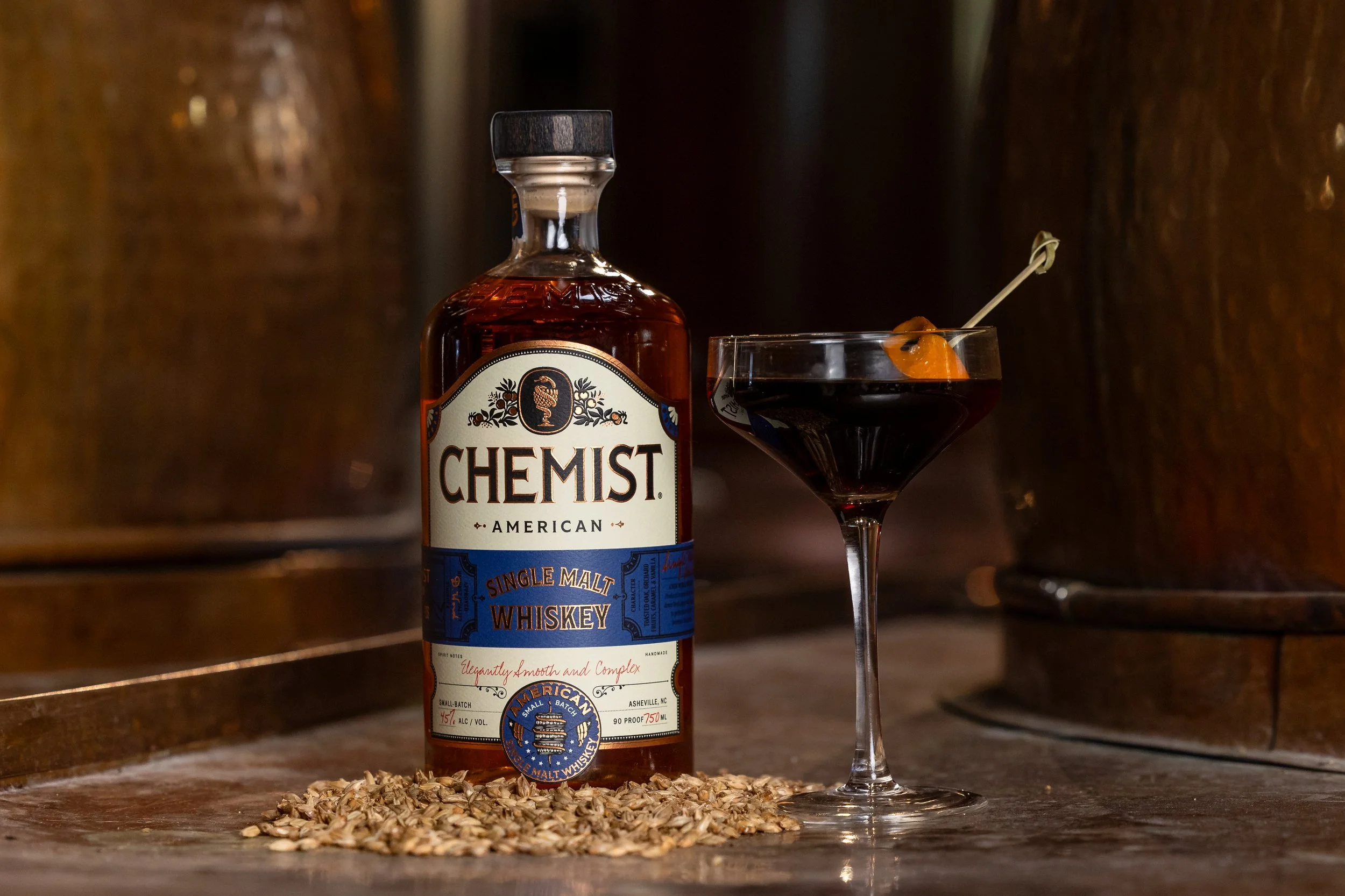
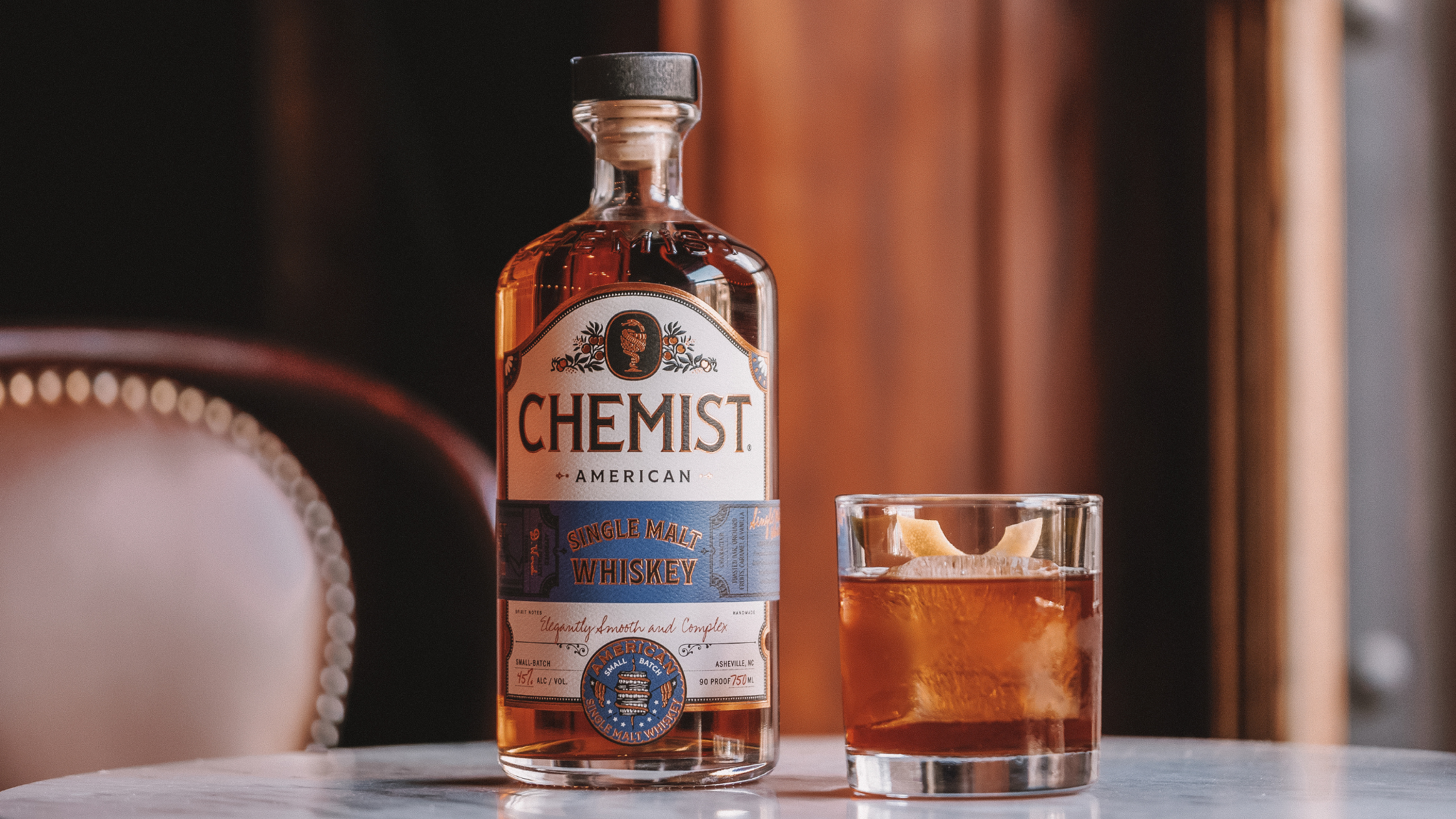
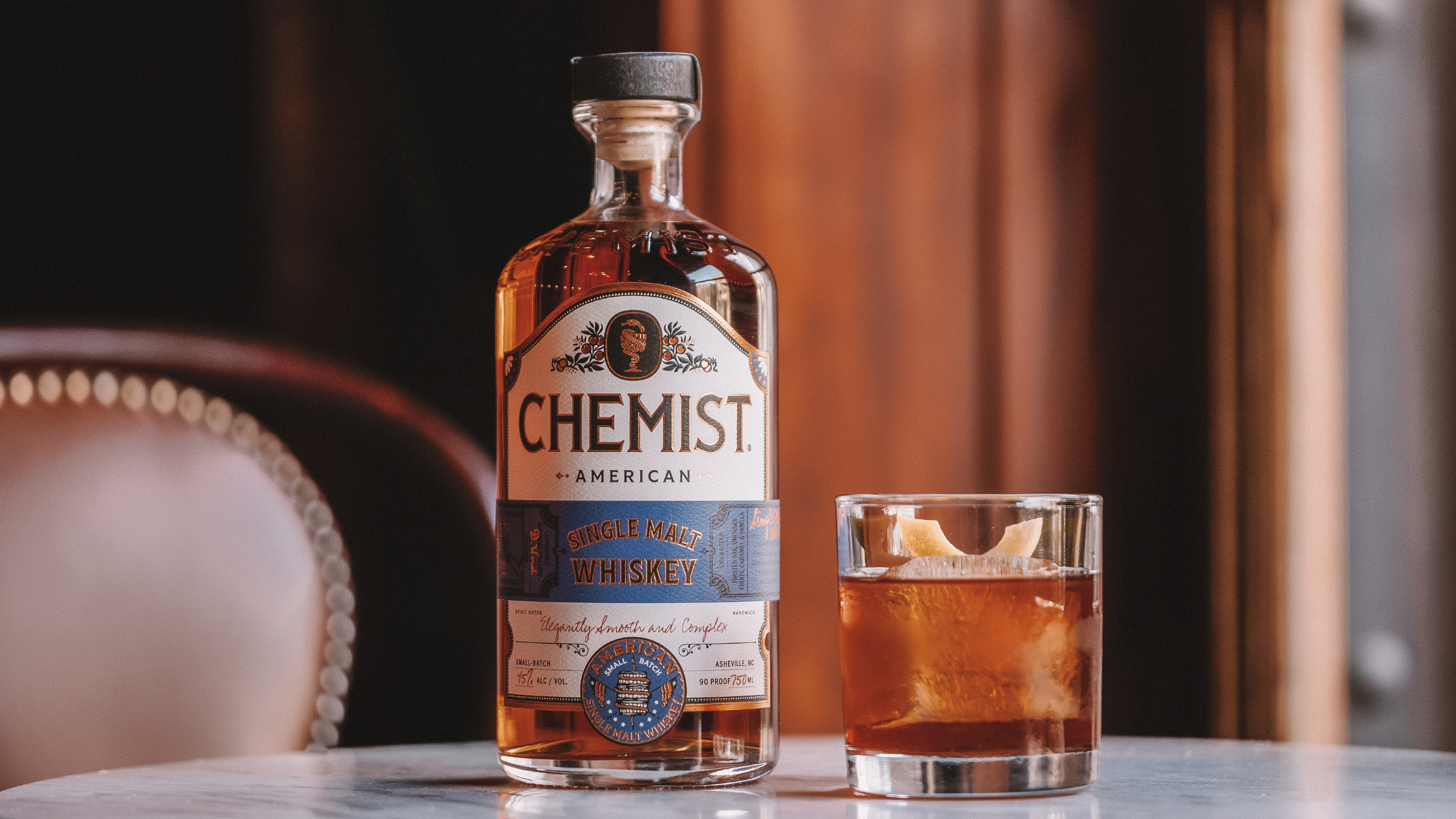
With the release of our first Bottled-in-Bond (BIB) Single Malt Whiskey, we at Chemist wanted to take a closer look at what Bottled-in-Bond really means, how the designation came to be, and how it fits into the modern-day world of spirits.
What is Bottled-in-Bond?
Bottled-in-Bond Whiskey is a federally regulated designation for whiskeys that meet a list of requirements set by the federal government. These whiskeys can be considered “bonded,” “aged in bond,” “bottled in bond,” or, simply, “bond.”
This classification was established to ensure transparency for American consumers after years of whiskey producers swindling and deceiving whiskey buyers with poor-quality and dangerous whiskey.
What is the History of Bottled-in-Bond?
At the end of the 19th century, whiskey production was unregulated. Whiskey, most notably bourbon, was produced and sold without honest labeling and was typically cut or colored using things like tobacco spit, fruit juice, or dangerous chemicals like turpentine and iodine.
This process of artificially coloring whiskey allowed producers to skip the long aging process, which not only gives whiskey its color, but also its distinct flavor. Producers would also cut batches with chemicals to make it last longer. The result was a low-quality whiskey that could make folks ill or kill them.
Because of the health risks and drop in quality, the U.S. government stepped in and ratified the Bottled-in-Bond Act of 1897. The main advocate was Colonel E.H. Taylor, grandnephew of President Zachary Taylor. E.H. Taylor had produced bourbon for years successfully before becoming a politician who advocated for high-quality whiskey.
In advocating for the Bottled-in-Bond Act of 1897, Taylor was advocating for hard-working whiskey producers who were continually being sidelined by the whiskey hacks cutting corners and sacrificing quality for profits. This act was one of the first consumer protection acts and set a standard for the whiskey we drink today.
When people saw the Bottled-in-Bond label on their whiskey, they knew they were purchasing a quality product. At the same time, it gave distillers tax incentives and highlighted their distillery as producing a quality whiskey.
What are the Requirements for a Bottled-in-Bond Whiskey?
The Bottled-in-Bond Act of 1897 created this new category of whiskey with rules and regulations. This act also benefited the U.S. government because while some whiskey producers were able to avoid being taxed, Bottled-in-Bond was an assurance that the government would get its cut through federal supervision of the aging process.
The rules a whiskey has to follow to be considered Bottled-in-Bond are:
The whiskey must be produced by one distillery
The whiskey must be produced under the supervision of one distiller
The whiskey must be produced during one distilling season: fall (July-December) or spring (January-June)
The whiskey must be bottled at 100 proof (50% ABV)
The whiskey must be aged for at least 4 years in wooden containers
There shall be no additives, colorings, or preservatives added to the whiskey, except water.
The whiskey must be aged in a federally bonded warehouse.
The Bottled-in-Bond Act has undergone some revisions, adding vodka and gin to the legislation, which can also be aged, or, more appropriately, “rested.” However, a whiskey still must meet all of the above criteria to be considered Bottled-in-Bond.
What Does Bottled-in-Bond Taste Like?
Although whiskeys must follow the same criteria to be labeled as Bottle-In-Bond whiskey, the tasting notes can vary. This is because there are no specific distinctions between what grains must be used, the foundation for any whiskey.
For example, you can have a Bottled-in-Bond bourbon, which has a majority of corn in its mash bill, or a Bottled-in-Bond rye, which is primarily composed of rye grain. Both result in different flavor profiles.
This means a Bottled-in-Bond whiskey can vary in taste. However, because it must be aged in wooden containers for a minimum of 4 years, and be bottled at 100 proof, the result is going to be a fuller-bodied whiskey with a richer profile.
Our American Single Malt Whiskey, for example, uses three different types of malted barley, which already yields notes of honey, chocolate, light caramel, stone fruit, and soft spice. Our Bottled-in-Bond expression of the same whiskey produced characteristics reflecting the whiskey’s maturity and proof, with notes of vanilla, cherry, rich chocolate, toffee, coffee, and warm baking spices. We can certainly say that you can “taste the quality.”
What Cocktails Can You Make with Bottled-in-Bond Whiskey?
A Bottled-in-Bond whiskey can be appropriate for any whiskey cocktail, but you should consider that using it in a cocktail can overshadow the depth and beauty of the whiskey itself. That being said, Jac from the Chemist Tasting Room and I tried it in an Old Fashioned, which you can check out here.
I will say, this Old Fashioned was probably the best I had ever had in my life; it nearly brought me to tears. It was rich, balanced, and still had those notes of tart green apple, chocolate, and baking spice. Even though the whiskey was rich, the cocktail was bright and fresh, with layers of flavor that kept coming on. Jac was clearly moved by it, as well.
We find that this Bottled-in-Bond works best in cocktails that highlight the whiskey, such as spirit-forward cocktails. Trying it neat or over a big ice cube is also an excellent way to enjoy it, and is just as likely to bring you to tears…or maybe that’s just me.
Where to Find Bottled-in-Bond Whiskey
Although distilleries today are more transparent with their whiskeys, quality remains a key factor for many whiskey lovers. This is why Bottled-in-Bond Whiskey still has a place in today’s spirit world.
Whiskey companies around the U.S. produce Bottled-in-Bond versions of their whiskeys, communicating the standards of craft and quality that their products have met, ensured by the federal designation (of products which may already be high quality and delicious).
While we have always been proud of our American Single Malt, we jumped at the opportunity to showcase its complexity and unique character in a new way. Our flagship whiskey is a Small Batch;, blending barrels to create both balance and complexity, resulting in a consistent spirit that is soft on the palate and versatile enough to enjoy on its own or in cocktails. The Bottled-in-Bond, also a single barrel,, is a more singular expression of the whiskey, designed to highlight its mash bill, maturity and distinct character while honoring the craft of the distiller through the Bottled-in-Bond designation.
Want to taste the difference? Come in to the Chemist Tasting Room or Antidote Cocktail Lounge to get a taste of our limited-edition Bottled-in-Bond whiskey.
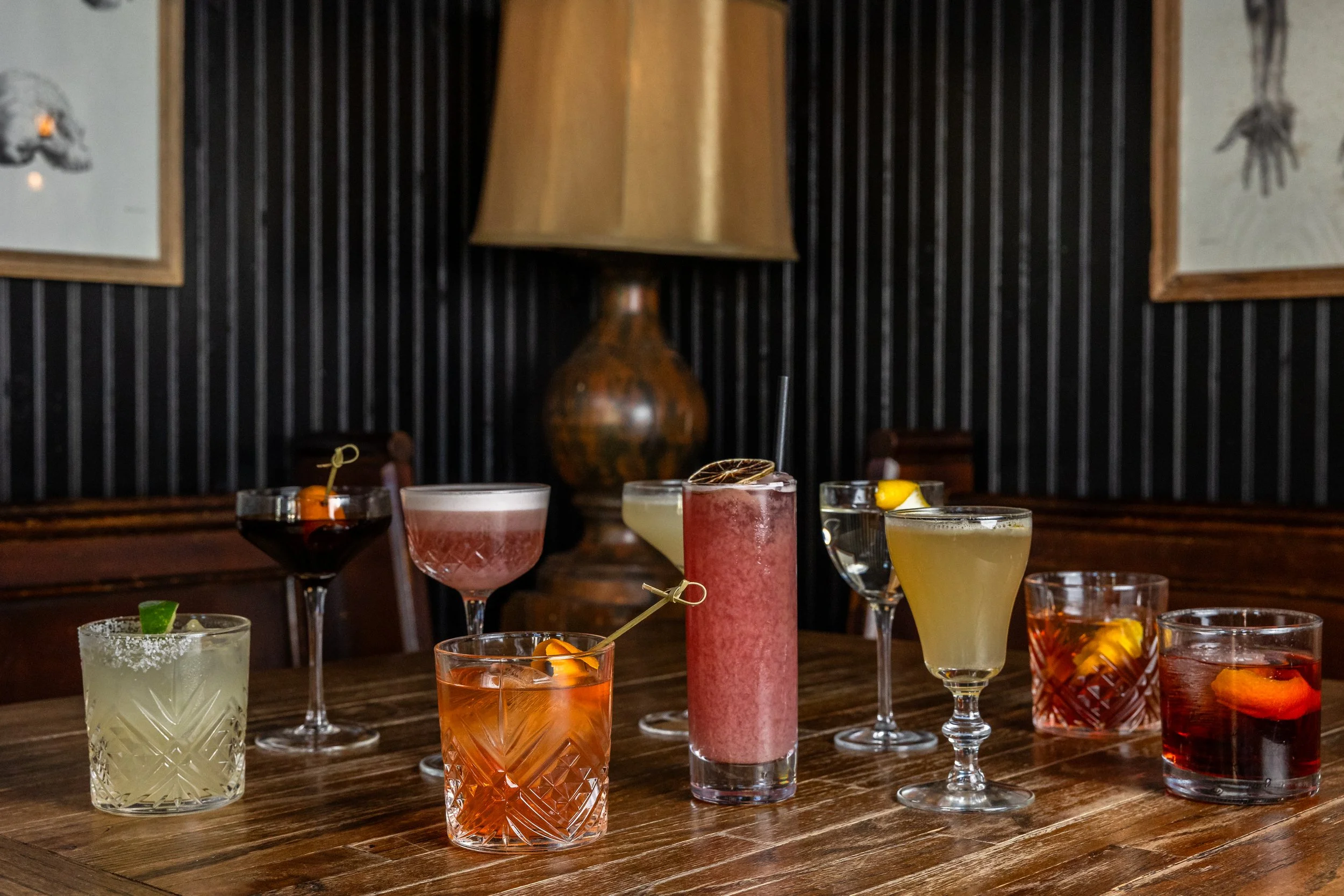
The 5 Best Whiskey Cocktails and How to Make Them
By Andrew Tardif
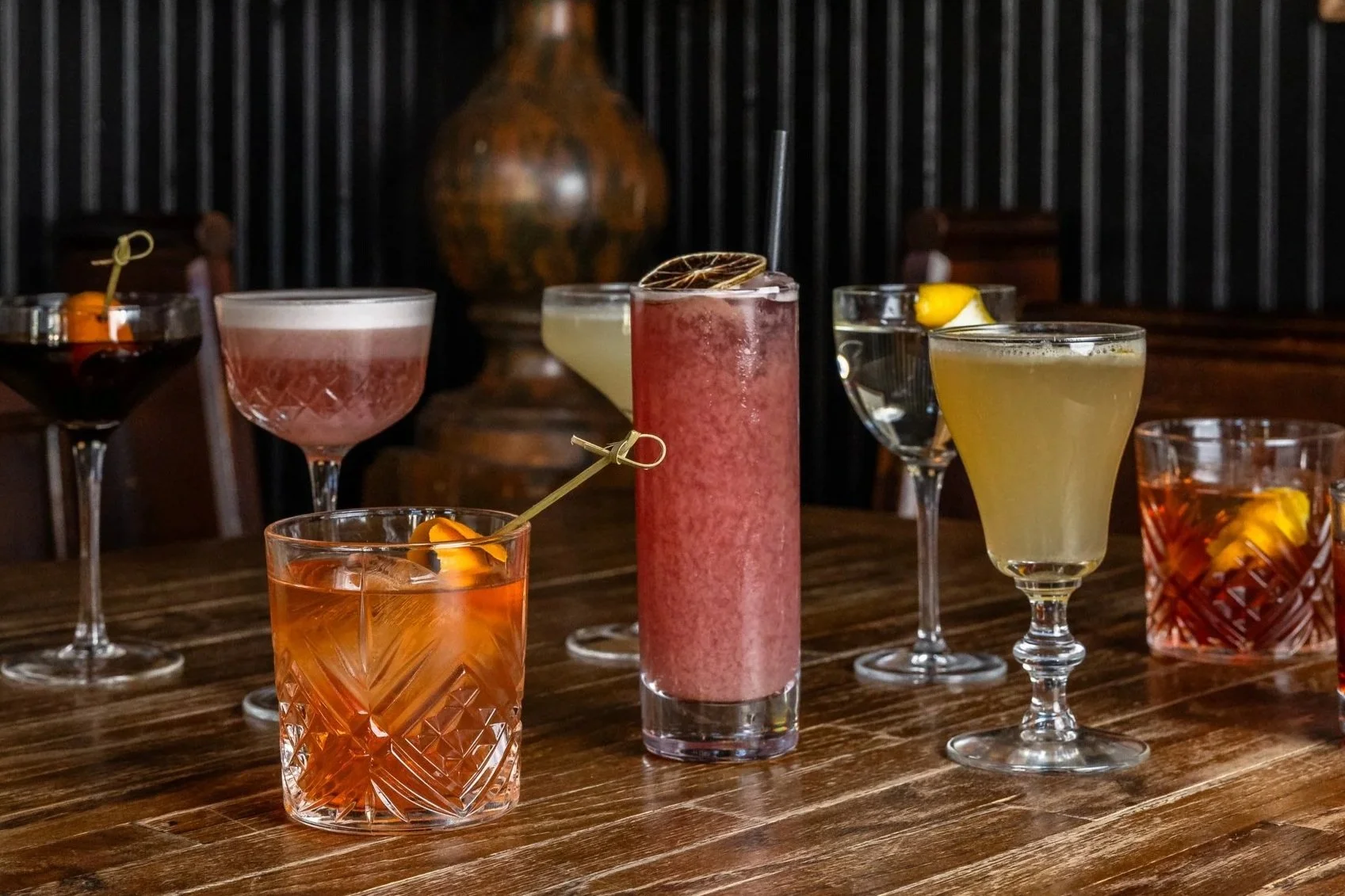
If you’re looking at that bottle of whiskey sitting on your bar and you’re tired of drinking it on the rocks or mixed with Coke, you may want to know these easy and delicious whiskey cocktails you can craft up at home.
We at Chemist Distillery wanted to give you some simple whiskey cocktails to play with, so here are the five best whiskey cocktails and how to make them.
Old Fashioned Cocktail
The Old Fashioned is quite literally old fashioned in that it predated many of the classic whiskey cocktails we know today, and it still stands as one of the best whiskey cocktails. Prior to the Manhattan and Martini, which introduced vermouth and other spirits into the mix, whiskey was simply mixed with bitters, sugar, and water. This mix was the identity of the cocktail.
When those newer whiskey cocktails started popping up in the late 19th century, people would order an “Old Fashioned” cocktail like the good ol’ days, meaning that simple mix of whiskey, sugar, bitters, and water. This simple recipe balances out the bite of many whiskeys.
Old Fashioned Recipe
Since the Old Fashioned has a pretty simple build, you’ll want to make sure you get quality ingredients. For the whiskey, we like to use our Chemist American Single Malt. At the end of the day, the hints of dark fruit and chocolate make this a fuller-bodied cocktail.
Next is bitters. Angostura aromatic bitters is the typical bitters of choice, but you can really use anything. As for the sugar in an old fashioned cocktail, traditionally you would use a sugar cube, but you can also use a rich demerara syrup—2:1 demerara sugar to water.
We think the best Old Fashioned recipe uses the sugar cube, unless you are trying to make 20 of them at a busy bar. At Antidote Cocktail Lounge, we like to put in some of our Chocolate Orange Gin Liqueur for more body and that touch of sweetness.
Ingredients:
2 oz Chemist American Single Malt
1 Demerara sugar cube (or one bar spoon of rich demerara syrup)
4-8 dashes of Angostura bitters
orange peel, for garnish
Instructions:
In a mixing glass, place the sugar cube
Add bitters over the sugar cube
With a muddler, muddle the sugar cube into a paste, but don’t break down the sugar cube completely
Add your whiskey
Add ice
Stir for 30 seconds or until thoroughly chilled
Strain over a large cube or regular ice
Express orange oil over top and garnish with the orange peel
Enjoy one of the best whiskey cocktails ever
2. Manhattan
One of the best whiskey cocktails, the Manhattan was probably the first of its kind. It strayed from the “Old Fashioned” cocktail by cutting the main spirit with Italian vermouth. This added a layer of sweetness that you would originally get from the sugar and also cut through the harshness of the whiskey.
Although the origin of this cocktail is contested, it is believed to have been made at the Manhattan Club, a prominent Democratic hub in Manhattan. Some tall tales falsely give it connections to Jennie Jerome, Winston Churchill’s mother, but its initial inception is unknown.
Manhattan Recipe
For our Manhattan recipe, we will stick to the common ratio of 2:1. For whiskey, we use our American Single Malt Whiskey, since we find the earthy spice works well with the sweet vermouth.
For bitters, once again, we’re reaching for the Ango, and as for the sweet vermouth, we typically reach for Carpano Antica, but there are so many sweet vermouths out there that are great for a Manhattan, including Punt e Mes, Yzaguirre Rojo, or Cocchi de Torino. You can even reach for a nice amaro, if you’ve got it (See Black Manhattan, one of the best whiskey cocktails for after dinner).
Ingredients:
2 oz Chemist American Single Malt Whiskey
1 oz Carpano Antica Sweet Vermouth
4 dashes Angostura bitters
Instructions:
Place all ingredients into a mixing glass with ice
Stir for 30 seconds or until thoroughly chilled
Strain into a chilled coupe
Garnish with a maraschino cherry
3. Whiskey Sour
Many cocktails were made to mask the flavor of alcohol that was found to be too sharp, and the whiskey sour cocktail was one of the best whiskey cocktails at the time to meet up to the bite of whiskey.
This classic whiskey cocktail has been around since the early 1800s and was popular in the mid-19th century through the 20th. This should be proof enough to make one at home.
Whiskey Sour Recipe
The classic whiskey sour can include egg white, but doesn’t require one to be considered as such. This simple whiskey cocktail just requires some syrup (easily made at home), some lemon juice, and whiskey.
Some whiskey sour recipes will call for orange juice in addition to lemon juice, but it also isn’t required.
Ingredients:
2 oz Chemist American Single Malt Whiskey
¾ lemon juice
½ - ¾ oz simple syrup
Instructions:
Pour all ingredients into a shaker tin with ice
Shake for 10-15 seconds or until thoroughly chilled
Strain into a chilled coupe
Garnish with an orange slice and maraschino cherry
New York Sour Recipe
Prior to its official naming in 1934 in Mr. Boston Bartender’s Guide, the New York Sour went by many names including the Continental Sour, Claret Sour, and Southern Whiskey Sour. This version of the Whiskey Sour, possibly made in the 1880s, simply floats red wine atop the cocktail.
What type of wine you use is up to you. I wouldn’t reach for a $150 bottle of that Bordeaux, but something fruity tends to compliment the tart and spicy nature of one of the best whiskey cocktails.
Ingredients:
2 oz Chemist Single Malt Whiskey
¾ oz lemon juice
½ oz simple syrup
Red wine to top
Instructions:
Place all ingredients, except the red wine, in a shaker tin with ice
Shake for 10-15 seconds or until thoroughly chilled
Strain into a rocks glass over a large cube
Pour about 1 oz of red wine over top the back side of a spoon above the cocktail to float it on top
Boston Sour Recipe
Although egg white is optional in a whiskey sour, it isn’t optional in the Boston Sour, which is simply a whiskey sour with egg white. The egg white, common in something like a gin fizz, adds a frothy texture, highlighting the sweeter and more decadent tones to a whiskey.
Although we do have to say that consuming raw eggs is dangerous, blah blah blah…you should try it. I haven’t lost a guest to an egg white cocktail yet! You can also buy a carton of pasteurized egg whites in the grocery store if you want extra safety.
We highly recommend the egg white for one of the best whiskey cocktails around.
Ingredients:
2 oz Chemist American Single Malt Whiskey
¾ oz lemon juice
½ oz simple syrup
1 egg white
Instructions:
Place all ingredients into a shaker tin with one ice cube
Dry shake for 10-15 seconds to develop foam
Add ice into the shaker
Shake for another 10-15 seconds or until chilled thoroughly
Double strain into a chilled coupe
Garnish with a cherry and orange slice*
*If you have Angostura bitters on hand, you can make a nice design with the foam. Great for impressing guests...
4. Paper Plane
The Paper Plane is one of the best whiskey cocktails to come about in the modern age of cocktails. Made by Sam Ross, who was inspired by M.I.A.’s “Paper Plane,” as heard in Slumdog Million, this cocktail took off after he brought it to New York’s Milk & Honey.
The combination of whiskey, Aperol, Amaro, and lemon results in a refreshingly tart and fruity whiskey cocktail.
Paper Plane Recipe
This cocktail traditionally uses bourbon as its focal point, which imparts a crucial sweetness in an otherwise bitter, sour, and herbaceous cocktail. We use our Chemist American Single Malt Whiskey since it’s approachable and balances the cocktail well.
Ingredients:
¾ oz Chemist American Single Malt
¾ oz Aperol
¾ oz Amaro Nonino
¾ oz lemon juice
Instructions:
Pour all ingredients into a shaker tin with ice
Shake for 10-15 seconds or until thoroughly chilled
Strain into a chilled coupe glass
Express lemon oil over top and garnish with the lemon peel
5. Boulevardier
The Boulevardier is one of the best whiskey cocktails to come from the best gin cocktails since it’s simply a Negroni that substitutes whiskey for gin. This whiskey cocktail was most notably mentioned in Barflies and Cocktails by Harry MacElhone and was named after a magazine at the time.
The Negroni, its predecessor, was a popular cocktail in the late 19th and early 20th centuries, and was likely an evolution of the Americano Cocktail (sweet vermouth and Campari topped with soda water).
Cocktail evolution led to the use of gin instead of soda water to get the Negroni, and then whiskey instead of gin to get one of the best whiskey cocktails: The Boulevardier.
Boulevardier Recipe
The type of whiskey you use is important since it will either be battling against the bitterness of the Campari and sweetness of the vermouth, or will be blended into a wonderful harmony. Many will call for bourbon, which has a bite and sweetness that works well, but we, of course, like to use our American Single Malt.
The ratio is another factor to consider. Although we like to use a 1:1:1 ratio, there is also the 2:1:1 ratio where whiskey is the more dominant spirit. At the end of the day, it’s always up to you.
Ingredients:
1 oz Chemist American Single Malt Whiskey
1 oz Campari
1 oz sweet vermouth
Instructions:
Pour all ingredients into a mixing glass with ice
Stir ingredients for 30 seconds or until thoroughly chilled
Strain into a rocks glass over a big cube
Express orange oil over top and garnish with the orange peel
Conclusion
When it comes to whiskey cocktails, these five are some of these easiest to make and work well with many whiskeys, namely our American Single Malts. If you’re looking to make some of the best whiskey cocktails around, invest in a bottle of something delicious and have fun mixing up and tasting some of these classics.
Best Whiskey Cocktails FAQs
What was the first whiskey cocktail?
The first whiskey cocktail was The Whiskey Cocktail, which was later named The Old Fashioned Cocktail after newer cocktails, like the Manhattan, emerged in the bar world.
What does whiskey mix well with?
Whiskey mixes well with sweet vermouth, ginger ale, lemon juice, and honey, for some examples. However, whiskey is a vast category and different whiskeys mix well with different sodas, fortified wines, liqueurs, and juices.
What is Whiskey?
Whiskey is a grain based non neutral spirit that is aged in wood barrels. This means that the spirit has a base flavor from the grains which is complemented by the sweet and oaky flavors from the barrel.
What is the Manhattan Cocktail: The Best Classic Manhattan Cocktail Recipe
By Andrew Tardif
One of the first true cocktails I had in my life was a Manhattan. A luscious and robust cocktail of whiskey, vermouth, and bitters, once I learned how to make the best Manhattan cocktail, the doors had opened to the world of whiskey and cocktails.
I have fond memories of mixing up Manhattans for buddies as we played cards on my porch in Uptown Chicago, totally unprepared for the hangovers that lay awaiting us the next morning.
So what is this cocktail that still sticks to my memories, and how do you make one so good that it will be remembered by you and your friends (hopefully, more responsibly)?
In this article we at Chemist Spirits want to highlight the cocktail that has lasted over a century and persists even today, examining its history and exploring how to make a Manhattan.
Manhattan 101: What is a Manhattan Cocktail?
Like the martini, which we recently discussed and its likely successor, the Manhattan has a similar build that can be adjusted to one’s taste.
The Manhattan cocktail ingredients are simply:
Base spirit: Whiskey (traditionally rye)
Modifier: Sweet vermouth (typically)
Method: Stirred with ice
Glassware: Martini or coupe glass
Garnish: Maraschino Cherry
Flavor profile: Spirit-forward, rich, spiced
As the Manhattan evolved through time, certain variations and alterations became possible including switching out the sweet vermouth for dry vermouth, reversing the ratios, and switching out some of the ingredients. Let’s begin with the basics.
What Kind of Whiskey is in a Manhattan Cocktail?
Some older recipes like the Manhattan Cocktail in Charlie Paul’s American and Other Drinks calls for “Scotch Whiskey” while the Manhattan Cocktail No. 2 in The Waldorf-Astoria Bar Book calls for “Irish Whiskey.”
Since this cocktail is of American birth, it was, and still is, common with American Whiskey. Other than the barbooks that specified Scotch Whiskey or Irish Whiskey, most all others of the era simply called for “whiskey.”
We love using our Chemist American Single Malt for a Classic Manhattan. It definitely makes the cocktail more approachable while having a nice malty, spicy finish. Our Rye is also great for a spicier and more in your face Manhattan.
The Best Vermouth for Manhattan Cocktails
Looking for the best vermouth for a Manhattan? Consider your taste. The typical Manhattan cocktail uses a rosso Italian sweet vermouth, but a French or dry vermouth is also an option.
Italian Vermouth: Typically sweet, deep red, and luscious
French Vermouth: Typically white, dry, and savory
In 1884’s The Modern Bartender’s Guide, there are two Manhattan recipes, the first uses French vermouth and the second, Italian, so both were possible.
Bitters
For bitters, the standard is Angostura. Some classic Manhattan recipes like from How to Mix Drinks and The Old Waldorf Astoria Bar Book call for orange bitters, which will result in a lighter Manhattan, and as you’ll see, this is a great addition for the Black Manhattan.
Boker’s bitters was the bitters of choice in Jerry Thomas’ The Bartender’s Guide while “Peruvian bitters” was specified in Winter’s How to Mix Drinks. At the end of the day, Angostura is the go-to for the basics of how to make a Manhattan.
Manhattan Ingredients Time Forgot
There are a few classic Manhattan ingredients that we seem to leave out of our modern making of the cocktail.
One is gum syrup, or gomme syrup. This syrup made of gum arabic and sugar was a common thickener in 19th century bartending that likely gave the Manhattan a more luxurious mouth feel. It was specified in How to Mix Drinks (1884 and 1906), Scientific Bar-keeping, and The Modern Bartender’s Guide.
The Manhattan recipes in How to Mix Drinks and The Modern Bartender’s Guide also called for dashes of Curacao in their Manhattan recipes, which could be to achieve the orange flavor that would come from orange bitters.
Although interesting to try at home or play with at your bar, these ingredients aren’t necessary in the classic Manhattan cocktail, so feel content with just whiskey, vermouth, and bitters.
What is the History of the Manhattan Drink?
The Manhattan, like many of our favorite cocktails today, is hard to pin down in its exact history. Luckily, with this cocktail, we do have more of an idea of where it comes from with two credible origins.
The Origin of the Manhattan Cocktail
The first possible origin has the history of the Manhattan cocktail rooted in the Manhattan Club, a club founded in 1865 in Manhattan well known for being a Democratic hub. The common story is that the drink was created for a dinner hosted by the club in honor of Samuel J. Tilden, a presidential candidate, in December of 1874.
Jennie Jerome, Winston Churchill’s mother, was allegedly in attendance at the dinner since the club was located at her family’s mansion, the Jerome Mansion. This story, however, doesn’t hold much weight since Jennie Jerome had recently given birth to Winston and was in England, and since the Manhattan Club hadn’t yet relocated to the Jerome Mansion.
The Manhattan Club was still believed to have been the birthplace of the cocktail, however, there is one other story that says the creator of the Manhattan was a bartender named Black who owned a spot called the Manhattan Inn.
This story came from a 1922 article by William F Mulhall who worked at the Hoffman House as the head barkeeper, but was dug up by the award-winning drink historian David Wondrich.
Regardless of its origins, the Manhattan revolutionized cocktails as we know them today, taking mixology from the old fashioned ways to those of our more modern understandings.
How to Make a Classic Manhattan Cocktail
How do you make a manhattan? As with all cocktails made with spirits, you’ll simply need a mixing glass. This cocktail is meant to be stirred, not shaken, a fact that was lost on me when I was younger, thanks to an episode of The Simpsons.
I frankly don’t know how Legs could have called that diluted mess, “Superb,” however, some folks do enjoy this drink shaken, but I think the best Manhattan recipe calls for a stirred cocktail.
Classic Manhattan Cocktail Recipe
Ingredients
2 oz Chemist Rye Whiskey (or Chemist American Single Malt)
1 oz Italian (sweet vermouth)
4 dashes of Angostura bitters
Instructions:
Place ingredients into a mixing glass with ice
Stir for 30 seconds or until thoroughly chilled
Strain into a chilled coupe
Garnish with a maraschino cherry
Common Manhattan Drink Variations
The Bourbon Manhattan Recipe
If you want your manhattan on the sweeter side, using Bourbon instead of Rye is a good way to change up the cocktail. It’s not a bad idea to bump up the amount of Angostura to counteract some of the sweeter notes.
Ingredients:
2 oz bourbon
1 oz sweet vermouth
6 dashes Angostura bitters
Instructions:
Place ingredients into a mixing glass with ice
Stir for 30 seconds or until thoroughly chilled
Strain into a chilled coupe
Garnish with a maraschino cherry
The Perfect Manhattan Recipe
The Perfect Manhattan uses both dry and sweet vermouth. This is similar to the Perfect Martini which also uses a combination of vermouths.
Perfect Manhattan Ingredients:
½ oz dry vermouth
½ oz sweet vermouth
3 dashes of Angostura bitters
2 dashes of orange bitters
Perfect Manhattan Instructions:
Place ingredients in a mixing glass with ice
Stir for 30 seconds or until thoroughly chilled
Strain into a chilled coupe
Garnish with a lemon peel or maraschino cherry
The Dry Manhattan Recipe
This Manhattan variation simply substitutes dry vermouth for sweet vermouth. Expressing the cocktail with lemon peel compliments the bite of the dry vermouth.
Ingredients:
2 oz Chemist American Single Malt Whiskey or rye whiskey
1 oz dry vermouth
4 dashes of Angostura bitters
Instructions:
Pour ingredients into a mixing glass with ice
Stir for 30 seconds or until thoroughly chilled
Strain into a chilled coupe
Express lemon oil over the top
Garnish with lemon peel
The Black Manhattan Recipe
This modern classic by Todd Smith of Bourbon & Branch simply switches out the vermouth for amaro, an Italian bitter spirit. This original recipe calls for Averna Amaro, but any dark amaro will do. We like to use our Burial American Single Malt for more depth and notes of chocolate and coffee.
Ingredients:
1 oz amaro
2 dashes orange bitters
2 dashes Angostura bitters
Black Manhattan Instructions:
Pour ingredients into a mixing glass with ice
Stir for 30 seconds or until thoroughly chilled
Strain into a chilled coupe
Express orange oil over the top
Garnish with orange peel
The Reverse Manhattan Recipe
This Manhattan variation is perfect for a late night cocktail post-dinner since the ratios become switched and vermouth is the dominant spirit. For a reverse Manhattan, we like to use our Biltmore Single Malt Whiskey, since the finish in Sangiovese wine barrels compliments the Italian vermouth.
Ingredients:
2 oz Italian vermouth
1 oz Chemist American Single Malt Whiskey
4 dashes of Angostura bitters
Reverse Manhattan Instructions:
Pour ingredients into a mixing glass with ice
Stir for 30 seconds or until thoroughly chilled
Strain ingredients into a chilled coupe or Nick and Nora glass.
Garnish with a maraschino cherry.
The Rob Roy Recipe
Known as “the Scotch Cocktail,” the Rob Roy simply uses scotch whiskey instead of American whiskey.
The Rob Roy Ingredients:
2 oz Scotch Whiskey or Chemist Green Man Single Malt Whiskey
1 oz Italian vermouth
4 dashes of Angostura bitters
The Rob Roy Instructions:
Place ingredients in a mixing glass with ice
Stir ingredients for 30 seconds or until thoroughly chilled
Strain into a chilled coupe
Garnish with a maraschino cherry
Where to Get the Best Manhattan in Asheville, NC
The Manhattan cocktail is one of those drinks that exudes luxury and class. The sweet vermouth coats the tongue and lingers there while the whiskey and bitters come knocking at the palate with the ol’ “How do you do?”
The Manhattan is a must-have cocktail. Stop by Antidote Cocktail Lounge, where we love to expose new cocktail lovers and seasoned veterans to the best Manhattan recipes. Stop by our tasting room to explore all of our own whiskeys, and grab a bottle, especially now that you know how to make the best manhattan .
Happy concocting!
Manhattan FAQs | Tips for Making a Manhattan
Is a Manhattan Cocktail Neat or on the Rocks?
The Manhattan cocktail is typically served up in a chilled coupe, but it can also be served over the rocks in a rocks glass. You may want to invest in large cubes if you want it on the rocks. This ensures slower dilution while keeping the cocktail chilled.
Do I need Fancy Bar Tools to Make a Manhattan?
You don’t need bar tools to make a Manhattan cocktail, and you can simply use a glass with ice or even a jar to stir the ingredients in.
Does a Manhattan Use Bourbon or Rye?
Although Manhattan recipes usually call for just “whiskey,” rye was likely the popular whiskey used in the Manhattan and is the common choice. Bourbon is also a fine whiskey choice, though it does depend on preference.
What’s the Difference Between a Manhattan vs. Old Fashioned?
A Manhattan uses sweet vermouth as its sweetener while the Old Fashioned cocktail uses sugar. Spirit, sugar, bitters, and water (melted ice) is the old fashioned cocktail and the Manhattan changed the concept of the cocktail by using vermouth.
Sources:
Difford’s Guide
The Oxford Companion to Spirits and Cocktails
Charlie Paul, American and Other Drinks 1884
O.H. Byron, The Modern Bartender’s Guide 1884
Winter, How to Mix Drinks 1884
E.N. Cook & Co., Scientific Bar-keeping 1884
G. Spaulding and W. Rositer, How to Mix Drinks 1906
Albert Stevens Crockett, The Old Waldorf-Astoria Bar Book 1935
What Is an Old Fashioned? | How To Make the Best Old Fashioned Cocktail
By Andrew Tardif
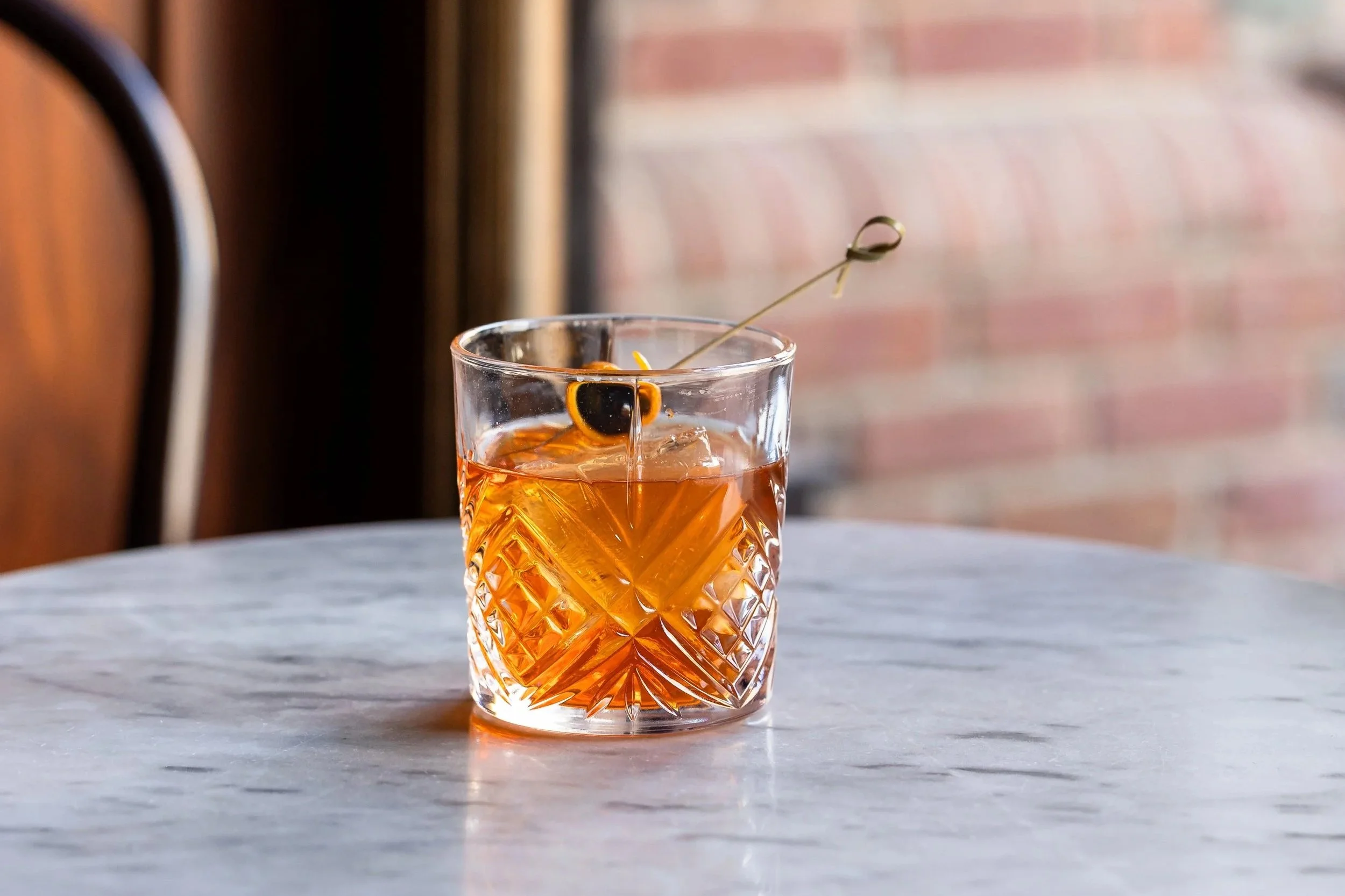
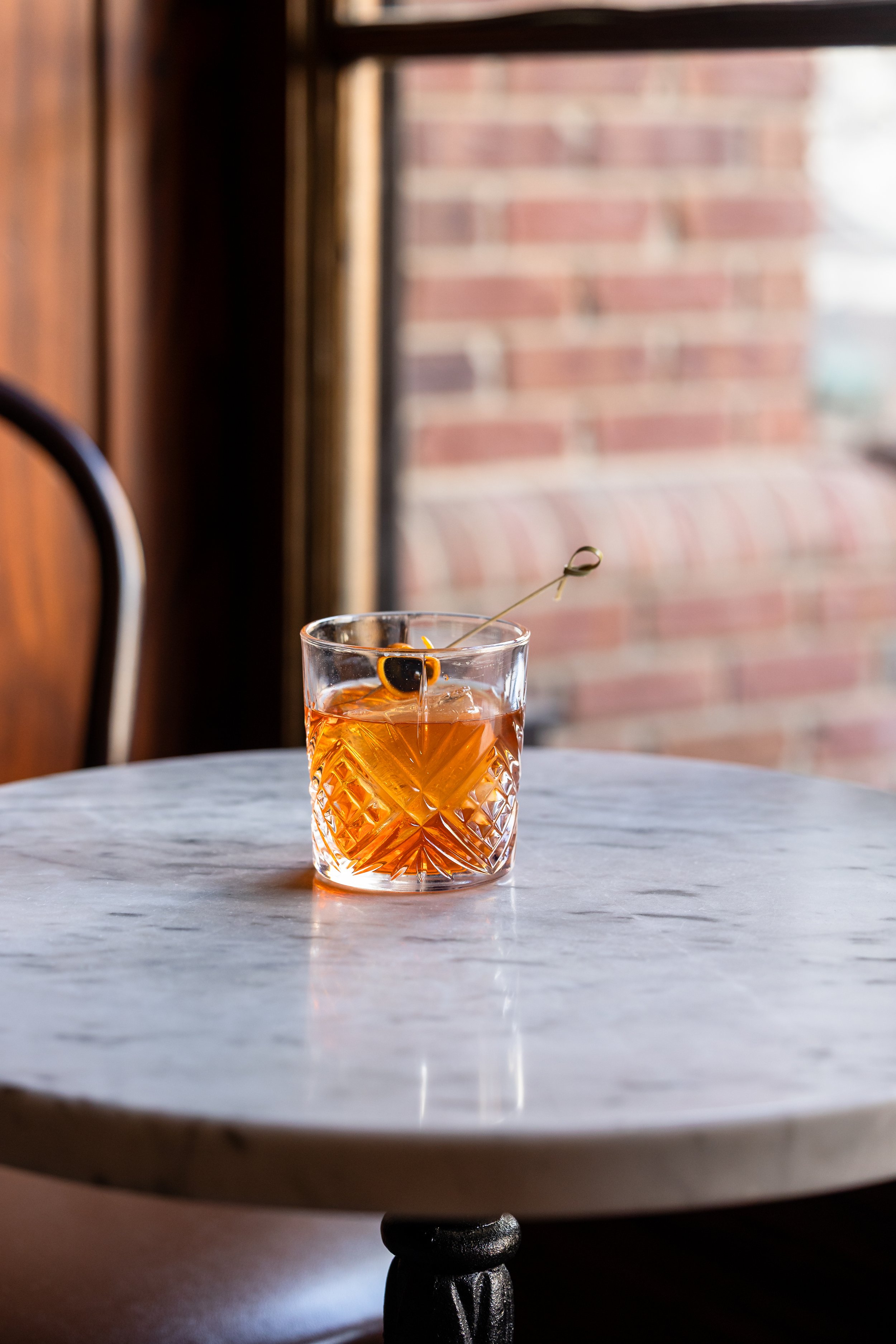
The Old Fashioned, the mother of all whiskey cocktails, is a cocktail made of whiskey, sugar, bitters, and water. It is a maternal concoction that boasts the perfect amount of sweetness, warmth, and strength.
Thrown into a bit of obscurity for some years, the Old Fashioned now seems to be the one cocktail that everyone knows, thanks to the resurgence of many classic cocktails in the 1990s.
It is truly an American cocktail. It is the cocktail. In this article, we want to explore what is an Old Fashioned and how to make the best old fashioned cocktail.
What is an Old Fashioned Cocktail?
In order to understand the Old Fashioned cocktail, it’s important to understand a bit of the history surrounding cocktails in general. What would become known as the “Old Fashioned Cocktail,” originally called the “Whiskey Cocktail,” was, at the time, the only type of cocktail.
The Origin of The Cocktail
The definition of the cocktail was put into official writing in 1806 when a columnist for a weekly newspaper out of Hudson, New York, The Balance and Columbian Repository, answered a question from a reader, “What is a cocktail?”
The answer: “spirit, sugar, water, and bitters.”
At this time, concoctions like the punch also existed. Believed to have originated in India and brought to the West by the British, punch was typically spirit, sugar, citrus, spice, and water.
Punch serves as the basis for cocktails like the whiskey sour, margarita, and daiquiri. The main difference is that the “cocktail” was made as a simple beverage to be drunk quickly; therefore, it was fast to make. Eventually, both cocktails and punches would come under the umbrella of cocktails.
Why is it Called an Old Fashioned Cocktail?
As cocktails like the Manhattan and Martini emerged, the original cocktail that was familiar to so many and still desired at bars, was eventually referred to as an “Old Fashioned Cocktail” and finally an “Old Fashioned” to help differentiate it from all those new fangled drinks.
“Get outta here with your New Fashioned drinks! Back in our day we only had the booze, and the bitters, and the sugar, and the water. Not none of these fancy curacows or vermuuts or what have ya’s.”
- Grumpy Guy from 1876
The origin of the Old-Fashioned cocktail is hard to find, and there is general speculation about where it comes from. First, it was believed to be invented at the Pendennis Club in Louisville, Kentucky. This would imply that originally its base spirit was most likely bourbon.
However, drink historian David Wondrich has mentioned that “it’s safe to pronounce this myth busted,” since the “Chicago Daily Tribune was already discussing ‘old fashioned cocktails’ in February 1880,” before the club was founded.
What Was the Original Whiskey in an Old Fashioned?
If it’s true and the Old Fashioned was made in Chicago or that region, it’s far more likely that the original spirit was rye whiskey. What we do know is that it was most likely made from American whiskey. Who really knows though? It could have been made with Canadian whisky the first time.
By the end of the 19th century, the cocktail that would be known as the Old Fashioned already existed, and had its place in cocktail books, most notably in 1862’s The Bar-Tender’s Guide by Jerry Thomas. The name given was simply The Whiskey Cocktail. The earliest written recipe for a cocktail referred to as an Old Fashioned was in 1888 in The Bartender’s Manual by Theodore Proulx.
What Happened to the Old Fashioned?
As was typical for many of the classic cocktails out there (cough cough, the martini, cough cough) time took the Old Fashioned to the depths of hell where it was bastardized and altered to become something other than its true self.
This abomination came with the addition of fruit and extra water, typically sparkling, intended to dilute and soften the already harsh whiskey being made during prohibition. This would eventually lead to the addition of Sprite in Wisconsin.
Now, I do like the muddled fruit in my Old Fashioned. This style of Old Fashioned was the first I tried, and it has a soft spot in my heart. Probably because I had it at The Green Mill in Chicago, which was a true speakeasy.
Thanks to the Cocktail Renaissance, the Old Fashioned returned from its dark night of the soul having rediscovered its true self. Countless variations exist now, with each bar toying around with variations of bitters and simple syrups intending to boast the best Old Fashioned cocktail.
At the end of the day, the Old Fashioned is just that: old fashioned with no frills or pretensions. It has stood the test of time because of its simplicity, and with quality whiskeys out there, the very foundation has been elevated with little need to doctor it up with sweet sodas or excess fruit.
So let’s talk about making the best Old Fashioned cocktail:
The Best Type of Whiskey for an Old Fashioned
As mentioned before, rye whiskey was most likely the whiskey of choice for the Old Fashioned back in the day, but bourbon soon took over since it was more accessible after prohibition. This being said, any American whiskey will do, but for the best Old Fashioned cocktail, we prefer our Chemist American Single Malt.
It adds notes of vanilla and caramel to the party while still keeping it lively with some strong malts. I wouldn’t recommend using a whiskey that you couldn’t stand to sip. The whiskey is still the star of the cocktail.
How to Make the Best Old Fashioned Cocktail:
There are some different variations on the Old Fashioned cocktail, so we’ll start with the best Old Fashioned cocktail recipe, which is simply the Classic Old Fashioned. Then, we’ll talk about some variations. Keep in mind, these recipes are always meant to be tweaked to your particular preference or the preference of those you are making it for.
You, after all, are the Chemist of your own lab.
The Classic Old Fashioned Recipe
For the classic recipe, the closest to what would have been made in the 19th century, you’ll need a sugar cube which is the closest to loaf sugar (you could also just get loaf sugar, if you want to be authentic).
Ingredients:
1 sugar cube (preferrably turbinando or demerara)
6-8 dashes of Angostura bitters
2 oz Chemist American Single Malt Whiskey
Instructions:
Place sugar cube in a mixing glass and top with bitters
Using a muddler, begin to break down the sugar cube and muddle it in with the bitters
Pour whiskey into the mixing glass and stir to incorporate
Add ice and stir for 30 seconds or until thoroughly chilled
Strain into a rocks glass over a big ice cube
Express orange oil over top and garnish with the orange peel
The Easy Old Fashioned Recipe
Now, if you’re making Old Fashioneds in bulk at a party or you’re feeling a bit lazy, the simple solution is to make…well, a simple solution. To make a simple syrup appropriate for an Old Fashioned you’ll want to use a 2:1 ratio sugar to water. So, 1 cup of water and 2 cups of sugar.
Once again, a demerara or turbinando sugar is preferable. Simply put that ratio of sugar and water into a pot and heat until the sugar is fully dissolved, stirring often so the sugar doesn’t stick to the bottom of the pot. Let it cool before you refrigerate.
Ingredients:
¼ oz rich simple syrup
3-8 dashes of bitters
2 oz Chemist American Single Malt Whiskey
Instructions:
Into a mixing glass, combine the bitters, rich simple syrup, and whiskey
Add plenty of ice
Stir for 30 seconds or until thoroughly chilled
Strain into a rocks glass with ice
Express orange oil over the top and garnish with the orange peel
The Gin Old Fashioned Recipe
Keep in mind, at first cocktails were named after their base spirit, i.e., Whiskey Cocktail, Brandy Cocktail, and Gin Cocktail. This means there’s a Gin Old Fashioned. We like to use our Chemist American Gin, since it stands well on its own. Our Barrel Rested Gin is good for folks who want to try out a gin but have a preference towards whiskey.
Ingredients:
2 oz Chemist American Gin
¼ oz rich simple syrup
2 dashes of Angostura bitters
4 dashes of orange bitters
Instructions:
Place all ingredients into a mixing glass with ice
Stir ingredients for 30 seconds or until thoroughly chilled
Strain into a rocks glass over a big cube
Express lemon oil over the top and garnish with the lemon peel
A Dessert Old Fashioned Recipe
If you want an Old Fashioned perfect for after dinner, then consider throwing in some of our Chemist Chocolate Orange Gin Liqueur. This results in a more fruit forward and decadent Old Fashioned that pairs well with the dark malt in our Chemist American Single Malt Whiskey.
Ingredients:
1 ½ oz Chemist American Single Malt Whiskey
½ oz Chemist Chocolate Orange Gin Liqueur
2 dashes of Angostura bitters
4 dashes of orange bitters
Instructions:
Place everything into a mixing glass with ice
Stir for 30 seconds or until thoroughly chilled
Strain into a rocks glass over a big cube
Express orange oil over top and garnish with the orange peel
The Muddled Old Fashioned Cocktail Recipe
This one is still my favorite, mostly for nostalgia’s sake. This is the first Old Fashioned I learned to make until I got my first real bartending job. It’s the concoction that I was drinking when the horns were filling a dark, sultry room above secret bootlegging tunnels.
Ingredients:
2 oz Chemist American Single Malt
1 turbinando sugar cube or ¼ oz simple syrup
1 maraschino cherry
1 orange slice
8-10 dashes of Angostura bitters
Instructions:
Place the fruit and sugar cube in a rocks glass
Pour the bitters over your sugar cube to get it saturated
Break down the sugar cube and then muddle it in with the fruit
Pour the whiskey in
Fill the glass up with ice
Top with a splash of soda water
Conclusion
If you aren’t drinking an Old Fashioned already, then I feel I haven’t done my job. I’m a failure. So please, grab a bottle of your favorite whiskey and the other easy to obtain ingredients and make yourself this taste of history–of American history!
Just remember that how to make the best Old Fashioned cocktail comes down to your preferences. And the best way to find that out is to start making some. Happy concocting!
Old Fashioned Cocktail FAQs
What’s in an Old Fashioned?
An Old Fashioned Cocktail is made of whiskey, sugar, bitters, and water. The water comes from the dilution process of stirring with ice and any spirit can be used to make it an Old Fashioned cocktail, but it is typically made of whiskey.
How To Make Simple Syrup?
To make a simple syrup you must simply mix equal parts sugar to water and heat until the sugar fully dissolves. For an Old Fashioned cocktail, we recommend using a rich simple syrup which is 2 parts sugar to 1 part water.
How Old is an Old Fashioned Drink?
The Old Fashioned is over two centuries old, with the recipe being the first real cocktail. Although, it wasn’t referred to as an Old Fashioned till the later half of the nineteenth century.
References
History of punch. (2019, September 20). https://www.diffordsguide.com/g/1129/punch-and-punches/history
Distilling, S. &. (n.d.-b). cocktail | The Oxford Companion to Spirits & Cocktails. Spirits & Distilling. https://www.spiritsanddistilling.com/dictionary/acref-9780199311132-e-287
Old Fashioned. Dylan Garret (2023, October 19).
https://www.liquor.com/recipes/bourbon-old-fashioned/
Young, N. (2015, May 5). Mastering the old fashioned, one of the world’s finest cocktails. Eater. https://www.eater.com/21551041/best-old-fashioned-cocktail-recipe
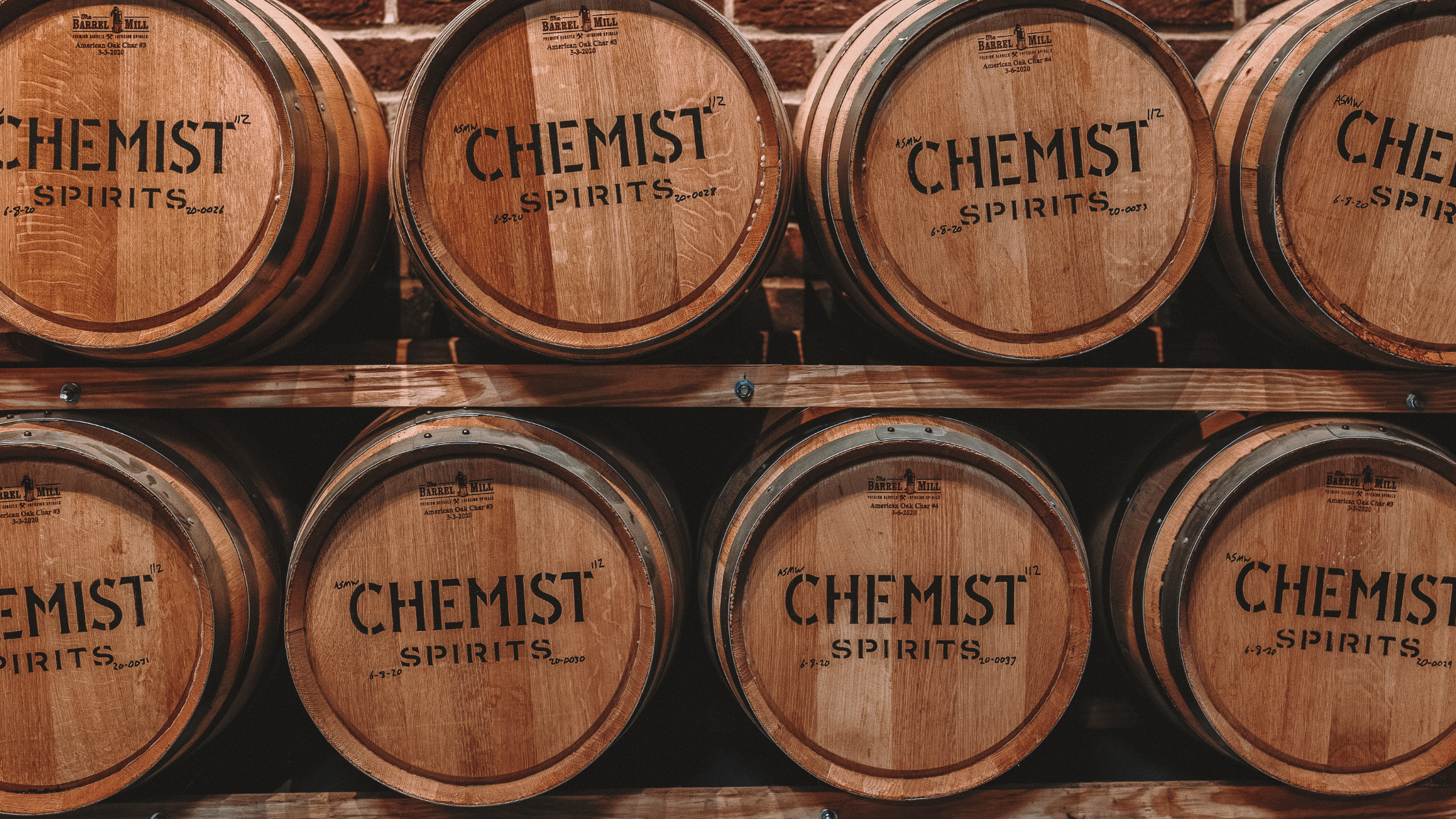
What is Whiskey? A Brief Explanation of How Whiskey is Made
By Andrew Tardif
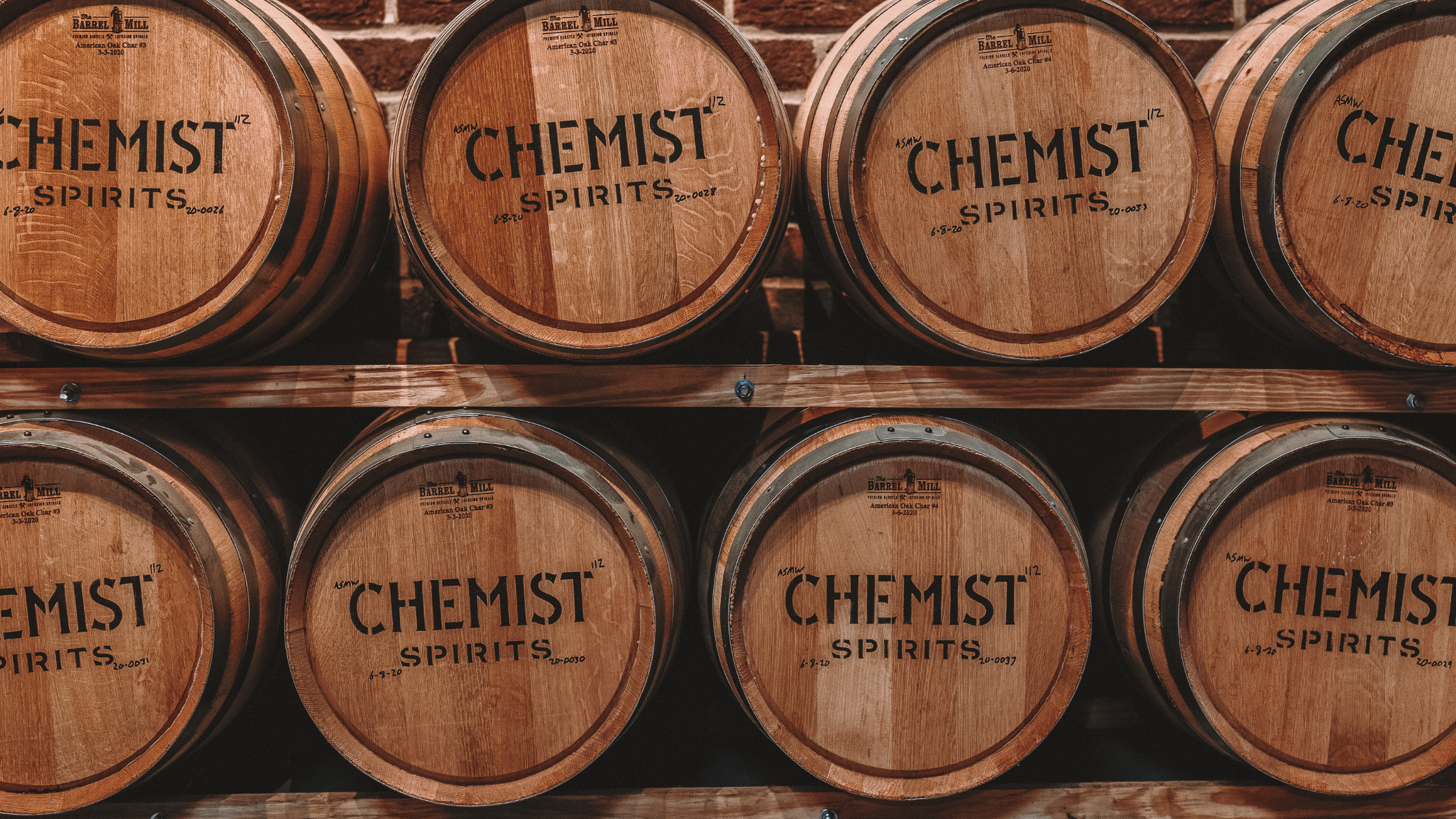
Whiskey is a grain-based neutral spirit that is aged in wood. We at Chemist Spirits love whiskey in all its forms. So, in this article, we want to uncover some of the basics surrounding this spirit: what whiskey is and how it’s made.
What is Whiskey?
At its base, whiskey is a grain-based non-neutral spirit aged in wood. The grain can be barley, wheat, quinoa, or any other grain, and many types of whiskeys are defined by the specific grain and percentage of that grain used in the mash.
By non-neutral, we simply mean that it has a distinct flavor profile, and takes on the aroma and characteristics of its base ingredients. A neutral spirit is typically used as a base for more complex spirits like gin since it doesn’t have a flavor, aroma, or color.
We use a neutral spirit made from a base of wheat for our American Gin while our American Single Malt Whiskey is distilled from a mash bill of three different barley malts.
After distillation, the base spirit must be stored in oak barrels; for some whiskeys, like Bourbon, the distilled spirits can technically just pass over wood and be categorized as that type of whiskey, but contact with wood is necessary for it to be considered whiskey.
How is Whiskey Made and What is Whiskey Made of
Whiskey (or whisky) begins as grains that are made into a mash, fermented, distilled, and then aged in wood barrels. The initial process of mashing and distilling can be done in a week or so, depending on the length of fermentation while the aging process typically lasts years.
Step 1: It All Starts with the Grain
The very first step of the whiskey-making process focuses on the grain. Choosing your cereal grain is crucial for developing the flavors and aromas that will be inherent in your spirit. The typical grains used in the making of whiskey include:
Barley: Necessary for earthy, nutty flavors
Rye: Imparts a quality of spice and intensity
Corn: Imparts sweetness
Wheat: For a smoother profile
Whiskey is typically made from one or more of these grains with a varying combination of some or all. Different ratios of grains result in different flavor profiles and lend itself to qualities particular to different brands of whiskey. Although those are the four most popular, whiskey can be made from any cereal grain, and some other grains that distilleries experiment with include:
Quinoa
Oats
Many distilleries, like ourselves, will use local grains to create spirits with personalities specific to the region.
Step 2: The Malting
Malt is a sprouted grain that develops the amylase necessary for the fermentation process. In this process, the grain is soaked to wake it up and allowed to germinate and sprout. The sprouting allows for the development of enzymes which are necessary for the fermentation process.
This growth is then halted and the flavors intensified by drying the grain, which can impart a lot of flavor.
Scotch gets its peaty flavor from the malted barley being dried over the smoke of burning peat. If a distillery doesn’t use a malted grain, they will typically introduce yeast to catalyze fermentation, but typically will use yeast in combination with the malted grain.
Step 3: The Mashing
A mash is the result of the grains being ground up, mixed with water, and then heated. This process breaks down the starches into sugars that will eventually be converted in alcohol from the enzymes produced by the malting process and/or the introduction of the yeast later on.
Step 4: Fermenting
After the introduction of the yeast, the mash is left to ferment, typically in stainless steel fermentation tanks. This process can take up to a week with specific whiskeys, like Japanese whiskeys, choosing the longer fermentation. The resulting liquid, called “distiller’s beer,” now has an alcohol content similar to beer.
Step 5: Distillation
The distiller’s beer is placed in some kind of still, be it pot, column, or hybrid typically, and the liquid is heated up. At lower temperatures more dangerous and unpleasant compounds are heated to their boiling point, evaporated, and condensed.
The initial products of fermentation, typically called the heads, are collected and either discarded or used for future distillations.
As the distiller’s beer continues to heat up, the more pleasant and coveted compounds, namely alcohol or ethanol, evaporate and condense. This is the hearts section of the distillation process and is what ends up in your bottle of whiskey.
The end of the distillation process results in the tails, which are also either discarded or used for future distillations.
Some whiskeys, like Irish whiskeys, are triple distilled to a higher alcohol content resulting also in a lighter spirit.
The White Dog
Prior to fermentation, the mash will have a dark color while after distillation, the resulting condensed liquid will be clear. This base liquor can be distilled multiple times and is typically referred to as a White Dog.
The White Dog can still be considered whiskey, but it may not be the most palatable thing to drink. The flavors can be sharp and harsh, which is where barrel aging comes in.
Step 6: Barrel Aging
What gives whiskeys their dark color is the barrel-aging process. This process may not have been a conscious decision in the history of whiskey making, and most likely was from the base liquor being transported in barrels.
Gins undertook the same transportation methods as they traveled on ships across the sea. Constant jostling and motion allowed the spirit to make repeated contact with the wood and resulted in a spirit that was more mellow and took on the characteristics and color of the wood. This has become a common practice for many spirits.
Distilleries like us intentionally “rest” our gins in barrels to make Barrel-Rested Gin and rest grain spirits in barrels to make whiskey. Different distilleries will experiment with different types of wood as well as different char levels to impart different flavors. Some whiskey companies will even reuse barrels originally used for port or beer to adopt those aromas and characteristics.
Different whiskey categories and labels require different lengths of aging, Scotch being the more stringent. Bourbon doesn’t require any minimum aging and can simply sit in a barrel for a day to be considered bourbon. Now, will that be a tasty bourbon? Probably not, and most distilleries will age their Bourbons for much longer.
We typically like to age our single malt for at least two years, although most of the time we will age it for 3 to 4 years. For many whiskeys like American single malt and bourbon, aging the spirit for at least two years gives it the label of “straight” as in straight American single malt or straight bourbon whiskey.
The specific ABV also affects the aging process, with a higher alcohol content taking out the tannins from the wood, while lower alcohol content allows for the catalyzation of sugars. We barrel at barrel strength instead of proofing down before aging.
Conclusion
The world of whiskey is vast and complex, and although this article only skirted the surface, hopefully it gave you a deeper understanding, and maybe, a deeper desire to sip on something dark.
Want to continue your whiskey education? One of the best ways to better understand the wide world of whiskey is to taste them! Order from Chemist Spirits to taste our award-winning American Single Malt Whiskey.
Or stop by the tasting room or the Antidote Cocktail Lounge to taste all of our single malts so you can answer the question: what is whiskey?
Frequently Asked Questions about Whiskey
What is the Difference Between Scotch and Irish Whiskey?
Scotch is typically (but always) peated while Irish whiskey is not. This makes Scotch smokey. Irish whiskey is triple distilled while Scotch is typically double distilled. Scotch whisky must be made in Scotland to be considered Scotch, and Irish whiskey must be made in Ireland to be called Irish whiskey.
Whiskey vs. Whisky?
Both are the same but whiskey is the common spelling in the U.S. and Ireland while whisky is common in Scotland, Japan, and Canada.
What is Bourbon Whiskey?
Bourbon whiskey is whiskey with a mash bill of at least 51% corn. The rest of the mash bill can be made of barley, wheat, and/or rye.
What is Rye Whiskey?
Rye whiskey is a whiskey that is made of at least 51% rye, the remaining of which can be made of barley, wheat, and/or corn.
References:
How Irish whiskey is made. (2020, March 17). https://www.diffordsguide.com/g/1144/irish-whiskey-uisce-beatha-eireannach/production
Wondrich, D., & Rothbaum, N. (2021). The Oxford companion to spirits and cocktails. Oxford University Press.
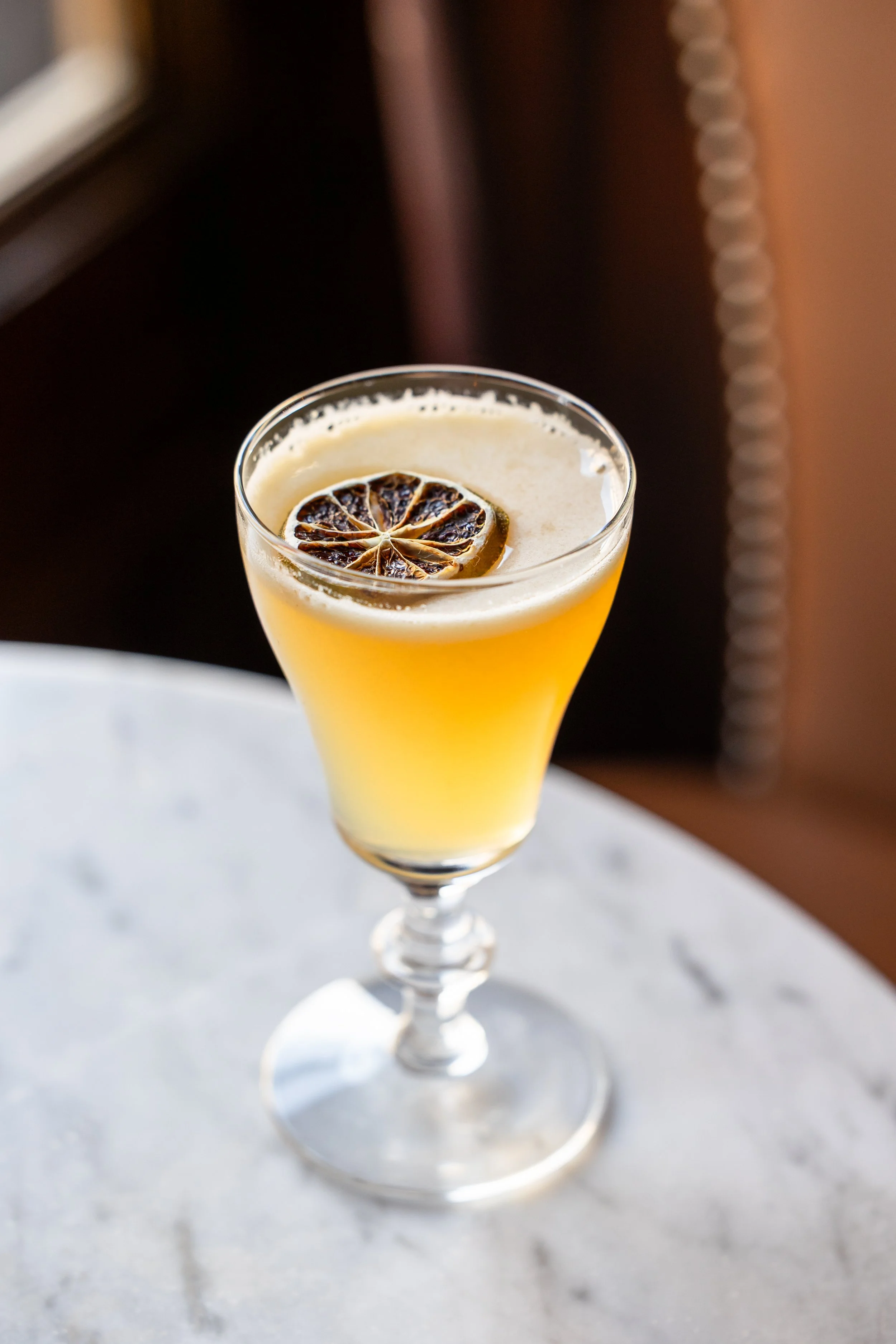
Gimlet Cocktail Recipe | History of the Gimlet Cocktail
By Andrew Tardif
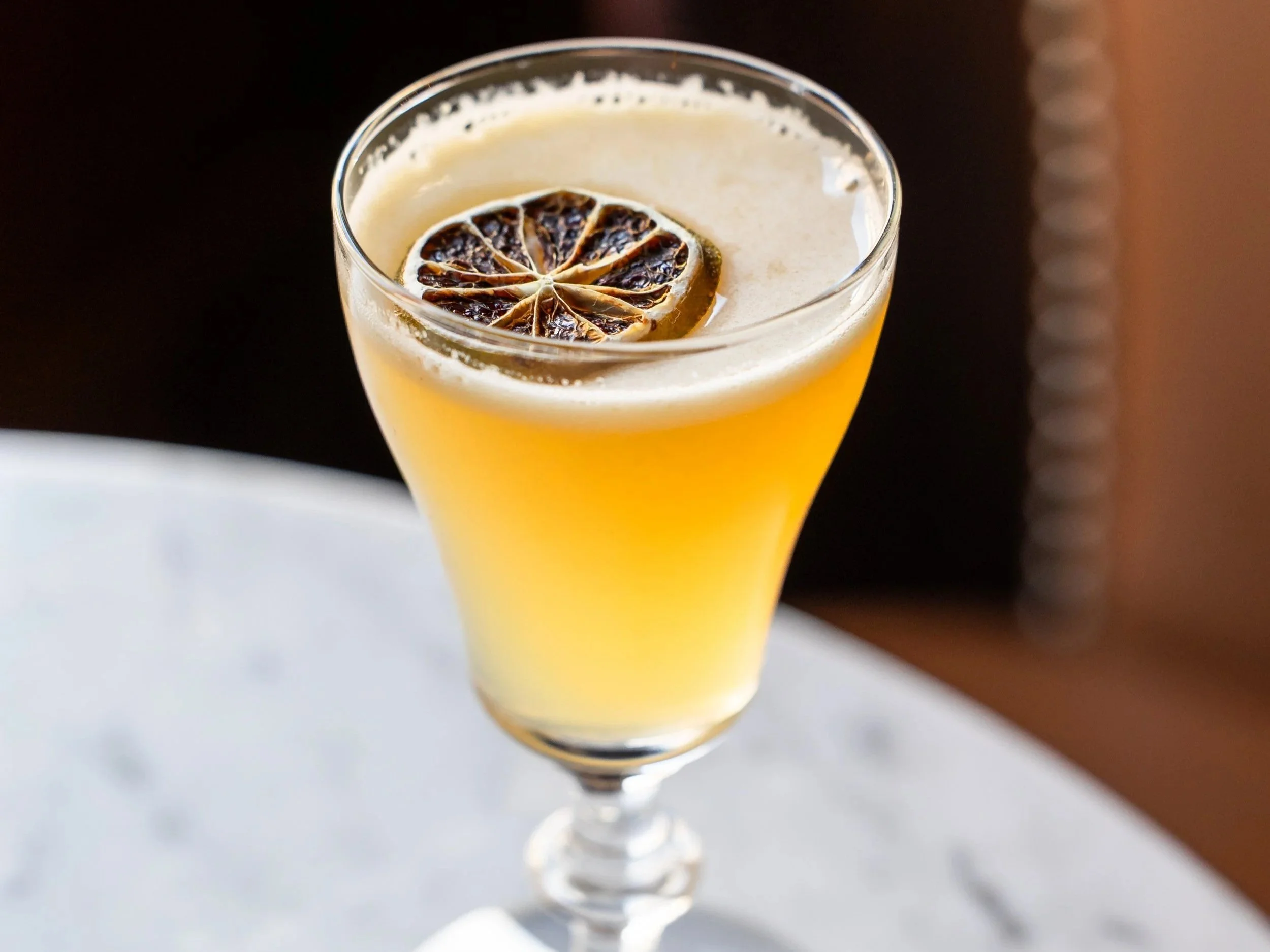
The Gimlet is a classic cocktail with roots to the British Royal Navy, and is simply made of gin, lime juice, and sugar. This cocktail led the way for many of the popular cocktails we know today like the Daiquiri, Margarita, and Whiskey Sour.
In this article, we at Chemist Spirits want to talk about where the gimlet cocktail comes from and how to make the best gimlet at home.
What is a Gimlet Cocktail?
The Gimlet Cocktail is simply gin, lime juice, and simple syrup. This is shaken with ice and strained into a coupe. The gimlet is a refreshing and tart cocktail perfect for spring, and it’s a cocktail where the quality of ingredients is crucial.
Ingredients:
Base Spirit: Gin
Citrus: Lime Juice
Sweetener: Simple Syrup 1:1
A Brief History of the Gimlet Cocktail
Although the exact origins aren’t known, the gimlet cocktail is the result of rationing during the times of the British Royal Navy. While rum was a common ration for navy members, gin was the typical ration for the officers at the time.
Lime juice and sugar eventually became possible rations on the ships. Naval authorities like Rear-Admiral Sir Thomas Desmond Gimlette (notice the name?) pushed their crew to mix the gin and lime juice in order to fight scurvy.
Eventually sugar was also added to make the concoction more palatable. So, there you have a gimlet. You’ll notice that it’s very similar to the Daiquiri, which is made of rum, lime, and sugar and also has origins in the British Royal Navy.
In the late 18th century, lime cordial was created by Lachlan Rose to make a more self-stable mix of lime juice and sugar. Rose’s Lime Cordial became the popular mixer for the British Royal Navy.
The gimlet cocktail became more codified in the mid 20th century, and with the rise of vodka in the U.S. it became common to see the cocktail using vodka instead of its original spirit, gin. Thanks to the resurgence of classic cocktails, the gimlet has reclaimed its place as a popular drink.
Now, as for the name. It’s still up in the air. Many point to its name being a nod to Rear-Admiral Gimlette from earlier, but it may also be named after the boring tool used to get into booze barrels, also called a gimlet.
Luckily, knowing where the name came from doesn’t affect the taste.
How to Make a Gimlet Cocktail
So, let’s make this cocktail. All you will need is:
Gin: Choose a gin you enjoy, since the lime juice and sugar are meant to balance out and accentuate the natural flavors of the gin. Using a floral and citrus-forward gin like our Chemist American Gin makes for a smooth and easy-drinkin’ gimlet. If you go for something like a London Dry, prepare for a more pine-forward and dry gimlet.
Lime Juice: We recommend using fresh squeezed lime juice. Lime juice from the bottle just doesn’t have the fresh quality you really want in a gimlet. In general, for cocktails, you should use fresh-squeezed.
Simple Syrup: We usually use a simple syrup using cane sugar with a 1 to 1 ratio of sugar to water. You can use white sugar, but cane is slightly less refined and therefore has a deeper flavor. You can also use demerara or turbinado sugar to add richness.
Since the whole purpose of the lime cordial was to emulate the freshness of lime juice and sugar in a self-stable product, you’re better off just using lime juice and simple syrup. That is, unless you plan on making gimlets while circumnavigating the globe.
Gimlet Cocktail Recipe:
2 oz Chemist American Gin
¾ oz lime juice
¾ oz simple syrup
Add gin, lime juice, simple syrup, and ice to a shaker tin.
Shake for 10-15 seconds or until thoroughly chilled.
Strain into a chilled coupe.
Garnish with a lime wheel.
As with all cocktails, you can play with the ratios and amounts to match your own palate.
Where to Get the Best Gimlet in Asheville, NC
From the decks of the British Royal Navy to your friendly neighborhood cocktail bar, the gimlet holds a very firm grip as a popular classic cocktail. If you’re in Asheville, NC, make sure to stop by Antidote Cocktail Lounge to try the best gimlet in Asheville.
You can also take a tour and sample all of our gins in our tasting room. This way you can find out which gin will go best in your gimlet cocktail recipe.
Happy concocting!
Gimlet Cocktail FAQs
Where Does the Gimlet Come From?
The Gimlet has its origins in the 19th century when crew from the British Royal Navy would combine lime juice with gin to fight scurvy and sugar to make it easier to drink.
What’s the Best Gin for a Gimlet?
The best gin for a gimlet depends on your particular taste, but we enjoy a more floral and citrus-forward gin especially for the springtime. So instead of a London Dry or Old Tom, we reach for a new world style like our American Gin.
Is a Lime Cordial in the Original Gimlet Recipe?
The gimlet originally used lime juice and sugar. Lime cordial became a mainstay of the British Royal Navy after Lachlan Rose, who ran a company that provisioned ships, found a way to preserve citrus juice using sugar.
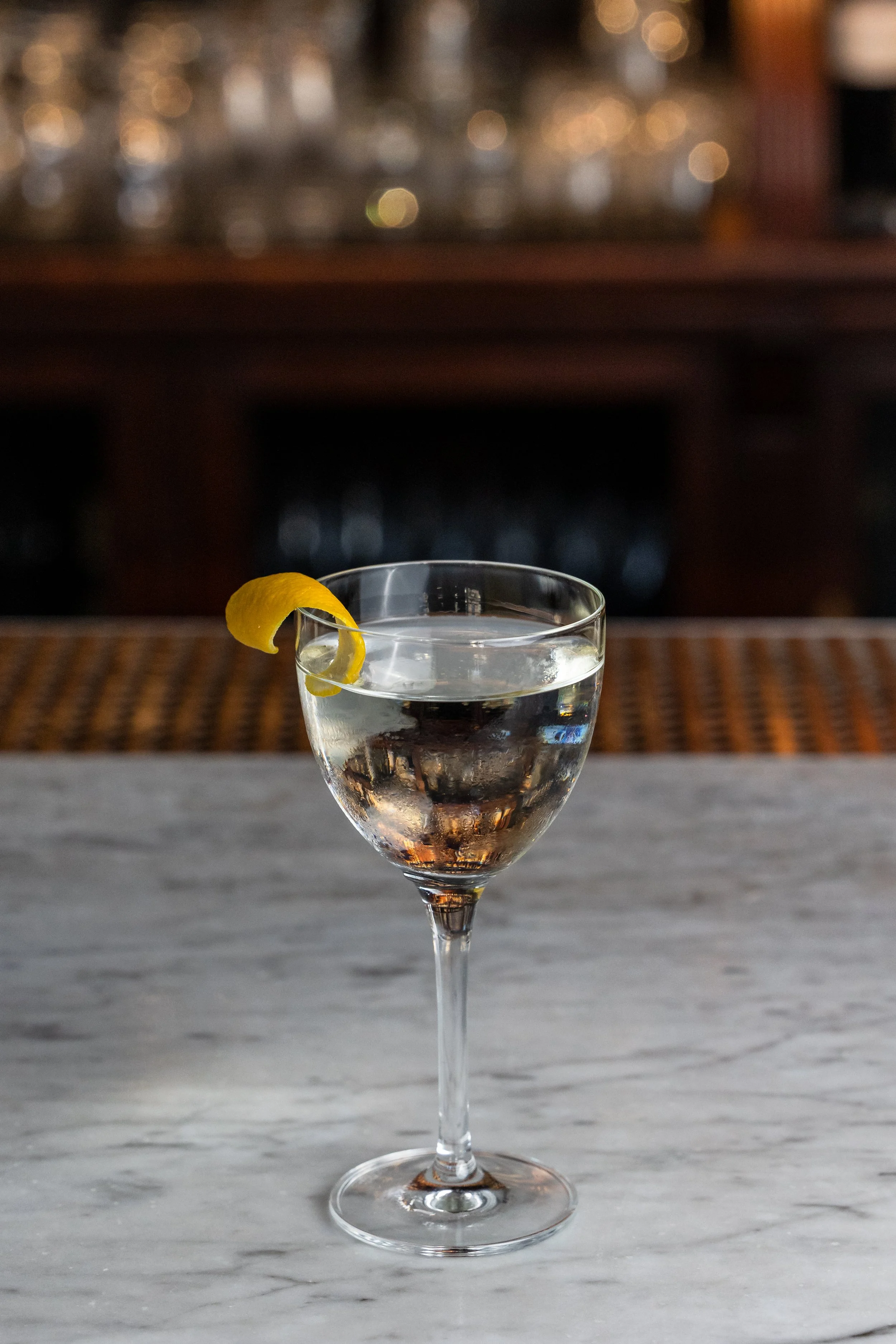
What is the Martini? How to Make the Best Gin Martini
By Andrew Tardif
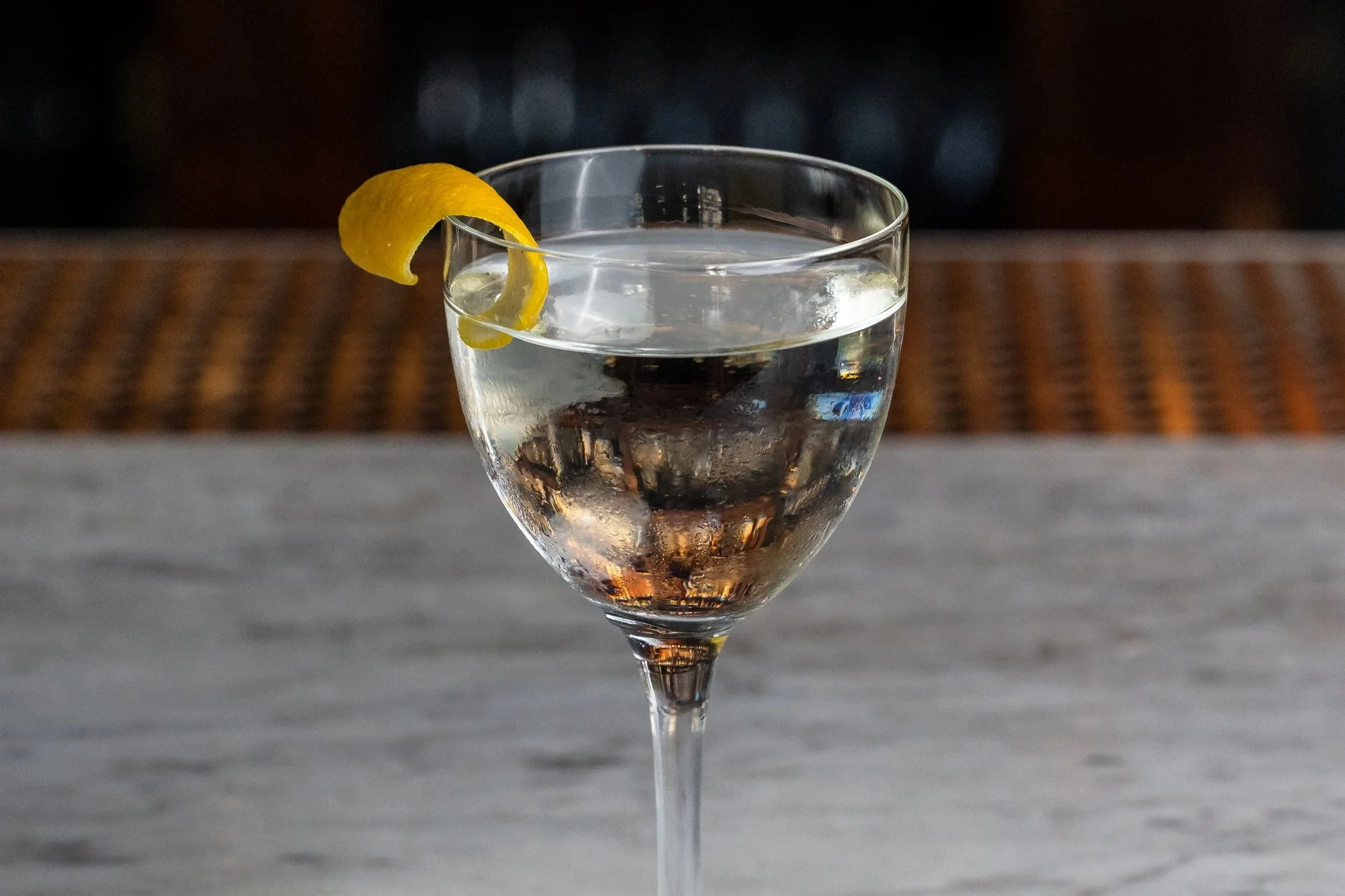
Ah, the martini. Nothing screams elegance and class like that signature glass filled with clear spirits garnished with a twist or olive. But this simple cocktail has been marred by many different renditions, from the chocolate martini to something as experimental as a kimchi or caesar salad martini.
Don’t get us wrong, experimenting with flavors is a trademark of mixology and something we at Chemist Spirits strive to do with our libations. But it has led to a simple question: what is the martini? If you put something in a martini glass, is it then a martini?
In this article we want to discuss what a martini is, its contested history, as well as recipes for the most common types of martinis so you can make the best gin martini at home.
Martini 101: What Is a Martini + Core Ingredients
So what is a martini? Any bartender knows that when a patron comes to their bar and orders a martini there is a slew of questions that must follow:
Gin or vodka?
Dry? How Dry?
Dirty? How dirty?
Stirred or shaken?
Bitters? Gibson? Vesper?
If you don’t know what some of these terms mean, don’t worry, we’ll elaborate in this article.
A martini cocktail in its simplest form is:
Base spirit: Gin (traditionally) or vodka
Modifier: Dry vermouth
Method: Stirred with ice
Glassware: Martini or coupe glass
Garnish: Lemon twist or olive
Flavor profile: Spirit-forward, herbal, dry
This results in a spirit forward cocktail where the gin is the star. Since the martini is made of these two basic spirits, the quality of the spirit and its overall flavor profile is crucial to the resulting cocktail.
What Type of Gin Should You Use in a Martini?
Over the years the type of gin typically used in a martini has changed.
Old Tom Gin – Slightly sweeter, rounder
Plymouth Gin – Earthier, softer botanicals
London Dry Gin – Crisp, juniper-forward
With so many different gins available, it’s really up to you what kind of gin you want to use. We love to use our Chemist American Gin for our martinis because it is citrus forward and floral.
Prefer something bolder? Navy Strength Gin makes a more spirit-forward martini. Looking for depth? A Barrel Rested Gin adds warmth and complexity. Choose a gin you genuinely love — the martini will showcase it.
What is Vermouth and What is the Best Vermouth to Use in a Martini?
Vermouth is a fortified wine, typically fortified with a fruit spirit like a grape brandy, that is “aromatized,” or elevated with botanicals and herbs. The fortification process stops fermentation, adding strength and complexity.
There are two primary styles:
Dry vermouth – Crisp, herbal, lighter in color
Sweet vermouth – Richer, darker, spiced
Modern martinis typically use dry vermouth, though sweet vermouth played a larger role in early versions of the drink. Vermouth is wine, so once opened, store it in the refrigerator. Fresh vermouth makes a dramatically better martini.
Vermouth has changed dramatically since the birth of the Martini, and with different vermouths and gins entering the market, the Martini as a cocktail has and continues to take on many different forms.
Dry Martini vs Classic Martini: Ratios & Differences
If you ordered a dry Martini at the beginning of the 20th century, you would be served a cocktail with dry vermouth, especially since it had to be differentiated from its sweeter predecessor which used Italian (sweet) vermouth.
However, modern day has seen a complete shift of the terminology. Now, the drier the martini, the smaller the vermouth ratio.
Common Martini Ratios
1:1 – Early historical style
2:1 – Balanced classic
4:1 – Dry
8:1 or 9:1 – Very dry
No vermouth – “Bone dry”
Yes, it’s counterintuitive. Modern martini culture is about vermouth reduction, which completely takes from the cocktail, in my humble opinion.
Martini History: Origins of the Classic Cocktail
Now, we aren’t cocktail historians, but we’ll do our best to paint a picture of the cloudy history surrounding the martini.
Where the Martini Comes From
The origins of the martini can be traced back to the late 19th century with ties to the popular Manhattan cocktail, the Manhattan being made of Whiskey (typically Rye), sweet vermouth, and bitters.
This was adapted by taking out the whiskey, replacing it with gin, and adding a cherry liqueur to make the Martinez cocktail. When tracing the history of the martini, you’re tracing the use of the name itself. Recipes that called for gin and vermouth emerged in the 19th century, but the drink itself became popular in the New York clubs and hotels.
How The Martini Got its Name
The name “Martini” likely gained traction because of the common vermouth used for the cocktail: Martini & Rossi, a vermouth brand still common today. Olive brine was a common ingredient in the Martini since the beginning of the 20th century, but it finally gained the name Dirty Martini in the 1980s.
The Classic Martini Returns
The popularity of the martini began to drop in the 70s and as time went on, variations of the cocktail took it far from its simple origins i.e. the Lemon Drop Martini, Chocolate Martini, or whatever concoction ended up in a martini glass.
With the resurgence of cocktail culture in the 1990s and early 2000s came a new interest in the martini, especially in its traditional form.
How to Make the Best Martini at Home
How to make the best gin martini comes down to what type you like and how dry, wet, or dirty you want it. Here are a couple of popular martini recipes to get you started. Remember, you’re the chemist, and you can alter these amounts how you please. You can even get very ornery about it like the great Alton Brown.
Classic Martini Recipe
Making something “original” is somewhat silly to us. Many of the recipes that have lasted through time were simply the ones that were written or documented. The chances are great that different bartenders in different geographical locations and bars were experimenting with various ratios and approaches on what would eventually be dubbed “the martini.”
In other words, play with this to your heart’s content and don’t feel pressured to make “the original” or “the classic” martini. With that being said, here’s our take on a “classic” martini.
Classic Gin Martini Ingredients:
2 oz Chemist American Gin (or Chemist American Vodka)
1 oz Dry Vermouth (or Sweet)
2 Dashes Orange Bitters (Optional)
1 Dash Absinthe (Optional)
Classic Gin Martini Recipe
Place ingredients into a mixing glass with ice
Stir for 30 seconds or until ingredients are thoroughly chilled
Strain into a chilled coupe
Express lemon oil over the top
Garnish with the lemon peel (or olive)
Dirty Martini Recipe
Dirty Martini Ingredients:
2 ¼ oz Chemist American Gin (or Chemist American Vodka)
¾ oz Olive Brine
Barspoon of Dry Vermouth
Dirty Martini Recipe
Place ingredients into a shaker tin with ice *
Shake for 10-15 seconds or until thoroughly chilled
Double strain into a chilled coupe
Garnish with an olive
*Technique Tip: Shaken or Stirred
This is a greatly contested issue. Many say that shaking a martini is blasphemy since it can “bruise” the liquor. This just means you over dilute it, and therefore can ruin an otherwise silky quality. With a dirty martini it can be important to shake it to properly dilute it, but feel free to stir your dirty martini, just be prepared for it to be very briney.
Dry Martini Recipe
Dry Martini Ingredients:
2 ½ oz Chemist American Gin
¼ oz Dry Vermouth
Dry Martini Recipe
Place ingredients into a mixing glass with ice
Stir for 30 seconds or until thoroughly chilled
Strain into a chilled coupe
Express lemon oil over the top’
Garnish with lemon peel or olive
Vesper Martini Recipe
This gin martini variation was named after the Vesper Lynd character in the James Bond novel, Casino Royale. We also enjoy our Navy Vesper variation which utilizes our more potent Chemist Navy Strength Gin.
Vesper Martini Ingredients:
1 ½ oz Chemist American Gin
½ oz Cocchi Americano Vermouth
Vesper Martini Recipe:
Place ingredients into a mixing glass with ice
Stir for 30 seconds or until thoroughly chilled
Strain into a chilled coupe
Express lemon oil over the top
Garnish with the lemon peel
How to Make a Gibson Martini
This final gin martini variation is another savory option and utilizes olive brine. Its origins go as far back as the original martini itself. It was created in 1898 at the Bohemian Club in San Francisco and simply removed the orange bitters, so it was just gin and dry vermouth.
It got its iconic onion garnish in the 1920s. Although the classic Gibson didn’t use olive brine, we like to throw some in ours to amplify its savory nature.
Gibson Martini Ingredients:
2 ½ oz Chemist American Gin
½ oz Onion Brine
Barspoon Dry Vermouth
Gibson Martini Recipe
Place ingredients into a mixing glass with ice
Stir for 30 seconds or until thoroughly chilled
Strain into a chilled coupe
Garnish with a pearl onion
How to Order a Gin Martini Like a Pro
Now that you know some of the main martinis, you should be able to order a gin martini at a bar.
To confidently order a martini, specify:
Gin or vodka
Dry, wet, or dirty
Stirred or shaken
Twist, olive, or onion
Examples:
“Gin martini, 4:1, stirred, lemon twist.”
“Dirty vodka martini, extra dirty, shaken.”
“Gin Gibson, classic ratio.”
Feeling daring? Try a gin martini with a couple dashes of Absinthe. Any cocktail bar like Antidote Cocktail Lounge is accustomed to the seasoned and novice martini drinker and seeks to make a martini to their liking.
Where to Get a Perfect Gin Martini in Asheville
The gin martini is a simple drink that has been clouded by an uncertain origin and convoluted imposters, but at its heart, it is simply a combination of gin and vermouth that emphasizes the botanicals and herbaceousness of its ingredients.
How to make the best gin martini depends on what you love. So, take out your best bottle of gin, favorite vermouth, and most sumptuous olive brine and concoct your perfect antidote to the most common cocktail, the gin martini
If you’re in Asheville and want to experience a carefully built gin martini, visit Antidote Cocktail Lounge at Chemist. Want to recreate it yourself? Take these ratios, experiment, and explore our full collection of gins and vodka to craft your perfect martini.
Martini FAQ: Tips for Making, Storing & Serving (H2)
Can I Make a Martini With Flavored Gin?
Yes! Flavored gins, such as citrus or floral varieties, can add a unique twist to your martini. Keep the garnish and vermouth simple to let the gin’s flavors shine.
What is the Best Glassware for a Martini?
Martinis are best served in a martini glass or coupe. The wide rim lets aromas fully develop, while the stem keeps your drink from warming too quickly.
Can I Make a Martini at Home Without a Shaker or Mixing Glass?
Absolutely. Stir ingredients in any clean glass or jar with ice, then strain into a chilled martini glass. Chilling and proper dilution are key to a smooth martini.
What Are Some Popular Gin Martini Variations?
Popular gin martinis include the Duke (very dry), Fifty-Fifty (equal gin and vermouth), and Rose (floral). These variations let you adjust sweetness, strength, and flavor to your taste.
Is a Martini Gin or Vodka?
A Martini is made with gin and was originally the go-to spirit for decades since vodka was hard to come by in the U.S. Vodka didn’t take off in America until after prohibition and became mainstream after WWII.
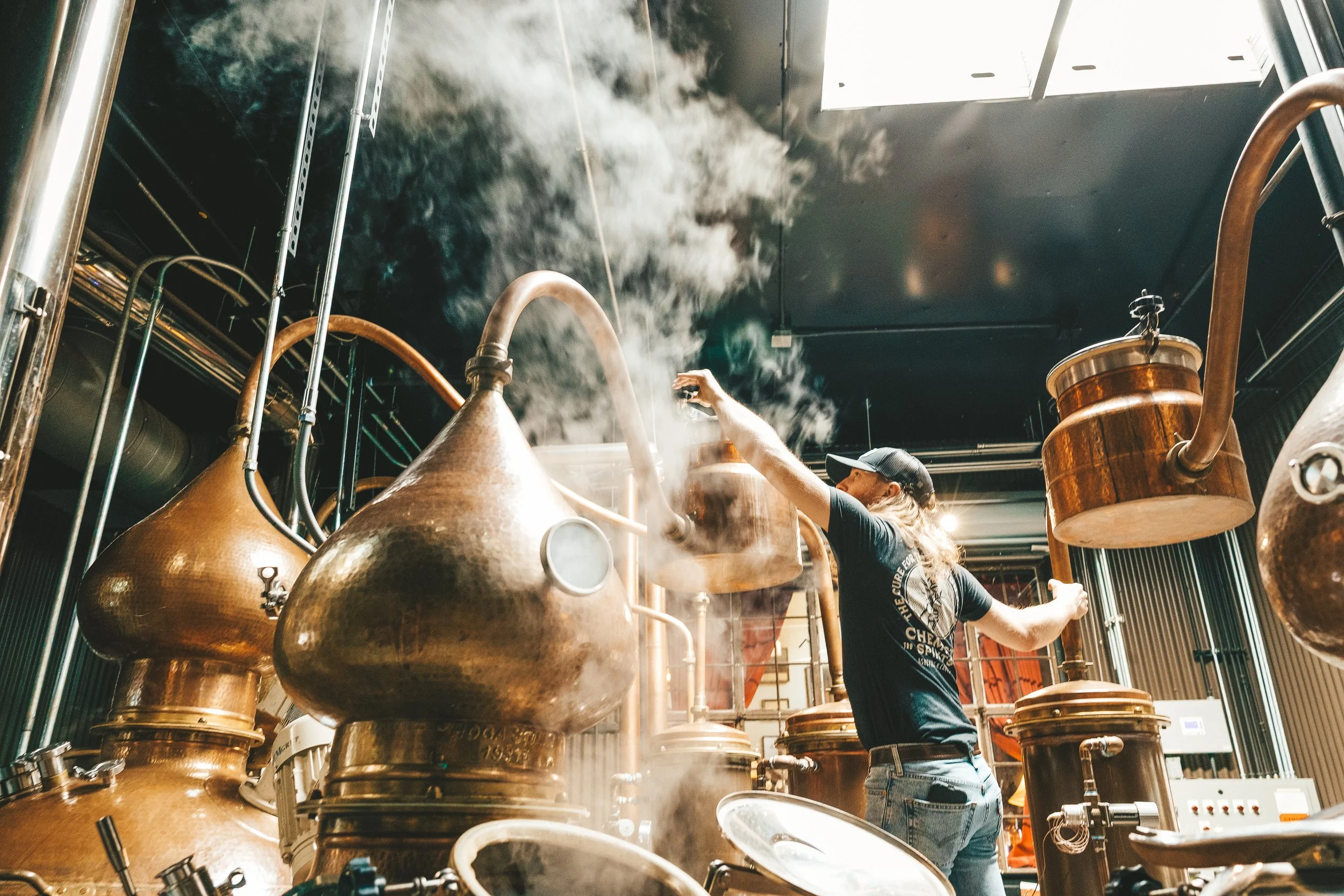
The Making of Chemist Gin | What is American Gin?
By Andrew Tardif
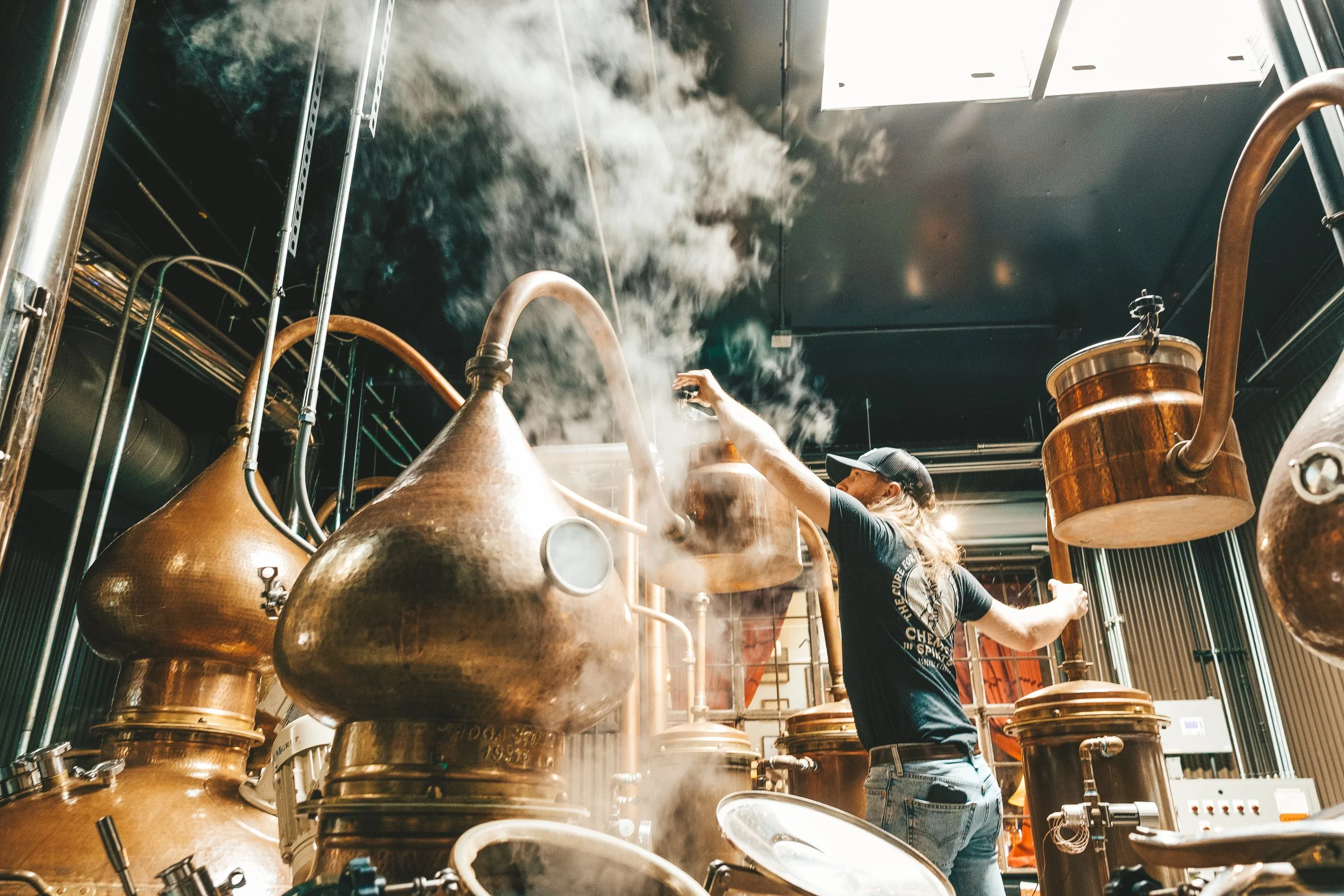
At Chemist Spirits, we use new techniques and recipes matched with old methods from Scotland to make our Chemist American Gin. But what is American gin and what makes it different from all the other gins out there?
What is American Gin?
American gin, also referred to as contemporary gin or new world gin, is a newer style of gin that has taken off in the last few decades. These gins tend to lean more experimental, typically going lighter on the juniper flavor and playing with other flavors such as lavender, cucumber, and citrus.
Some popular contemporary gins include Aviation, Hendricks, and our Chemist American Gin. Our gin focuses on vapor infusion using Appalachian-inspired ingredients like rose hip, peppermint leaf, lemon, and bilberry.
The result is a more approachable gin that embraces the potential for a more botanic backbone.
What Makes American Gin Different?
Before American gin there was London Dry Gin. This gin is what people think of when they think of gin: pine-forward and dry. This particular flavor profile can be abrasive to some drinkers, and it seems that many folks have a dislike of gin for this reason.
It also doesn’t help that many drinkers have their first experience with gin in college or party settings where low-quality gin is imbibed and the result is…well, a gin sickness. Over time, London Dry Gin had sugar introduced to make it more approachable. The result was Old Tom Gin.
These gins were the dominant types for centuries, although throughout the 20th century gin lost its popularity as vodka took over, especially in the cocktail world.
With the resurgence of cocktails, new gin distilleries emerged, making way for more experimentation.
Main Ingredients in American Gin
As mentioned, gin must include juniper as its main ingredient, however there are other compenents that balance out and enhance the flavor. Typical ingredients that you will find in gin include:
Juniper berries
Orris root
Angelica root
Lemon peel
Coriander
Cassia
Almond
Cinnamon
Cardamom
Ginger
Grains of paradise
Since American, new world, and contemporary gins bend the rules a bit, they can include a wide variety of ingredients. Some of note worth mentioning:
Lavender
Cucumber
Asparagus
Rose Petals (our Biltmore Conservatory Rose Gin)
Galangal
Violet flowers
Butterfly pea flower
Yuzu
Olives
Keep in mind, this list is not exhaustive and new gins are being developed all of the time. Many gin distilleries are inspired by local ingredients that can only be found in their region, making them unique.
What Makes our Chemist American Gin Special
Many American gins are unique and ours is no different. Part of it has to do with our ingredients since we use a wide variety of herbs, botanicals, roots, and spices inspired by our home in Appalachia. These ingredients include:
Juniper
Angelica root
Orris root
Grains of Paradise peppercorns
Orange peel
Sweet orange peel
Rose petals
Rose hips
Bilberry
Lemon verbena
Grapefruit peel
Green aniseed
Cassia bark
Tangerine peel
Lemon peel
Peppermint leaf
Our process for infusing many of these botanicals is through vapor infusion. This means filling a botanic basket connected to the lyne arm with the botanicals and allowing the vapor from the neutral spirit to pass through as it’s heated.
This extracts the oils and allows for a rich flavor profile without being too overpowering or bitter. The result is a gin that is complex, approachable, and light on its feet.
The 3 Best Cocktails with American Gin
There are countless cocktails with gin, and American gin is a vast category with a variety of ingredients and flavor profiles. For American gin like our own, we recommend cocktails that would benefit from more floral and citrus-forward flavors.
Here are a couple cocktails that would benefit from our Chemist American Gin, and are popular and are frequently ordered at Antidote Cocktail Lounge:
Negroni:
The Negroni is a classic cocktail that blends the best of bitter and sweet. An American gin adds a level of citrus that helps support the Campari, and a botanical backbone that pairs well with an aromatized wine.
Ingredients:
1 oz Chemist American Gin
1 oz Campari
1 oz sweet vermouth
Instructions:
Pour ingredients into a mixing glass
Add ice
Stir for 30 seconds or until thoroughly chilled
Strain into a rocks glass with ice
Express orange oil over top
Garnish with orange peel
Gimlet:
This cocktail comes from naval tradition where naval officers were given rations of gin and were told to combine it with lime juice to fight off scurvy.
Ingredients:
¾ oz lime juice
¾ oz simple syrup
Instructions:
Combine ingredients into a shaker tin with ice
Shake ingredients for 10-15 seconds or until thoroughly chilled
Strain into a chilled coupe
Garnish with a lime wheel
Corpse Reviver No. 2
The corpse reviver is a type of cocktail that served as a hangover cure. Although many renditions exist through history, this particular recipe has survived the test of time and can be found in many cocktail bars.
Ingredients:
¾ oz orange curacao
¾ oz Cocchi Americano
¾ oz lemon juice
absinthe rinse
Instructions:
Put all ingredients into a shaker tin with ice
Shake for 10-15 seconds or until thoroughly chilled
Spray absinthe into a chilled coupe
Strain chilled ingredients into the coupe
Express lemon oil over top
Garnish with lemon peel (optional)
Where to Get Award-Winning American Gin
There are plenty of new world gins out there, but we think Chemist American Gin is perfectly balanced with citrus and floral notes making it great as a simple mixer with soda or tonic or as the perfect base for a cocktail.
Want to explore more of the world of American gins? Stop by the Chemist Spirits tasting room for a tour to try our gins as well as our whiskeys, or head into Antidote Cocktail Lounge to try our spirits in bartender-curated cocktails so you can really taste what an Amercan Gin is..
American Gin FAQs
What is Gin?
Gin is a spirit that is flavored primarily with juniper. The flavor is imparted mainly through distillation, infusion, or compounding. Gin typically uses ingredients like angelica root, orris root, and citrus.
Where Does Gin Come From?
Gin originated from Genever, a Dutch grain spirit flavored with juniper berries. The English gained a taste for Genever and eventually began making it themselves using a neutral spirit as its base, resulting in the well known London Dry Gin.
Does American Gin Follow Any Rules?
In order to be considered gin, there are particular rules, mainly that the spirit must have juniper as its dominant ingredient and flavor. American gin, contemporary gin, or new world gin only needs to follow the basic rules of gin to be considered that spirit, but it doesn’t need to follow any particular rules to be called “American,” “Contemporary,” or “New World.”
What Are The Different Types of Whiskey?
By Andrew Tardif
Hello fellow chemists, today we want to delve into the wild world of whiskey. Do you like Bourbon, Rye, or maybe even Scotch? These are all whiskeys, but they are also so vastly different that one tippler may loathe one and adore another.
At Chemist Spirits, we love to explore the many types of whiskey out there, in an attempt to better develop our own American Single Malt Whiskey, in its many iterations. So, join us in our lab as we discuss the different types of whiskeys, what sets them apart, and some of the cocktails that commonly use them.
What is Whiskey?
Whiskey is, simply said, a non neutral spirit made of cereal grains and aged in barrels. This leaves a lot of room for different varieties making different types of whiskeys diverse in flavor. This is especially since there are a wide range of cereal grains as well as different aging techniques and types of barrels.
What Are the Different Types of Whiskey?
The different types of whiskey are Scotch, Irish Whiskey, Canadian Whiskey, Bourbon Whiskey, Rye Whiskey, and American Single Malt Whiskey. Whiskey is mainly differentiated by region which can lend to different flavors.
This is especially true when considering the water used in the process. Water and grains from Islay, Scotland are going to make for different flavors than water and grains from, say, Lawrenceburg, Indiana.
Being in Appalachia, our spirits benefit greatly from our fresh mountain water, which is most apparent in our Chemist American Vodka, but a key characteristic to all of our spirits, including our whiskeys.
Scotch Whisky
Let’s start with Scotch Whisky since both Scotch and Irish Whiskey are the delicious primordial goo from which all future whiskeys would sprout.
It’s difficult to know which came first, Scotch or Irish Whiskey. The first written record of Scotch is in the Exchequer Rolls in 1494; these were tax records that specified malt purchased to make “aqua vitae.”
Aqua Vitae is Latin for “water of life,” the gaelic for that being “uisce beatha,” the uisce eventually evolving to the term whiskey.
The first written record, however, doesn’t dictate when whiskey started being made, and this grain spirit was most likely being made for centuries prior.
What Makes Scotch Whisky?
As of now, Scotch Whisky has some stringent rules it must follow. As laid out by the Oxford Companion to Spirits and Cocktails, Scotch must be:
a. Produced at a distillery in Scotland from water and malted barley (to which only the whole grains of other cereals may be added), all of which have been: (i) processed at that distillery into a mash; (ii) converted to a fermentable substrate only by endogenous (i.e., not added) enzyme systems; (iii) fermented only by the addition of yeast
c. Matured in an excise warehouse in Scotland in oak casks of a capacity not exceeding 700 liters, the period of that maturation being no less than three years
d. In retention of the color, aroma, and taste derived from the raw materials used in, and the method of, its production and maturation
e. Free from the addition of any substance other than water and spirit caramel
f. Bottled at a minimum of 40 percent alcohol by volume
(Wondrich & Rothbaum, 2021)
What Does Scotch Whisky Taste Like?
Of the types of whiskey, many will consider Scotch to be defined by a peaty/smoky flavor since the malted barley is eventually dried out by the smoke of peat, organic material that has layered due to waterlogging and other causes.
Peat was used out of necessity as an alternative fuel source in the 17th and 18th centuries, and eventually became a defining characteristic of Scotch. This is not required for Scotch, however, and many Scotch whiskies won’t peat their malted barley.
In time, peated Scotch whisky may even become phased out due to its environmental impact (Littler 2025), but Scotch will certainly continue to exist in its non-peated form. The taste of a Scotch is dependent on the type it is and where it is produced.
Types of Scotch
Single Malt Scotch: This Scotch must be produced in one distillery and is made of 100% malted barley
Single Grain Scotch: This Scotch must be produced in one distillery and made of a malted barley and other grains.
Blended Malt Scotch: This Scotch is a blend of Single Malt Scotches from two or more distilleries.
Blended Grain Scotch: This Scotch is a blend of Single Grain Scotch from two or more distilleries.
Blended Scotch: This Scotch is a blend of Single Malt Scotch and Single Grain Scotch from two or more distilleries.
Scotch Regions
Scotch is produced in five regions, each region lending a different flavor profile:
Islay Scotch: This Scotch is made on the Isle of Islay and is typically identified by its bold and peaty flavors.
Highland Scotch: This Scotch has a wide range of flavors since it is produced in a large area of Scotland. These Scotches can range from light and fruity to more full bodied and smokey.
Speyside Scotch: These Scotches are made around the River Spey in Strathspey located in the Highlands. They can range from grassy and light to full bodied.
Lowlands Scotch: Compared to Highland Scotch, these Scotches are lighter and more approachable. These are good for beginner Scotch drinkers.
Campbeltown Scotch: These Scotches are typically pungent and are described as “smoky” and “oily.”
Irish Whiskey
Although many a joke has been made at the expense of the Irish regarding their whiskey consumption, they are one of the oldest sources of the spirit.
One of the earliest written records dates back to 1405 when it was mentioned in the Annals of Clonmacnoise, and the earliest written recipe for whiskey dates back to 1324 in the Red Book of Ossory.
The distilling of the spirit could have gone as far back as the 6th century when monks came over to Ireland with their skill of distilling for medicinal purposes.
As mentioned earlier, peat was used for whisk(e)y production in both Ireland and Scotland, but Ireland eventually moved away from peat. A main distinction between Irish Whiskey and Scotch is the region of production as Irish Whiskey must be malted, distilled, and bottled in Ireland.
Irish Whiskey typically uses pot stills which is a more time-consuming and intensive process, but makes for a more robust and well rounded flavor compared to column still distilled whiskey, which can typically taste lighter.
Types of Irish Whiskey
Irish Whiskey can be broken down into similar categorizations as Scotch Whiskey. Here are the four main types of Irish Whiskey:
Single Malt Irish Whiskey: This Irish Whiskey is made entirely of malted barley and must be produced by one distillery. This is the one type of Irish Whiskey that is typically double distilled.
Single Grain Irish Whiskey: This Irish Whiskey uses a mix of malted barley and other grains, and it must be produced by one distillery using column stills.
Single Pot Still Irish Whiskey: This Irish Whiskey is the trademark, triple distilled in pot stills and made with a combination of malted and unmalted barley. It must have a minimum of 30% each of both types of barley.
Blended Irish Whiskey: One of the most popular exports from Ireland, Blended Irish Whiskey is a blend of at least two of the three types of Irish Whiskey: Single Malt, Single Grain, and Single Pot Still. Some common brands include Jameson and Tullamore D.E.W.
How Does Irish Whiskey Taste?
As with Scotch, the flavor of Irish Whiskey is dependent on the type. Single Pot Still Irish Whiskey is going to have a more forward spiciness from the combination of malted and unmalted barley and from the pot still.
Blended Irish Whiskey varies based on the combination, but these generally are smoother, more approachable whiskeys. In general, Of the different types of whiskey, Irish Whiskeys will have a flavor profile that is light, smooth, and creamy.
Irish whiskey is also aged in used barrels, typically bourbon barrels, which impart another layer of flavor that you wouldn’t get with whiskeys aged in new oak barrels.
Canadian Whisky
As immigrants from Europe came over to North America, they took their distilling practices with them, including their small stills. Those that were up in Canada along the coast were using molasses at first to distill liquor, but as those colonizers moved more inland, grains became a more feasible distillate, thus was born Canadian Whisky.
The main feature of Canadian Whisky that sets it apart from other types of whiskey is the blending process. Canadian whiskies are made with a base which carries the flavor of the wood and flavoring which carries the flavor of the grain. These spirits are distilled and aged separately and then blended together.
Canadian whiskies must be made in Canada and aged for at least three years. They are typically made with a blend of corn, barley, rye, and/or wheat. Corn is typically the dominant grain while rye comes in second lending a dominant flavor.
How Does Canadian Whisky Taste?
The taste of Canadian whisky can vary based on the brand and mash bill, but the blending process that is inherent in the making of Canadian Whisky does lend itself to a somewhat smoother and lighter whisky.
Bourbon Whiskey
As we step more into the American types of whiskeys (although these types aren’t necessarily limited to America), we see them becoming more popular in cocktails. This is due to the fact that the cocktail became an American institution in the 19th century.
Certainly other countries mix spirits, but America, as a melting pot of cultures, becomes a place where the spirit of many cultures mix in a variety of ways to make a variety of cocktails.
Bourbon is a true American spirit. This spirit came about thanks to the prevalence of local corn (maize) in addition to the distilling skills the colonizing groups brought with them. Bourbon must be made of at least 51% corn in its mash build, and for the remaining build uses barley, rye, and/or wheat.
Unlike other types of whiskey which can require aging in barrels for a minimum of three years (Scotch and Irish Whiskey), Bourbon doesn’t have a minimum aging requirement. It can quite literally be stored for a day in a charred oak barrel and be called “Bourbon,” although no respectable distillery would do that.
However there are Bourbons that are flash-aged, that is, aged for shorter amounts of time in smaller barrels. These are becoming more popular because of high demand.
As for other requirements, Bourbon can only be made in America, and, despite popular belief, can be made outside of Bourbon County, Kentucky. Kentucky is the origin of the spirit, as Kentucky farmers would typically mix their corn with other spent grains for distillation.
Bourbon Whiskey Taste
Since Bourbon is going to be made primarily of corn, the result is going to be on the sweeter side. This doesn’t mean it’s necessarily smooth, and many bourbons can have an in-your-face quality while having that sweet corn flavor.
The taste also depends on the length of aging and char of the barrel. Some bourbons will be smoother, especially “straight” bourbons, that is, bourbons that have been aged a minimum of 2 years.
Our American Single Malt Whiskey uses three different types of malted barley which impart an approachable sweetness similar to a bourbon, which is why we take any opportunity possible to use it in a typically Bourbon-focused cocktail.
Rye Whiskey
German settlers to North America had been well practiced at distilling rye, and so rye became the popular whiskey in America. Many of the classic cocktails we know today most likely used rye whiskey since it was so popular and was accessible in the north, where many cocktails developed.
Rye Whiskey must be made of at least 51% rye. The remaining 49% is made up of corn, barley, and/or wheat. We at Chemist recently made a Rye Whiskey that does well as a sipper since it has a great deal of spice but still has a smooth finish.
How Does Rye Whiskey Taste?
Since it is primarily made of rye grain, Rye Whiskey is spicier and has more of a bite. Many of the cocktails that emerged using Rye Whiskey tried to balance out the spiciness with sweeter elements, although some rye whiskeys will use more corn to achieve that balance.
American Single Malt Whiskey
American Single Malt Whiskey became an official classification recently, although it has been produced for a while by many distilleries. Single malt as a classification has also been around for a while as you can see in the classification of Scotch and Irish Whiskeys.
American Single Malt Whiskey is like other types of whiskey labeled as “single malt”; it must be made of 100% malted barley (the malt part) and distilled entirely at one distillery (the single part), but this classification also must be distilled in the United States of America.
It must also be aged in oak casks “not exceeding 700 liters.” American Single Malt Whiskeys is something we specialize in at Chemist Spirits. As of now, we have a variety of single malts including our American Single Malt Whiskey, Antidote Single Malt Whiskey, Biltmore Single Malt Whiskey, and Burial Single Malt Whiskey.
How Does American Single Malt Whiskey Taste?
The variety of barley, use of various stills, and variety of barrels make single malts a diverse category with a range of flavor profiles. Since the composition is 100% malted barley, American Single Malts will generally have a nutty, malty flavor.
Conclusion
Now that you know the various types of whiskey out there, it’s time to get out there and try them, whether it be neat, on the rocks, or in a cocktail. Our tasting room is open at Chemist Spirits for you to drop in and sample our single malt whiskeys.
Schedule a tour to see how we make it and learn the story of Chemist. You can also stop next door at Antidote Cocktail Lounge to try our single malt whiskeys in some of our signature cocktails!
Different types of Whiskey FAQs
What is the difference between Scotch and Irish Whiskey?
The main difference is the Scotch is made in Scotland and Irish Whiskey is made in Ireland. Irish Whiskey is typically triple distilled compared to Scotch which is normally double distilled. This makes Irish Whiskey fruitier with a higher concentration of alcohol.
What is the most popular whiskey in North America?
Canadian Whisky is the most popular whiskey in North America alongside bourbon. This popularity has been consistent through the 19th and 20th century.
How is Tennessee Whiskey made?
Tennessee whiskey has an additional step to bourbon where it is passed through maple charcoal which imparts a smoother and sweeter flavor. It must be made in Tennessee to be considered Tennessee whiskey but is not required to use the Lincoln County Process mentioned.
References:
Distilling, S. &. (n.d.). whisky | The Oxford Companion to Spirits & Cocktails. Spirits & Distilling. https://www.spiritsanddistilling.com/dictionary/acref-9780199311132-e-1318
Story of Scotch. (n.d.). Scotch Whisky Association. https://www.scotch-whisky.org.uk/discover-scotch/story-of-scotch/
How charring and toasting wood impacts whiskey flavor. (n.d.). https://whiskyadvocate.com/charring-toasting-wood-flavor
Distilling, S. &. (n.d.-a). charring, toasting (and recharring) | The Oxford Companion to Spirits & Cocktails. Spirits & Distilling. https://www.spiritsanddistilling.com/dictionary/acref-9780199311132-e-1326
Turning Beer into Whiskey. (2023, July 12). Distiller - the Liquor Expert. https://distiller.com/articles/beer-distilled-whiskey
What is peat? - International Peatland Society. (2019, July 2). International Peatland Society. https://peatlands.org/peat/peat/
Distilling, S. &. (n.d.-b). peat | The Oxford Companion to Spirits & Cocktails. Spirits & Distilling. https://www.spiritsanddistilling.com/dictionary/acref-9780199311132-e-632
Littler, M. (2025, July 18). Peated scotch whisky at risk of ban within 5 years, expert warns. Forbes. https://www.forbes.com/sites/marklittler/2025/07/17/peated-scotch-whisky-at-risk-of-ban-within-five-years-expert-warns/
Distilling, S. &. (n.d.-c). The Blood and Sand | the Oxford companion to spirits & cocktails. Spirits & Distilling. https://www.spiritsanddistilling.com/dictionary/acref-9780199311132-e-255
Everything you need to know about Triple-Distilled Whisky. (n.d.). https://whiskyadvocate.com/know-triple-distilled-whisky
Author. (n.d.). Scotch whisky. Diageo Bar Academy. https://www.diageobaracademy.com/en-us/home/alcohol-categories/scotch-whisky
American single Malt whiskey commission. (n.d.). American Single Malt Whiskey Commission. https://www.americansinglemaltwhiskey.org/
Flash-Aged whiskey . . . hype or hell yeah? (n.d.). Vices Reserve. https://vicesreserve.com/blogs/the-magazine/flash-aged-whiskey-hype-or-hell-yeah
Distilling, S. &. (n.d.-e). whisky, bourbon | The Oxford Companion to Spirits & Cocktails. Spirits & Distilling. https://www.spiritsanddistilling.com/dictionary/acref-9780199311132-e-1206
St. Canice Cathedral And Round Tower. (2025, November 19). The Red Book of Ossory on public display – St. Canice’s Cathedral. St. Canice Cathedral and Round Tower. https://www.stcanicescathedral.ie/red-book-of-ossory/
Author. (n.d.-a). Irish Whiskey. Diageo Bar Academy. https://www.diageobaracademy.com/en-zz/home/explore-all-categories/irish-whiskey
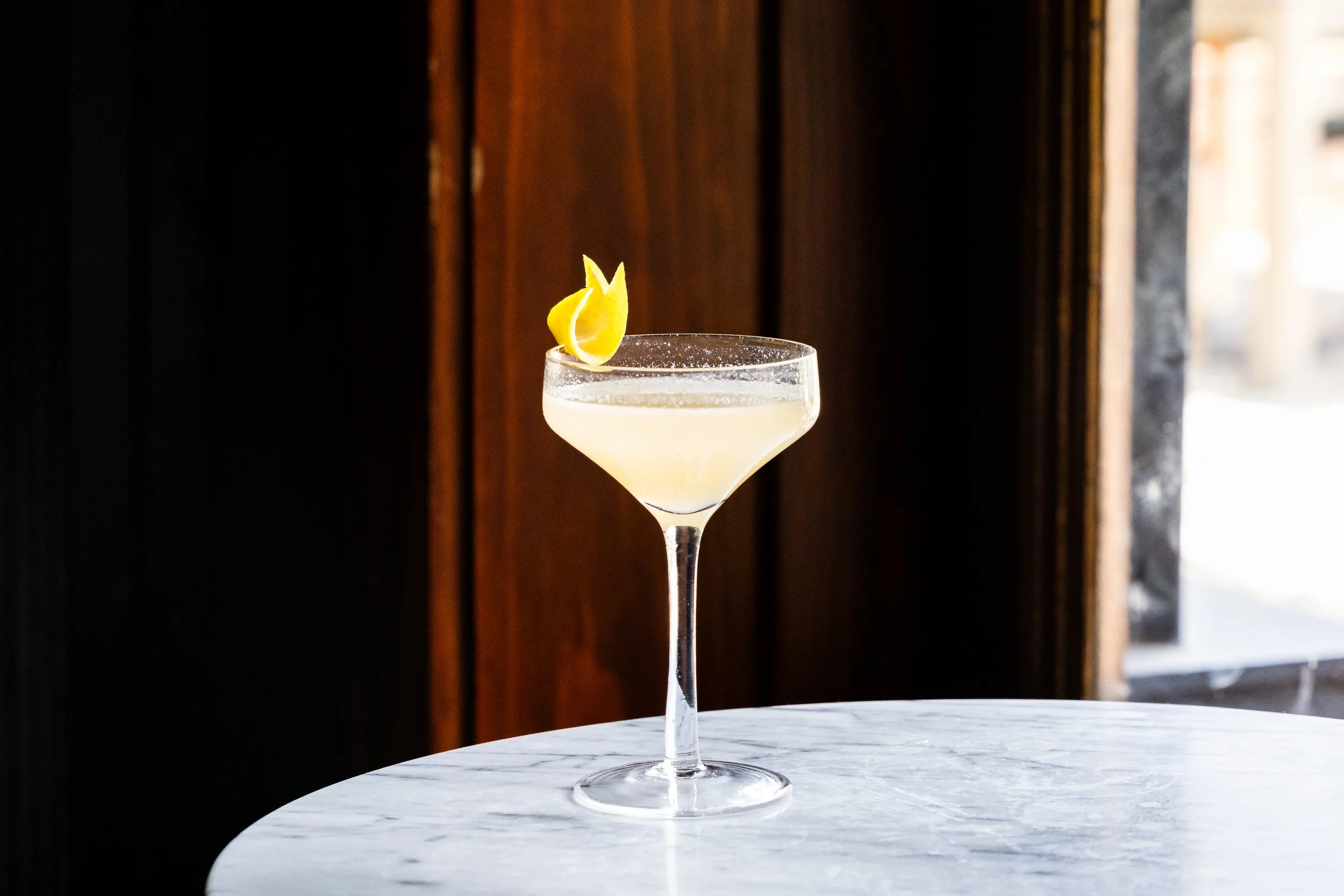
What is the Corpse Reviver #2? | One of the Best Spring Cocktails
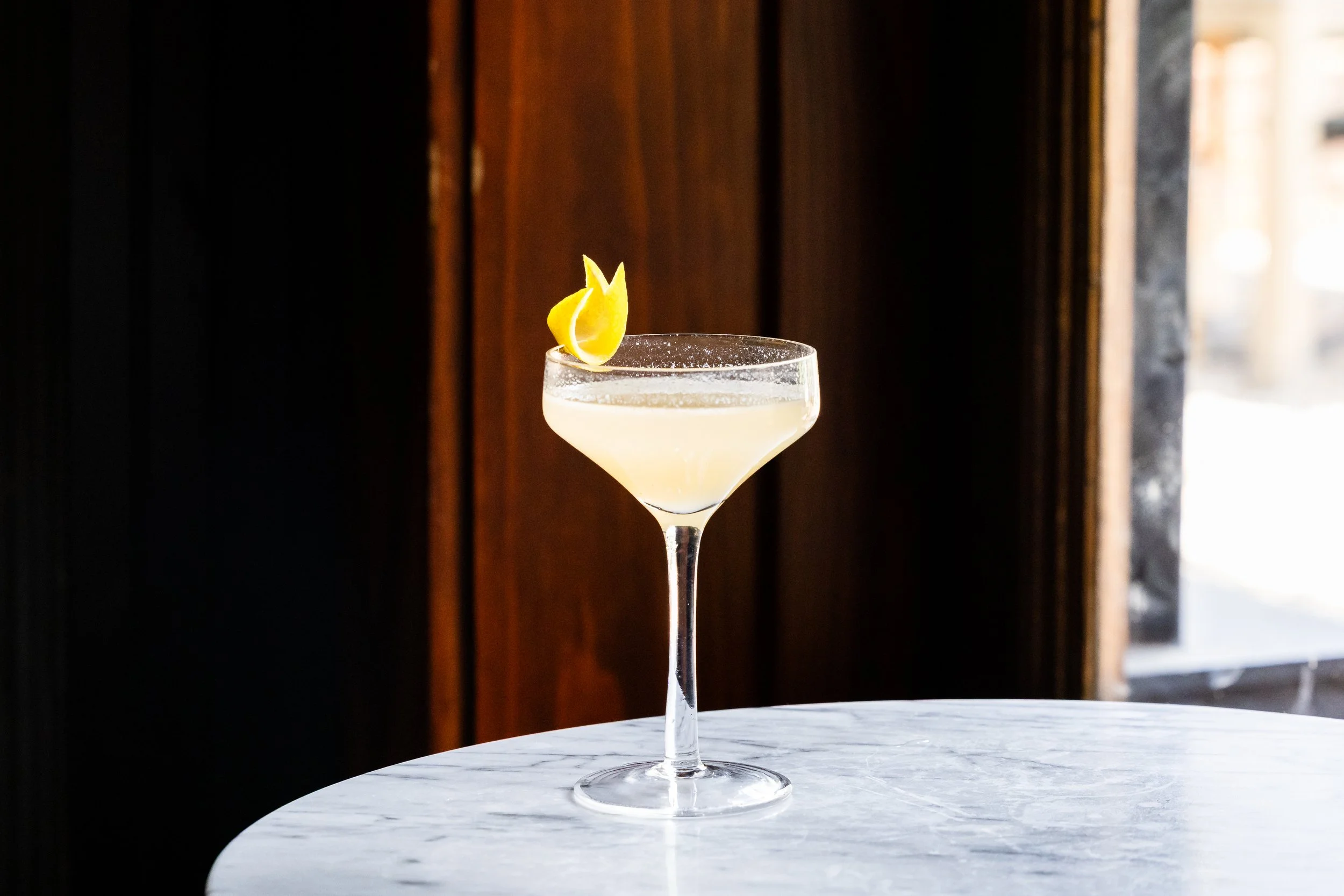
Of the classic cocktails, there are those that emerge as the one to represent an entire category. What is the Corpse Reviver #2? It’s a random survivor in a war waged on hangovers. The Corpse Reviver #2 is a gin cocktail that truly has a defining flavor.
But it isn’t the only of its kind. In this article, we at Chemist Spirits want to highlight a cocktail that’s great for the springtime. It’s perfect to batch for a springtime party, housewarming party, or just a cocktail party, and it’s the last of the Corpse Reviver cocktails.
What is the Corpse Reviver Cocktail?
The Corpse Reviver is in many ways a type of cocktail and not a specified recipe. Its purpose is in the name, to uplift the spirits after a night of drinking. Yes, the ol’ hair of the dog argument. But for long enough this was the belief, and the result was the emergence of a variety of cocktails that held that label. The one that survived is the Corpse Reviver #2.
Here’s a quick breakdown of a Corpse Reviver #2 :
Base spirit: Gin
Other Ingredients (Originally): Kina Lillet, Cointreau, and lemon juice, absinthe (rinse)
Method: Shaken with ice
Glassware: Chilled coupe glass
Garnish: Lemon twist
Flavor notes: Dry, citrus-forward, refreshing
The Corpse Reviver 2 History
We could probably say that there were far more cocktails with the name Corpse Reviver, or referred to as a Corpse Reviver cocktail than were ever written about. I’m sure patrons would come into any bar asking their bartender for a pick me up, and each bartender had their own recipe and possibly a variety tailored for each patron.
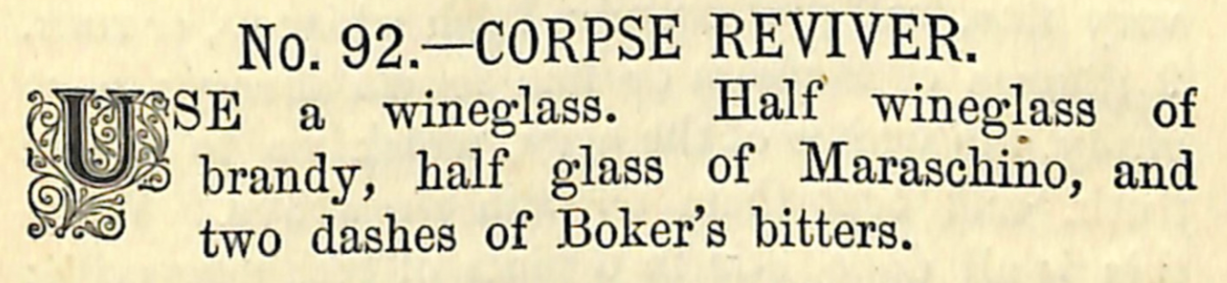
These cocktails were intended to be imbibed quickly in the morning “whenever steam and energy are needed,” as Harry Craddock wrote in his The Savoy Cocktail Book in 1930. Craddock himself provides two different versions of the Corpse Reviver cocktail (#1 and #2). However, the first mention of the Corpse Reviver appears in 1871 in The Gentleman’s Table G
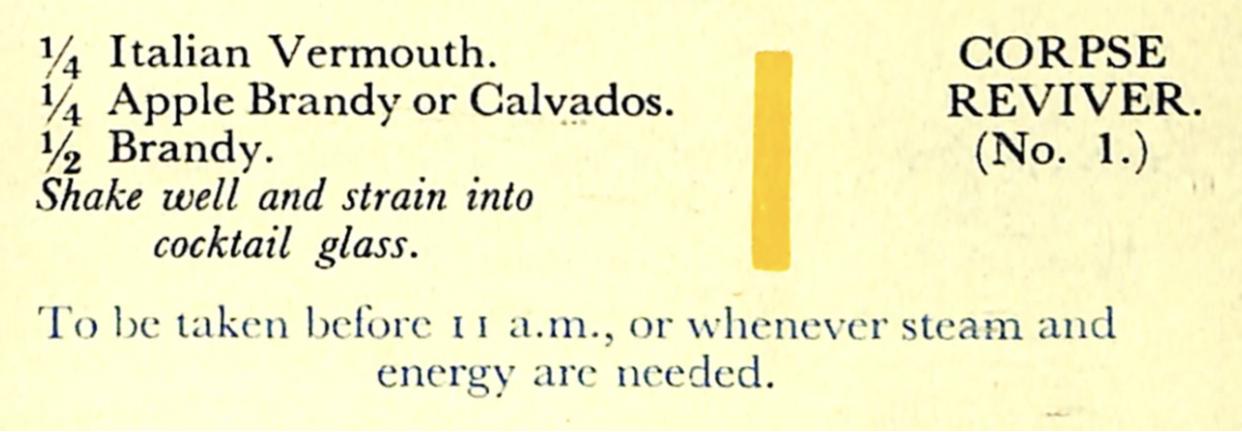
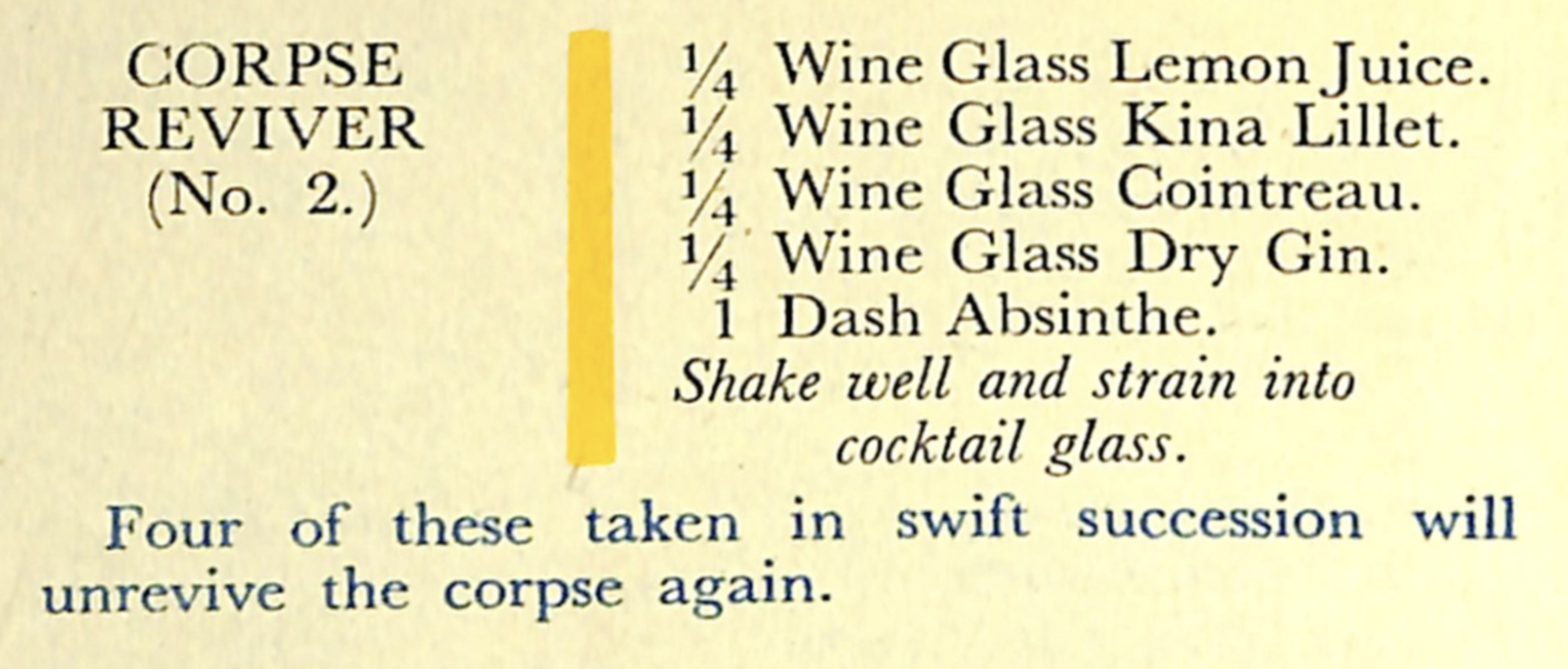
This means this type of cocktail has been around for over one hundred years, and many different types have emerged. Anders Erickson does a great job of breaking down some of the Corpse Reviver variations throughout history.
At the end of the day, very few Corpse Reviver cocktails survived past the realization that alcohol was not the best hangover cure. To be fair, it’s best to avoid alcohol altogether, but you’re reading a blog about booze, so just know that we’re not those types of people, and probably won’t be anytime soon.
The Corpse Reviver no 2 is the quintessential Corpse Reviver cocktail and is the one that can be found in most cocktail bars.
Who knows why the Corpse Reviver #2 recipe was the one to survive.
It may have been because it was the one written down and codified.
It may be because it was one that found the most balance as others may have been too sweet or too tart to survive the casual drinking bar culture.
Regardless, it’s the one that survived and owns the name to this day.
The Best Gin for a Corpse Reviver no 2
The original Corpse Reviver recipe called for London Dry Gin which lends itself to a dry and citrus-forward cocktail.
We love to use our Chemist American Gin because it is citrus forward, and doesn’t go as dry and piney as those London Dry Gins. We find this balances out the other flavors much more without completely drying out the palate.
Do You Use Lillet Blanc in the Corpse Reviver #2?
When seeking historical accuracy, it’s important to know that about 40 years ago Lillet Blanc changed their recipe. The main flavor associated with that fortified wine was quinine, which was extracted from chinchona bark.
Now, the closest fortified wine to it, and the one we use for our Corpse Reviver #2 at Antidote Cocktail Lounge, is Cocchi Americano. Not only is Cocchi a great aromatized wine in many cocktails, I use it in my Martini, but it has a similar profile as the Lillet.
Should You Use Triple Sec, Cointreau, or Orange Curacao in a Corpse Reviver #2?
At Antidote Cocktail Lounge we like to use Pierre Ferrand Dry Curacao. The original recipe from Harry Craddock specified Cointreau, and many bartenders will use Triple Sec. This will definitely change the flavor and in some cases the overall mouth feel.
We find that the Dry Curacao imparts a much needed sweetness to the cocktail, even though it is called a dry curacao. Go with what you feel in your heart, you’re the chemist, after all.
How to Make a Corpse Reviver #2 Cocktail
Now, this is how to make a Corpse Reviver #2:
Ingredients:
¾ oz Chemist American Gin
¾ oz orange curacao
¾ oz Cocchi Americano
¾ oz lemon juice
Absinthe spray
Instructions:
Pour the gin, curacao, Cocchi, and lemon juice into a shaker tin with ice
Shake for 10-15 seconds or until thoroughly chilled
Double strain into a chilled coupe glass
Spray with an absinthe rinse over the top of the cocktail
Express lemon oil over the top and garnish with lemon peel
Isn’t it a Drop of Absinthe?
Some people put a drop or dash of absinthe, others will do an absinthe rinse in the glass, and others will spray absinthe over the cocktail. It’s really up to you. I find the absinthe to be more pronounced when sprayed on the top.
Lemon Oil Too?
Some folks leave out the lemon oil and lemon peel garnish, feeling that the absinthe is enough of a finishing touch. I like the lemon oil, but I always love citrus on the nose.
Revive Your Corpse with Quality Spirits
Although we at Chemist Spirits don’t believe a Corpse Reviver no 2 is the best way to start the day, even after a night of drinking, we do believe it can be a great way to end it. As a cocktail, the Corpse Reviver #2 has a fantastic balance with a memorable flavor.
But you don’t really know until you try it, and now that you know how to make a corpse reviver, you can get yourself the very best gin and really answer the question, what is the Corpse Reviver #2?
Corpse Reviver #2 FAQs
What is the Difference Between Corpse Reviver #1 and #2?
The Corpse Reviver #1 as found in Harry Craddock’s The Savoy Cocktail Book has Italian vermouth, Apple Brandy, and Brandy while the Corpse Reviver #2 has gin, Lillet Blanc, orange curacao, and lemon juice.
How Many Corpse Revivers are There?
There were probably a countless number of Corpse Revivers throughout history, and there is one that is popular in cocktail culture today: the Corpse Reviver no 2.
Can I Use Triple Sec in a Corpse Reviver #2?
Yes, you can use Triple Sec in the Corpse Reviver #2. Although, it does depend on your palate. Cointreau is the common orange liqueur used in the Corpse Reviver no 2 and is listed in Harry Craddock’s recipe in The Savoy Cocktail Book.
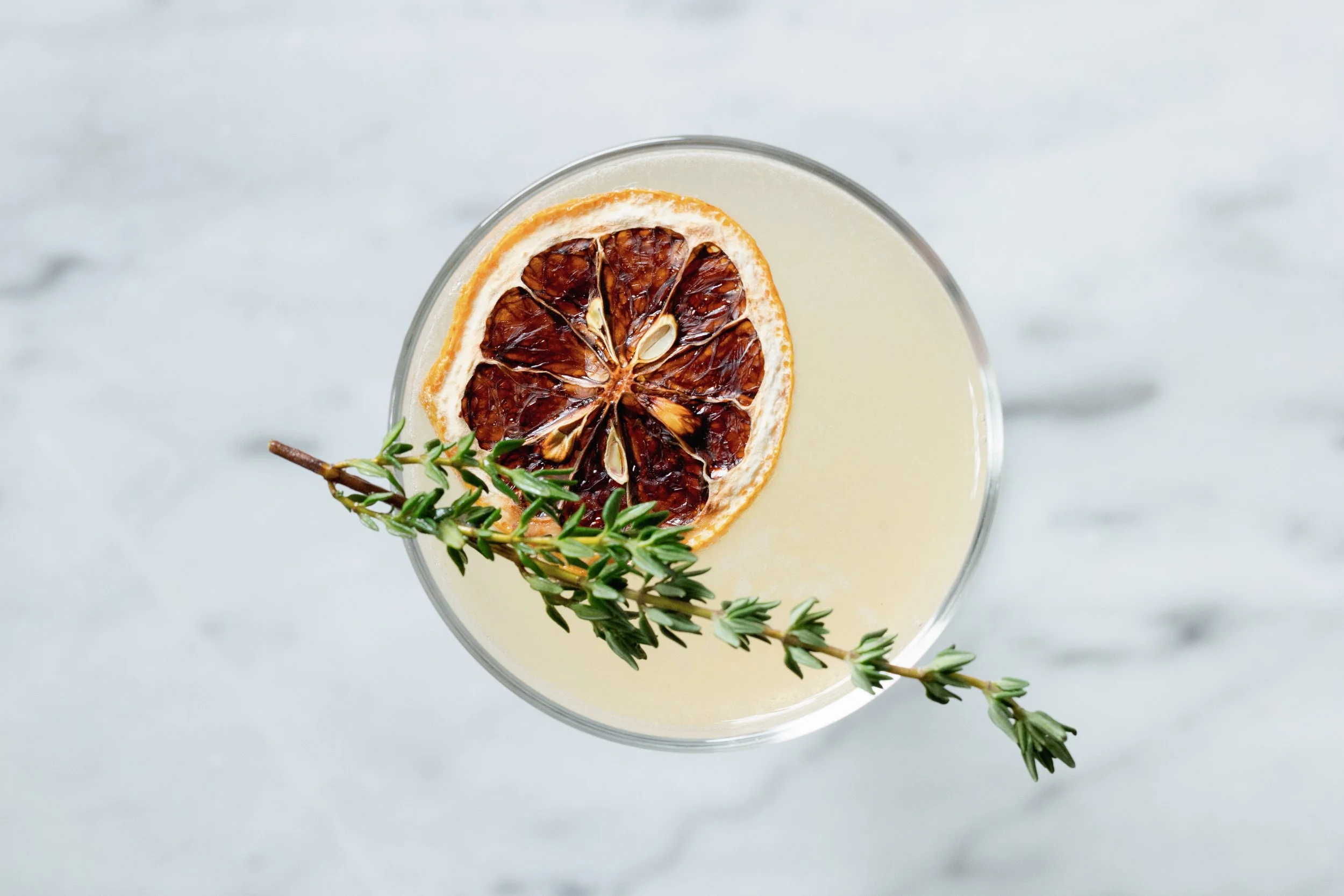
The 8 Best Spring Cocktails of 2026 | Our Favorite Easy Spring Cocktails
By Andrew Tardif
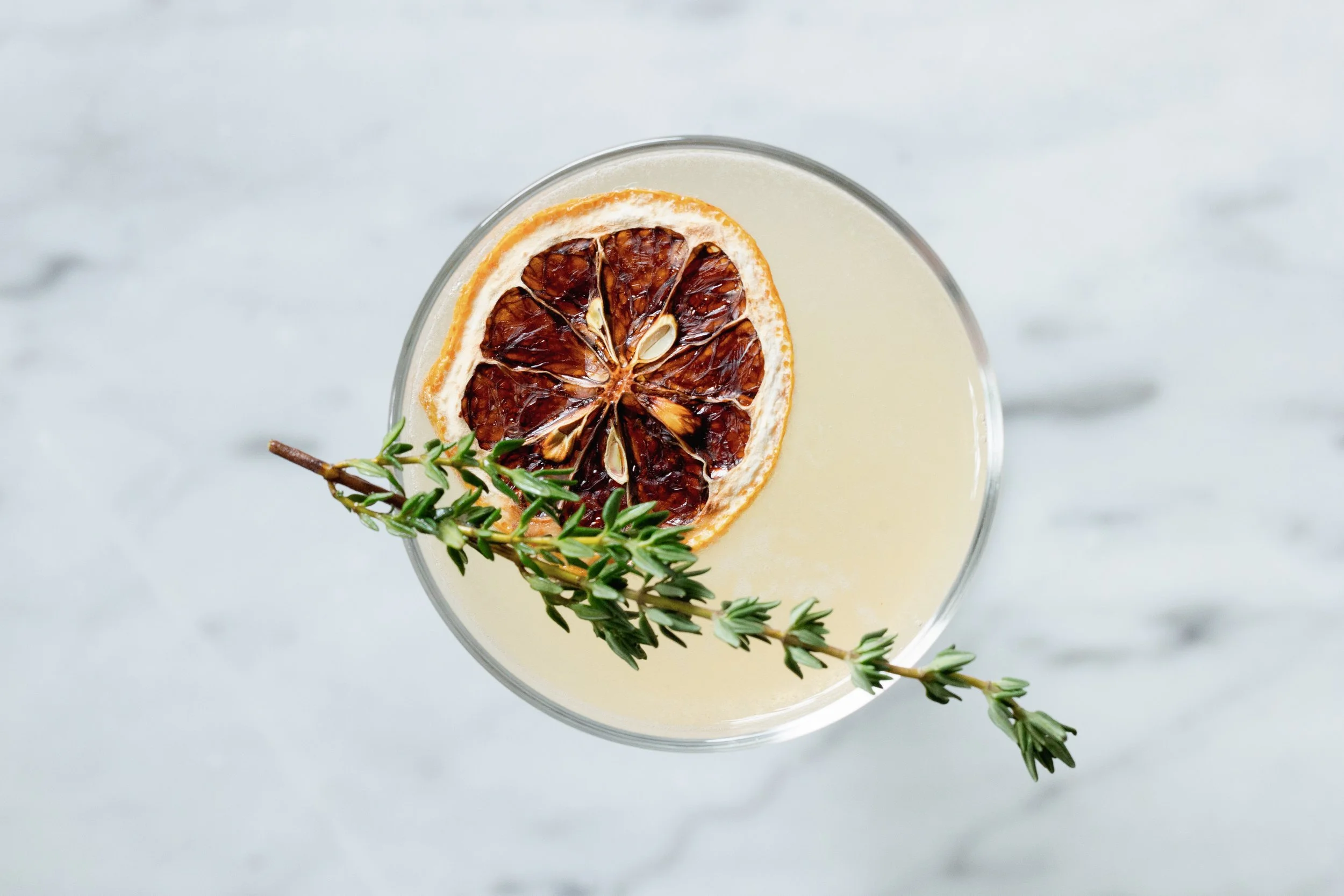
As spring comes into full swing, warmer weather swoops in, and the green buds of a flourishing summer begin to appear, a crucial question enters our mind. One of great existential weight. The question: What am I drinking?
It becomes too warm for a hot toddy, but not quite warm enough for a mojito, although I’ve rarely allowed temperature to dictate my ongoing desire for a mojito.
At Chemist we have a vested interest in finding those cocktails perfect for the season, which is why we want to bring you the best spring cocktails of 2026.
The Lavender Gin Fizz: A Floral Summer Gin Cocktail
In its earliest renditions, this refreshing gin cocktail was simply lemon juice, sugar, and gin shaken and topped with soda water, but the fizz was later made more luxurious with egg yolk or egg white.
Unlike the Tom Collins, which is served over ice and built in a Collins glass, the Gin Fizz is typically shaken to predilute it, and is served without ice.
Ingredients:
1 ½ oz Chemist American Gin
¾ oz lavender simple syrup*
¾ oz lemon juice
Egg white
Instructions:
Place ingredients in a shaker tin and shake without ice to foam the egg white (about 10-15 seconds)
Add ice and shake to chill (another 10 seconds)
Strain into a Collins glass
Top with soda water
Note: Although the original fizz recipe doesn’t call for ice, I like to have ice in the glass. A long cube in a Collins glass also looks good.
* For a lavender simple syrup, simply combine equal parts sugar, water, and heat until sugar is dissolved. Turn off the heat and add the lavender. Let the lavender steep for 30 minutes to 1 hour. Be aware that lavender is very pungent and strong; you won’t need much and it doesn’t need to steep for too long.
Gimlet: A Classic Gin Cocktail From the High Seas
It’s hard not to mention the Gimlet, I mean, it’s like the quintessential refreshing gin cocktail. It may have been named after a doctor with the British Royal Navy or after a tool that bores into barrels, but who knows for sure? Knowing where it comes from isn’t a prerequisite for making it, or drinking it—thank goodness!
However, it does have its origins in the British Royal Navy where officers would receive rations of gin and lime juice. Lime juice was a suggested addition to gin in order to get the necessary nutrients to prevent scurvy.
Although it is a navy drink, we find it’s more historically accurate to use our Chemist Barrel Rested Gin as opposed to our Navy Gin. This is because gin was transported and stored in barrels at the time. To be fully authentic, you could make a lime cordial, a simple combination of lime juice and sugar, but we find that the fresh lime juice makes it brighter and more appropriate as one of the best spring cocktails.
Ingredients:
2 oz Chemist Barrel Rested Gin
¾ oz lime juice
¾ oz simple syrup
Instructions:
Place ingredients in a shaker tin with ice
Shake ingredients for 10-15 seconds or until thoroughly chilled
Strain into a chilled coupe
Garnish with a lime wheel
The Gin Aperol Spritz: A Simple Take on the Aperol Spritz
I’m not sure if the addition of gin is somewhat sacrilegious to the spritz. I love a good Aperol Spritz, I must admit, but I think the simple addition of gin adds a lovely hint of botanicals, and I believe the use of a Navy Strength Gin, like ours, helps the gin stand out thanks to the higher proof.
Ingredients:
1 oz Chemist Navy Strength Gin
1 oz Aperol
2 oz sparkling brut or prosecco
2 oz sparkling water
Instructions:
Fill a white wine glass with ice
Add in Aperol and gin
Pour in prosecco and sparkling water
Garnish with an orange slice
The Classic Martini
A perfectly chilled martini made the classic way is a great porch sipper during the spring. The vermouth adds a silky texture, and the gin gives a cool botanical backbone. The martini is also one of the quintessential gin cocktails.
The martini was born out of the manhattan cocktail, simply switching out the whiskey for gin. It originally had equal parts gin to vermouth but over time, the vermouth was taken out of the equation until the gin was left all on its lonesome, sometimes paired with olive brine (a Dirty Martini) or even onion brine (Gibson).
This classic recipe for the martini is equal parts our American Gin to vermouth, but the beauty about the martini is that the ratio can change depending on how you want it. You can do 2:1 or 5:1 or whatever, but just remember that getting rid of the vermouth kind of strips it of its title as a Martini.
Ingredients:
1 ½ oz Chemist American Gin
1 ½ oz Cocchi Americano Vermouth
4 dashes orange bitters
2 dashes of absinthe (optional)
Instructions:
Place ingredients in a mixing glass with ice
Stir for 30 seconds or until thoroughly chilled
Strain into a chilled coupe glass
Express lemon oil over top
Garnish with the lemon peel or olive
Gin Rickey: The Easiest Gin Drink to Make
Look, it’s easy and it’s not really a cocktail, probably more of a gin mixed drink, but I think this simple gin cocktail is great for the springtime since it’s light and refreshing. It also serves as a low calorie drink, if you’re trying to get that summer bod going.
The Rickey has some relation to a fella named Rickey, but he is not the creator, only the one who popularized it in the East. The Rickey originally was just a highball, whiskey and soda, but then evolved to have lemon juice and eventually lime juice.
Ingredients:
2 oz Chemist American Gin OR Chemist American Single Malt Whiskey
¾ oz lime juice
Soda water
Instructions:
Place gin or whiskey and lime juice into a shaker tin with ice
Shake for 5 seconds to slightly dilute it
Pour into a Collins glass over ice
Top with club soda
Garnish with a lime wedge
Single Malt Renewal
This take on Jeffrey Morganthaler’s Bourbon Renewal cocktail uses our American Single Malt Whiskey in place of the Bourbon. The use of creme de cassis in this whiskey cocktail adds some sweet and tart flavors and a lovely purple color that you don’t see with many whiskey cocktails.
This serves as a great whiskey cocktail in our list of the best spring cocktails because it has that depth but is still refreshing and light enough for the season.
Ingredients:
2 oz Chemist American Single Malt Whiskey
½ oz Creme de Cassis
½ oz lemon juice
¼ oz simple syrup
2 dashes of Angostura Bitters
Instructions:
Place ingredients into a shaker tin with ice
Shake for 10-15 seconds or until thoroughly chilled
Strain into a rocks glass with ice
Garnish with a lemon wedge
Whiskey Sour
Of the best spring cocktails, the whiskey sour is one of those whiskey cocktails that tows the line between decadent and refreshing. You could have this whiskey cocktail without the egg white, but you would be forfeiting a lot of body and depth. If you are vegan, you can use alternatives like aqua faba instead of egg white.
The whiskey sour has been around for quite a while and you could really use any whiskey for the base, although bourbon has traditionally been used. We love to use our American Single Malt Whiskey in this whiskey cocktail recipe because it has the caramel profile that comes from bourbon but also has a malty finish that comes full circle with the texture of the egg white.
Ingredients:
2 oz Chemist Single Malt Whiskey
¾ oz lemon juice
¾ oz simple syrup
Egg white
Instructions:
Place ingredients into a shaker tin with one ice cube
Shake for 10-15 seconds to froth the egg white
Add more ice and shake for another 10 seconds to chill
Strain into a chilled coupe
Drop some Angostura bitters on the foam and use a toothpick to create a cool design
Whiskey Southside
The Southside is one of my favorite gin cocktails out there and has been since I started making them in Chicago. Although seemingly named after the Southside of Chicago, this is misleading.
The Southside is originally from Long Island. Yeah. Not as romantic as it coming from Chicago. No offense, Long Island. There are also tales that this was Al Capone’s favorite cocktail.
As noted, this whiskey cocktail originally has gin, but using a whiskey like our Chemist American Single Malt Whiskey can add some depth with notes of caramel, vanilla, malt, and spice for one of the best spring cocktails for whiskey lovers.
I’ve seen variations in the juice that is used. I learned it with only lime juice, I’ve been to bars where they only used lemon juice, and then I recently learned that a combo of lemon and lime is a popular option too.
Ingredients:
2 oz Chemist American Single Malt Whiskey
½ oz lime juice
½ oz lemon juice
¾ oz simple syrup
Handful of mint
Instructions:
Combine whiskey, juice, syrup, and mint into a shaker tin with ice
Shake ingredients for 10-15 seconds or until thoroughly chilled
Double strain into a chilled coupe
Garnish with a mint leaf
Conclusion
Spring brings cool, life-giving rains, bright flowers, and warmer weather, and it also gives us at Chemist Spirits the opportunity to play with all sorts of new drinks in our lab, and we hope we give you some inspiration to concoct something tasty.
Whether you like gin cocktails or whiskey cocktails, our list of the best spring cocktails is sure to have something you will enjoy this spring season, especially with our gin or whiskey.
Frequently Asked Questions
1. Is Gin Good with Lime Juice?
Yes, gin is great with lime juice and the pairing can be found in many classic gin cocktails from The Last Word to our aforementioned Gimlet. The lime brings out a lot of the citrus and floral notes in gin.
2. What is Gin Made From?
Gin is made from a neutral spirit that is then infused with juniper berries and other herbs, botanicals, and citrus such as angelica root, orris root, coriander, lemon peel, and many others. Gin must have juniper berries as a dominant ingredient and flavor to be considered gin.
3. What Mixes Well With Gin?
Gin can mix well with many things like lime or lemon juice, but it also goes well with soda water, tonic water, or ginger ale.
References:
Distilling, S. &. (n.d.-a). Aperol Spritz | the Oxford companion to spirits & cocktails. Spirits & Distilling. https://www.spiritsanddistilling.com/dictionary/acref-9780199311132-e-237
Distilling, S. &. (n.d.-g). The Southside | the Oxford companion to spirits & cocktails. Spirits & Distilling. https://www.spiritsanddistilling.com/dictionary/acref-9780199311132-e-423
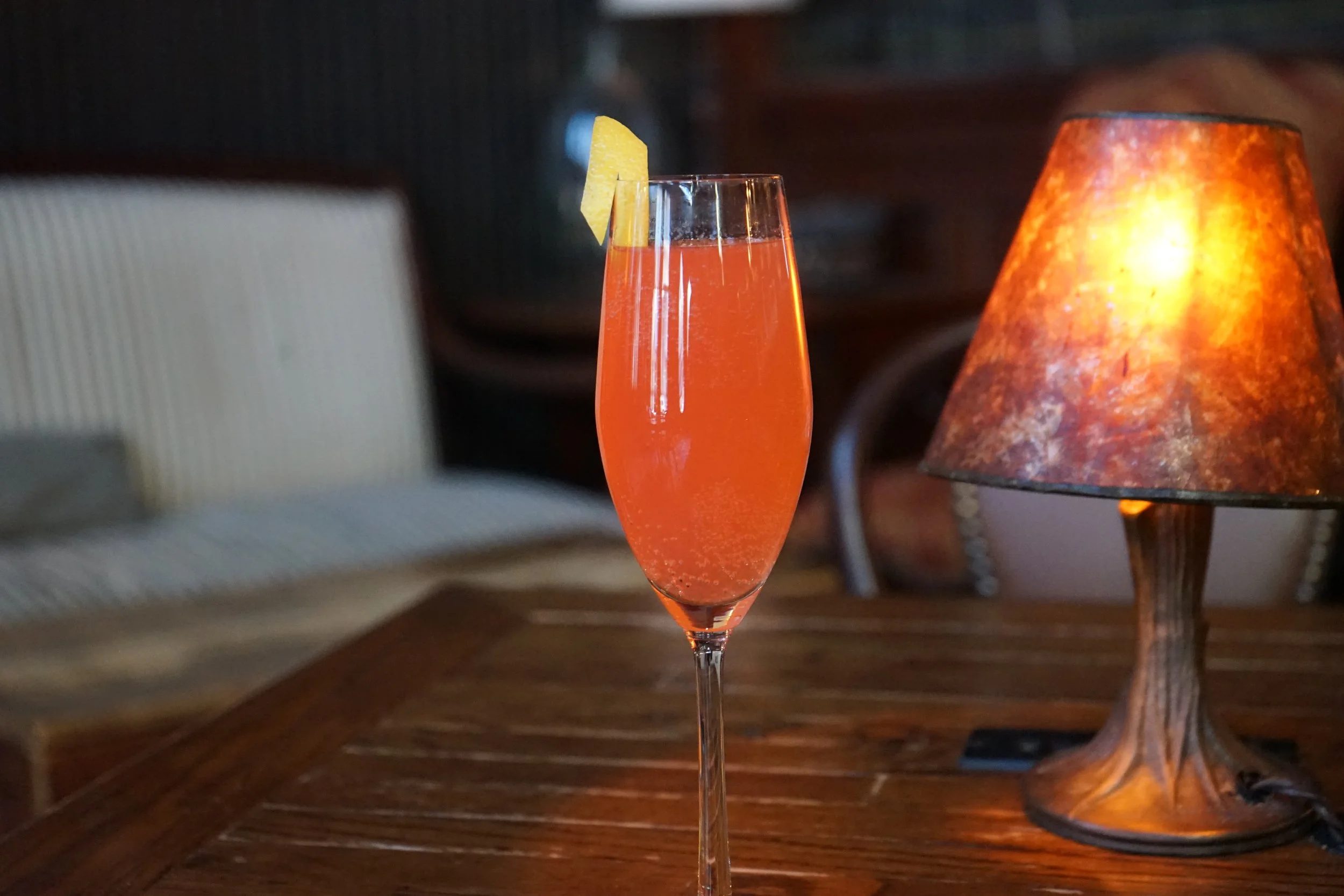
Top 5 Galentine’s Day Cocktails
By Andrew Tardif
As Valentine’s Day approaches we wanted to highlight a day that is important to the gals out there. If you’re looking to spend some time cherishing friendships over some cocktails, we at Chemist Spirits wanted to provide 5 Galentine’s Day cocktails that are easy to make but still have a Valentine’s Day flair.
What is Galentine’s Day?
Galentine’s Day was made famous by the fictional character Leslie Knope from Parks and Recreation. The day before Valentine’s Day (February 13th) the ladies celebrate their friendship with each other. It’s about, “Ladies celebrating ladies.”
Although Leslie Knope likes to celebrate her friendships at JJ’s Diner, alongside their famous waffles, we thought some Galentine’s Day cocktails would be a great way to celebrate.
“It’s like Lilith Fair minus the angst…plus frittatas”
- Leslie Knope
This day focuses on the ladies, but we believe it can also be a time where all folks celebrate their friendships. So get those cocktail shakers and Chemist spirits ready and enjoy these 5 Galentine’s Day cocktails the way they should be enjoyed – with friends.
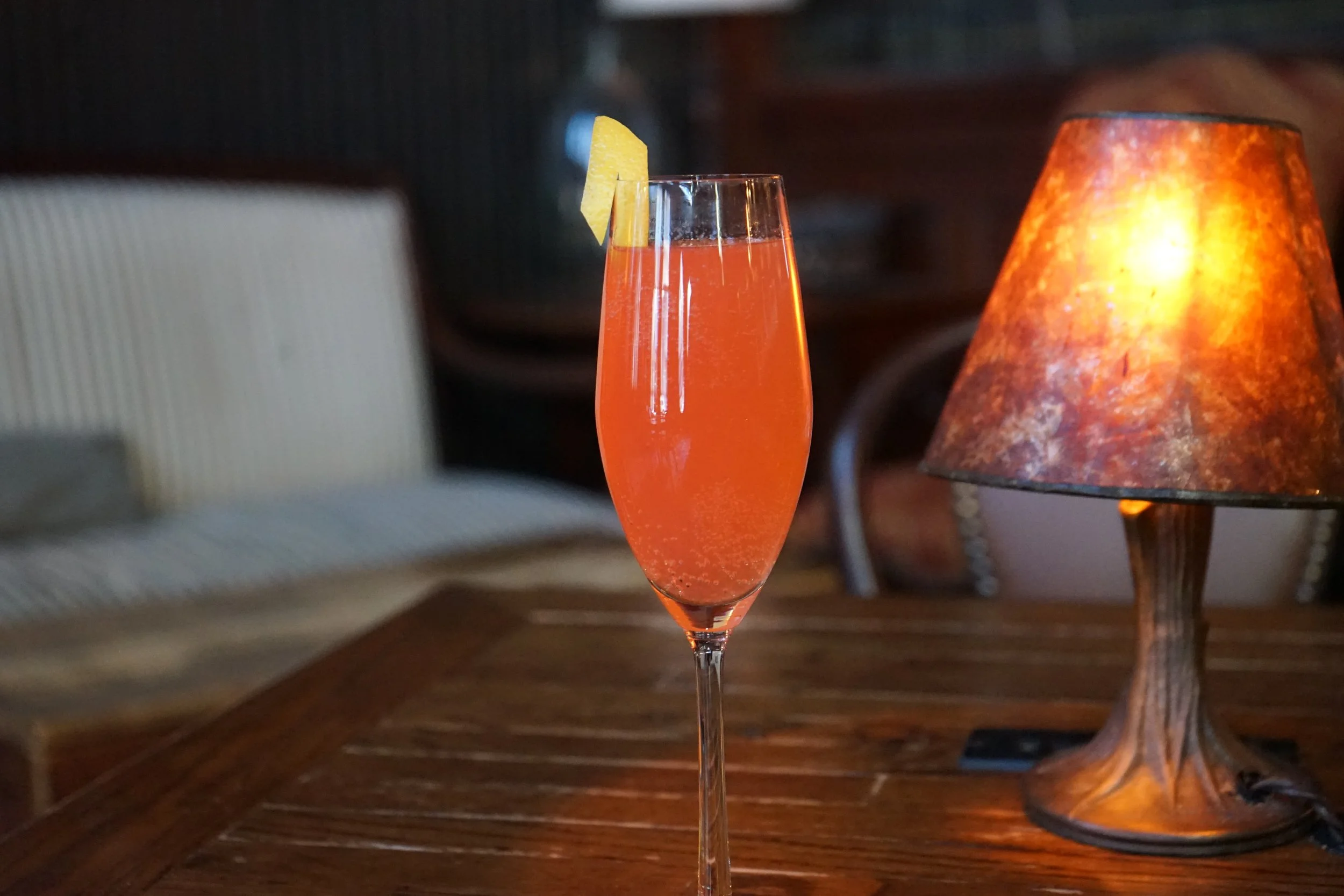
Strawberry French 75
The French 75 is a classic cocktail that includes gin, simple syrup, lemon juice, and champagne. Its origins are murky, but many sources claim the name is related to a piece of artillery used by the French during WWI. This 75mm weapon was encountered by American soldiers and was referred to as the “French 75.”
Many renditions of the cocktail can be found throughout the early 20th century, but the recipe that most bars follow is a take on the Tom Collins. The Tom Collins is gin, lemon juice, and simple syrup topped with soda water. The simple change from soda to champagne made the classic French 75.
Strawberry French 75 Recipe
A piece of French artillery is not very Galentine’s Day, if you ask us, but this is the perfect Galentine’s Day cocktail to enjoy with the ladies. Although the classic cocktail is perfect for any occasion, we think the addition of a strawberry syrup adds much desired color and fruitiness, especially paired with our Chemist American Gin.
Strawberry Syrup Recipe:
Take 180 grams of strawberries and gently mash them with a muddler, or with whatever you can mash them with. Add 180 grams of granulated sugar and stir to make sure all of the sugar makes contact with the strawberries. Let this mixture sit for up to 2 hours.
The sugars will draw out the natural juices and will result in a beautiful red syrup. You can then blend the mixture and strain. Now you have a lovely strawberry syrup for a nice strawberry lemonade, strawberry soda, or the fanciest of these Galentine’s Day cocktails.
Strawberry French 75 Ingredients:
1 ½ oz Chemist American Gin
¾ oz Strawberry Syrup
¾ oz Lemon Juice
Champagne to Top
Strawberry French 75 Instructions:
Pour gin, strawberry syrup, and lemon juice into a shaker tin with ice
Shake for 10-15 seconds, or until ingredients are thoroughly chilled.
Strain into a champagne flute
Top with champagne
Express lemon oil over top and garnish with the lemon peel.
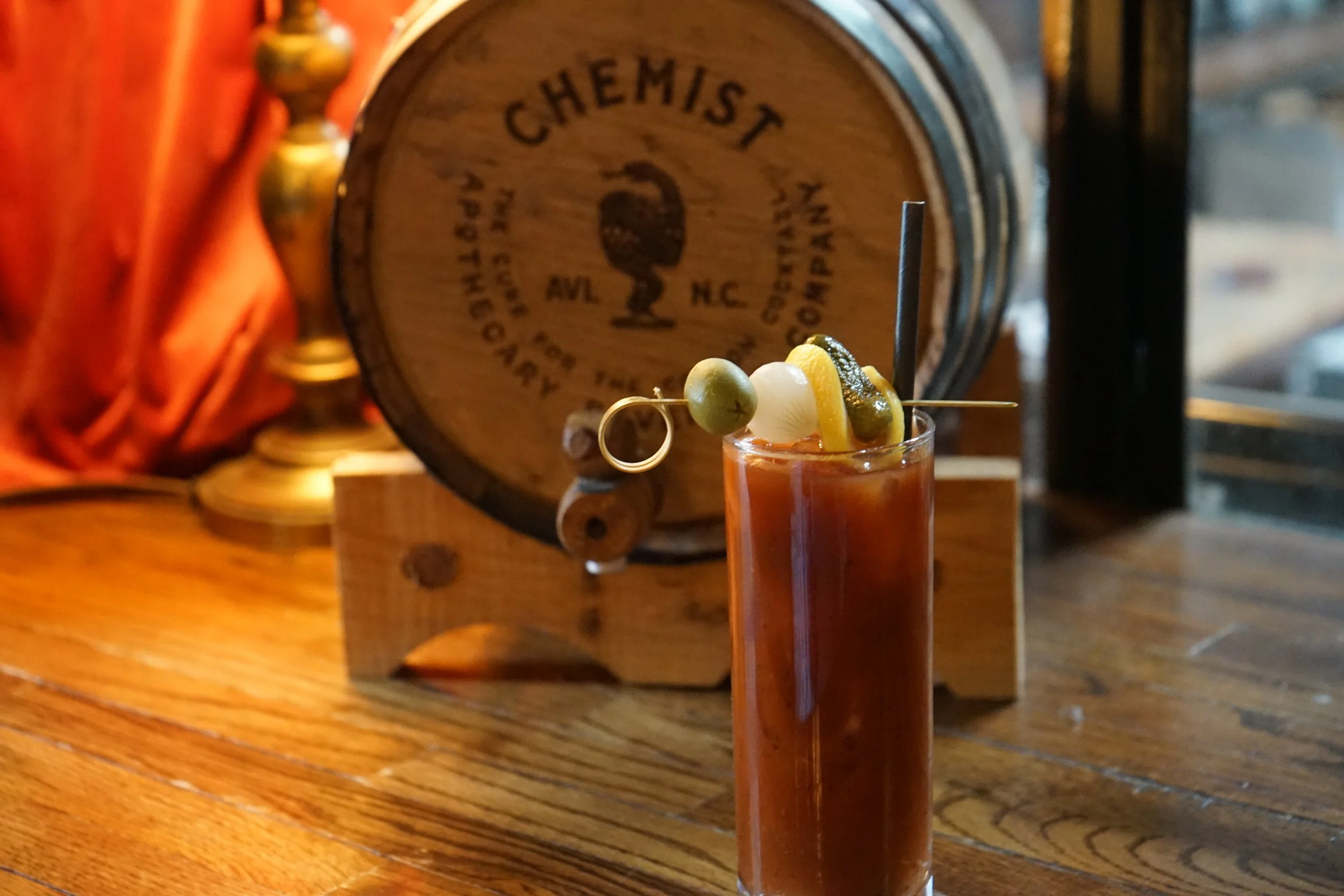
Red Snapper - A Perfect Galentine’s Day Brunch Cocktail
If you want to recreate the JJ’s Diner experience with some brunch Galentine’s Day cocktails, you may want to reach for a Mimosa or Bloody Mary. But how about a Red Snapper? This rendition of a Bloody Mary uses gin instead of Vodka to add some botanicals while maintaining the tomato-based mix that made it popular.
The name Red Snapper was originally intended to give the Bloody Mary cocktail a less vulgar title. Post prohibition, gin was more common than vodka and the name Red Snapper eventually became associated with the gin version.
Red Snapper Recipe:
Like a Bloody Mary, the Red Snapper recipe is made with a tomato juice base which can be played with in myriad ways. Feel free to adjust the recipe to your spice level and liking, but this recipe is a nice start. We also like to use our Barrel-Rested Gin since it smooths out any possible bite from the gin.
Red Snapper Ingredients:
2 oz Chemist Barrel Rested Gin
4 oz Tomato Juice
¾ oz Lemon Juice
4 Dashes Tabasco Sauce
3 Dashes Worcestershire Sauce
2 Pinches Celery Salt
2 Pinches Ground Black Pepper
Red Snapper Cocktail Instructions:
Rim a highball glass with celery salt and ground black pepper
Pour all ingredients into a shaker tin with ice
Roll the cocktail shaker to mix the ingredients
Fill highball glass with ice
Strain ingredients over ice
Garnish with a celery stalk, lime wedge, and whatever extra garnishes you typically enjoy with a Bloody Mary.
Galentine’s Day Punch
The punch is the first true cocktail and many of the cocktails we know today originated from this primordial recipe of spirit (aquae vitae), sugar, juice, spices and water.
The history of punch goes back centuries with one of the first mentions of it found in the 17th century in a letter from a fellow working for the British East India Company. Its origins can be traced back to India where the spirit arrack was mixed with sugar, citrus, and water, but it was the English that made the punch what it is today.
The origin of the name is debated, but it can come from the Hindi term for five, paanch, or, most likely, it comes from what the English term for the stout barrel it was served from, punch.
Punch is great for a Galentine’s Day gathering since it gives you an excuse to buy a beautiful punch bowl, and because it can be prepped ahead of time so you are ready for any gathering.
Galentine’s Day Punch Recipe:
Luckily, like cocktails, a punch is limitless in its possibilities. You can mix a wide array of citrus, fruit, spices, and spirits to make your punch. Don’t feel limited by this recipe and instead let it be a starting point for your own punch. First we start with an oleo saccharum, a sugar syrup made with citrus peels.
We suggest using a Navy Strength Gin for this recipe since over time the punch will dilute more from the ice block, and therefore will lose strength.
Oleo Saccharum Recipe:
Put 150 grams of lemon peels and 150 grams of sugar into a mason jar and let it sit for 24 hours stirring occasionally so that the sugar crystals can come into contact with the lemon oils. After 24 hours, add 150 grams of lemon juice and shake. Set aside.
Galentine’s Day Punch Ingredients:
Bottle of Chemist Navy Strength Gin (750 ml)
Oleo Saccharum Mixture
Slices of Lemon
Mint
Water (750 ml)
Block of ice (750 ml)
Galentines’ Day Punch Instructions:
Take a bread mold (or any mold that can fit inside your punch bowl) and fill it with water.
Freeze the mold.
When fully frozen, place the resulting giant ice block into your punch bowl.
Pour the gin, water, oleo saccharum mix, slices of lemon, and mint into your punch bowl.
Use a ladle to serve your punch into cups for your Galentines
For a more in-depth exploration of punches, we want to refer you to the Difford’s Guide for punch, which really breaks it down.
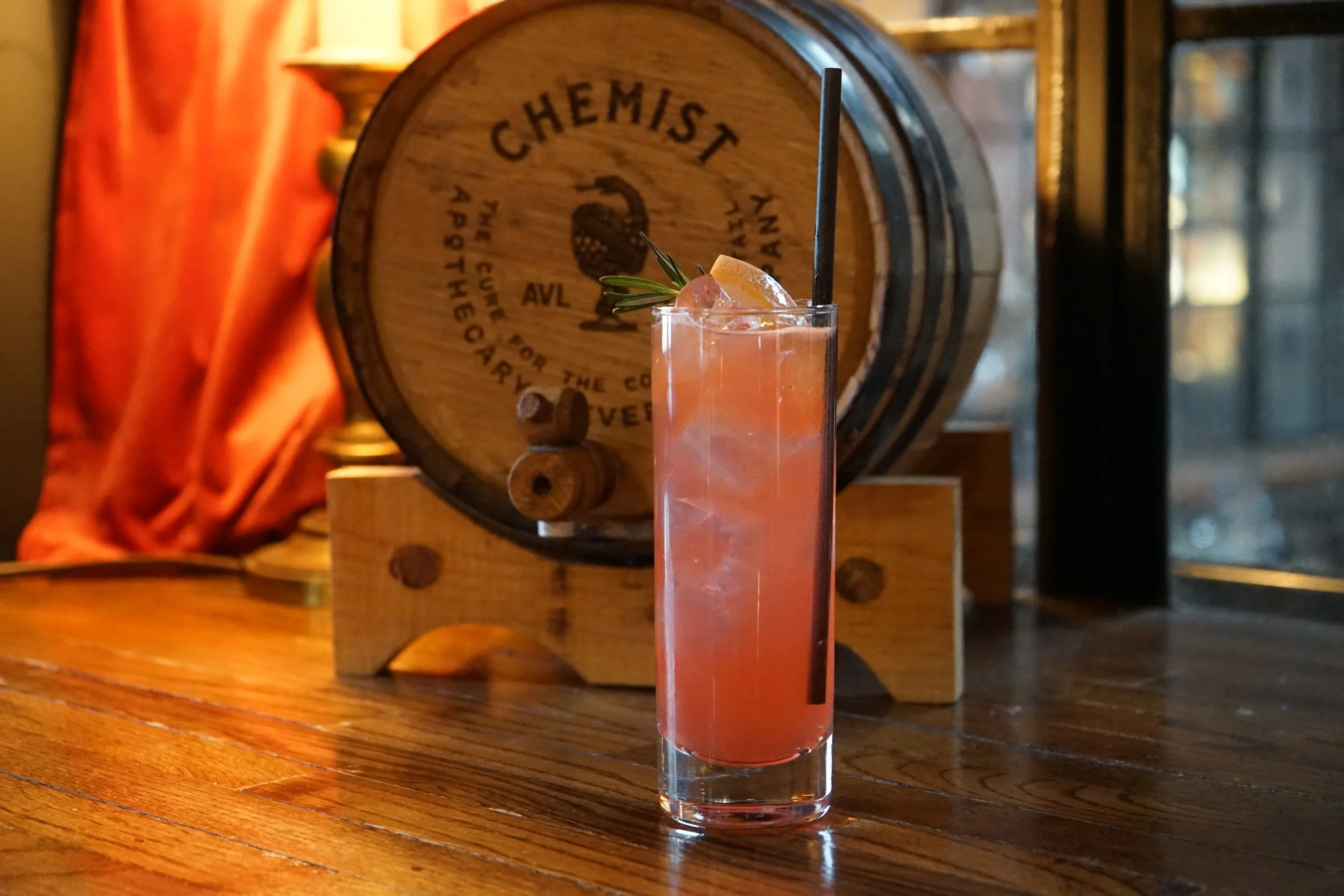
The Italian Greyhound
The Greyhound is a classic cocktail that can be found in Henry Craddock’s The Savoy Cocktail Book from the 1930s. Originally called the Grapefruit Cocktail, this originally called for grapefruit jelly and lemon juice. The alternative used grapefruit juice and simple syrup, the recipe common today.
As with the Red Snapper, gin was the common ingredient until vodka took over and became more accessible. The Italian Greyhound, however, embraces more grapefruit flavors with the addition of Campari or Aperol. And, I mean, look at that color.
Italian Greyhound Cocktail Recipe
This is the more bitter of the Galentine’s Day cocktails, but is still a refreshing option that embraces the bright citrus of our American Gin. You can use either Aperol or Campari, or you can mix them together. In our recipe, we like to stick with the Campari since the color is brighter and since it balances out the grapefruit juice.
This cocktail is also easy since all you need to do is build it in the glass.
Italian Greyhound Ingredients:
1 ½ oz Chemist American Gin
¾ oz Campari (or Aperol)
4 oz Grapefruit Juice
½ oz Simple Syrup
Soda Water to top
Italian Greyhound Cocktail Instructions:
Fill a highball glass with ice
Pour gin, campari, simple syrup, and grapefruit juice into glass
Top with soda water
Garnish with a rosemary sprig and grapefruit wedge.
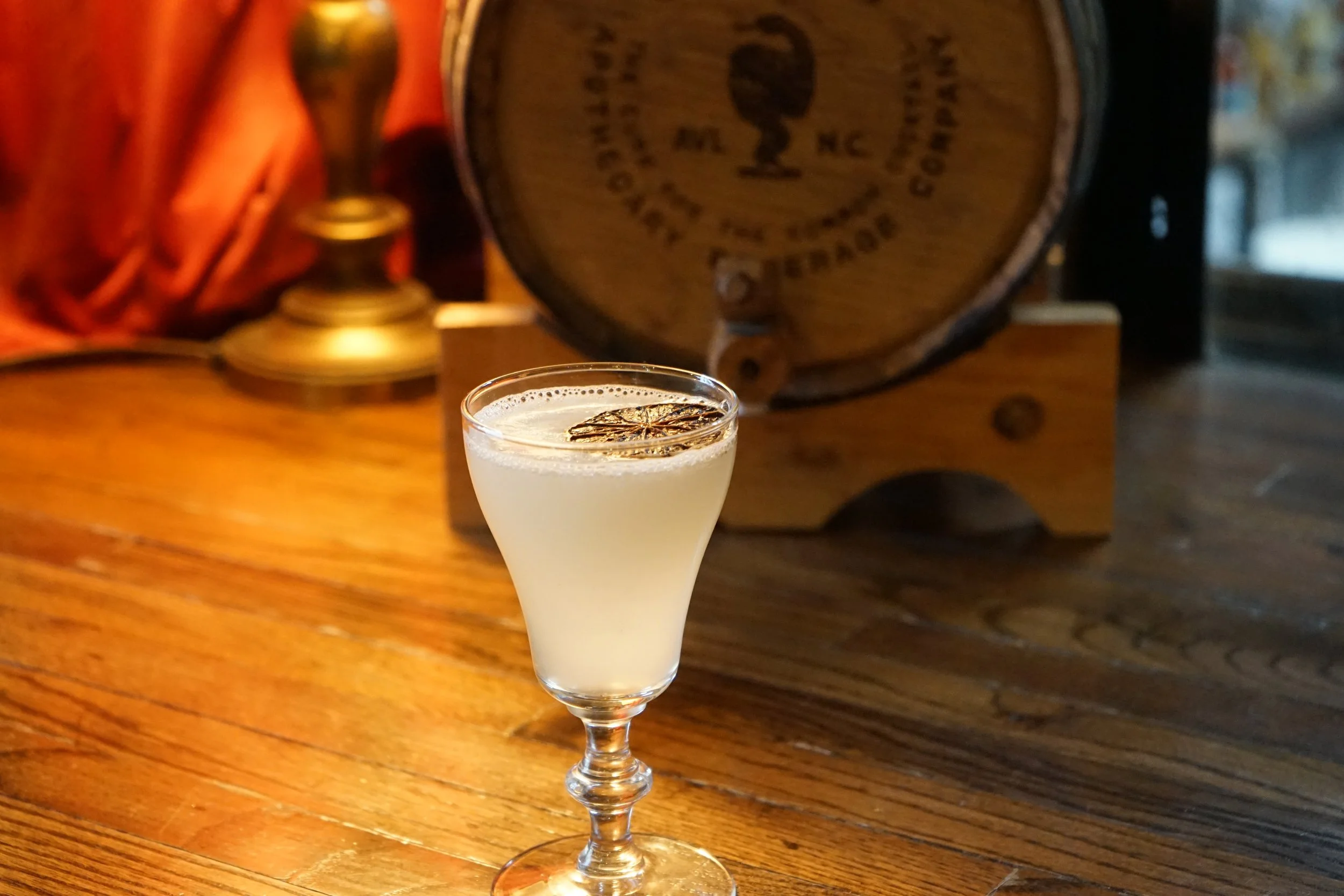
Gimlets With the Gals
The origin of this cocktail isn’t so Galentine’s Day, unless the Gals were gathering on a British Royal Navy ship. During the 19th century, rum became a common ration at sea for many sailors while gin became a common staple for naval officers.
In order to fight scurvy, officers were ordered to add lime juice to their gin and in many cases they would acquire rations of sugar to mix in in order to make the beverage more palatable. Regardless of its origins, the Gimlet is one of our top choices for Galentine’s Day cocktails, especially since it is light, refreshing, and simple.
Gin Gimlet Recipe:
The original Gimlet recipe was made with a lime cordial, which combined the lime juice and sugar. You can certainly make your own lime cordial, but really you can just use fresh lime juice and a simple syrup, which is less labor intensive.
At the Antidote Cocktail Lounge, we like to use our Chemist Barrel-Rested Gin to add extra depth. However, the Chemist American Gin makes for a light and refreshing Gimlet as well. Tired of gin? That’s okay, why not try it with our Chemist Vodka?
Gin Gimlet Ingredients:
2 oz Barrel-Rested Gin
¾ oz Lime Juice
¾ oz Simple Syrup
Gin Gimlet Instructions:
Place ingredients into a shaker tin with ice.
Shake ingredients until fully chilled
Strain into a chilled coupe or gimlet glass.
Garnish with a dehydrated lime wheel.
Here’s to Cocktails with Friends and Loved Ones
This Galentine’s Day, we at Chemist recommend getting the ladies together for a nice meal and indulging in one of these Galentine’s Day cocktails. The classics and twists on the classics are a great chance to have some laughs and conversations.
Don’t feel limited by these recipes, after all you are the chemist in your laboratory. One thing is for sure, if you use Chemist spirits, anything Galentine’s Day cocktail you make will be a cure for the common cocktail.
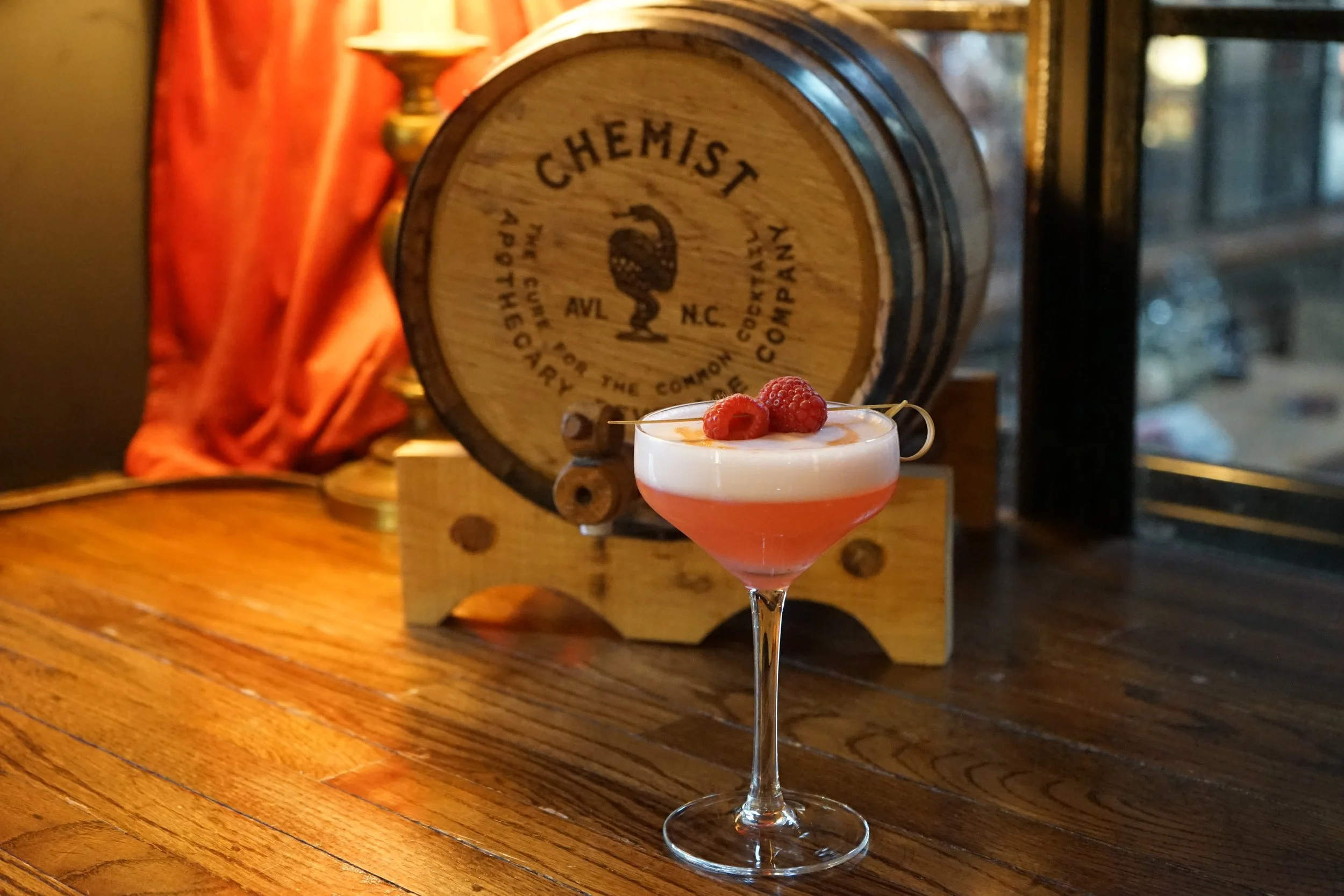
5 Easy Valentine’s Day Cocktails to Make For That Special Someone
By Andrew Tardif
Valentine’s day is here again, promising many subpar chocolates, hokey valentines’s day cards, and expensive dinners out. But what happened to a romantic Valentine’s Day at home with a nice meal and, of course, sexy valentine’s day cocktails?
Whether your heartthrob loves gin, whisky, or vodka, Chemist Spirits has the bottle for you and the cocktail. There’s no better way to impress your date than with these 5 easy Valentine’s Day cocktails, which emphasize our Chemist Spirits. After all, love is a sort of alchemy, isn’t it?
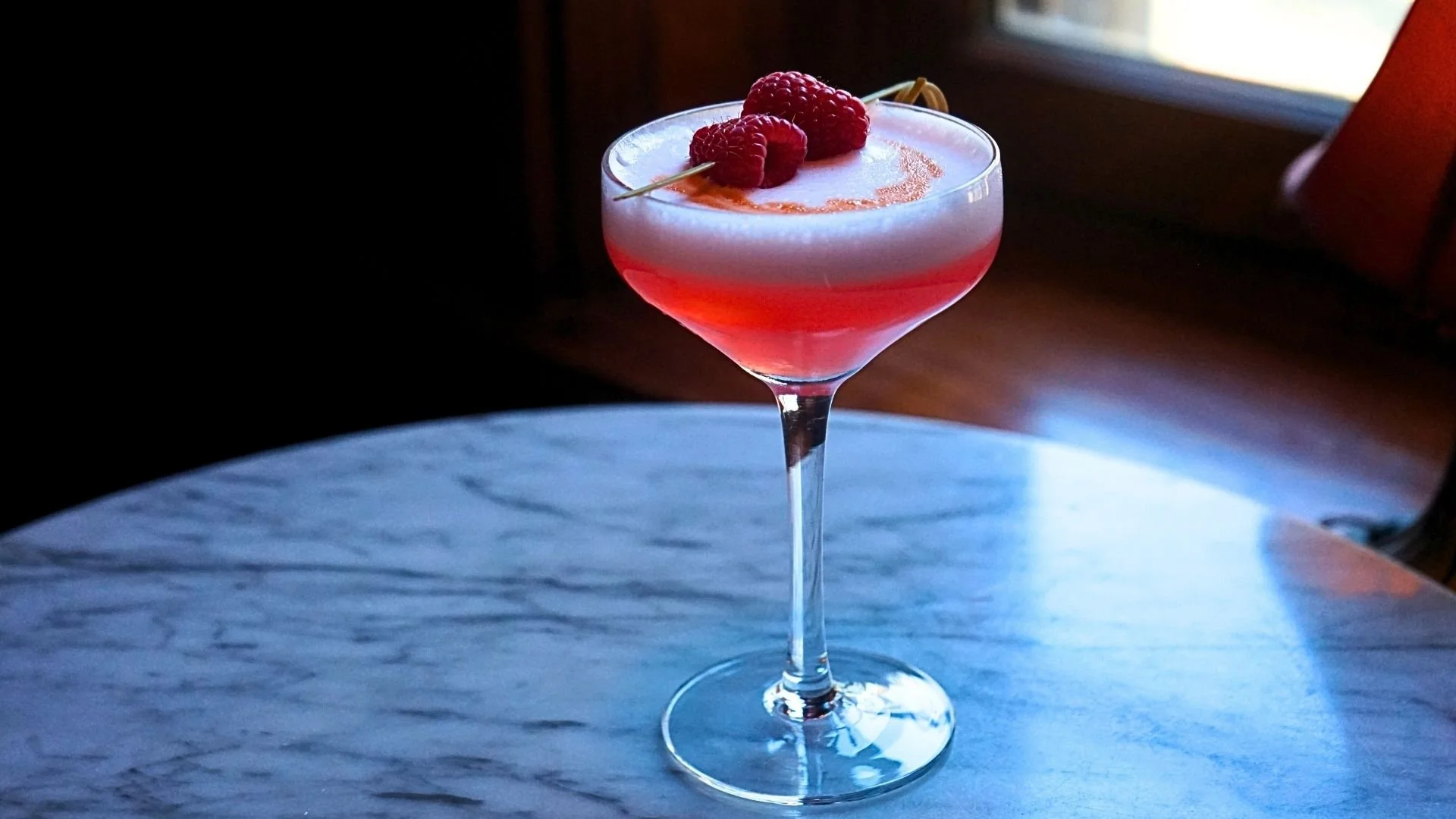
Clover Club
This pink-hued, foamy gin cocktail has its roots in the late 1800s at the Bellevue-Stratford Hotel in Philadelphia. The hotel was frequented by many intellectuals and well-to-do folks who would gather to discuss the hot topics of the day, including politics.
Prohibition spelled the death of the cocktail as it fell out of favor. This is possibly due to the fact that an egg-white cocktail with raspberry syrup was labor intensive and speakeasies were always at risk of getting raided. This meant the quicker the drink the better.
In 2008, Julie Reiner opened the Clover Club bar where she served this lovely cocktail. We have her to thank for the resurgence of this luscious and eye-catching valentine’s day cocktail.
Clover Club Cocktail Recipe
Although this Valentine’s Day drink recipe calls for raspberry syrup (which is very easy to make), you can replace that with Chambord, or you can simply muddle and shake fresh raspberries with ½ oz of simple syrup. The raspberries give it a better color, in our opinion.
We also like to use our Chemist American Gin to add a floral essence and emphasise the notes of citrus.
Ingredients:
1 ½ oz Chemist American Gin
¾ oz Raspberry Syrup (or Chambord)
¾ oz Lemon Juice
Egg White*
Instructions:
Place Chemist Navy Gin, lemon juice, raspberry syrup (or Chambord), and egg white into shaker tin.
Dry Shake ingredients for 10 seconds to foam the egg white.
Add ice to the shaker tin and shake ingredients again for 10-15 seconds to chill.
Strain into a chilled coupe.
Garnish with fresh raspberries.
*Technique Tip: Dry Shaking
Out of these Valentine’s Day cocktails, this one is the most labor intensive at home due to the Dry Shaking required.
There are some different modes of thought surrounding dry shaking. Some bartenders will shake the cocktail with egg white but without any ice first to create foam without diluting it.
After “dry shaking,” ice is added and you can shake it for another 10 seconds to chill. An alternative way that some bartenders may use, including some at Chemist’s Antidote Cocktail Lounge, is to shake with ice the first time and then strain it, discard the ice, and then dry shake it.
The cold egg white will be able to foam better, like chilling heavy cream, the bowl, and whisk before whipping it. The colder it is, the more structure you can form.
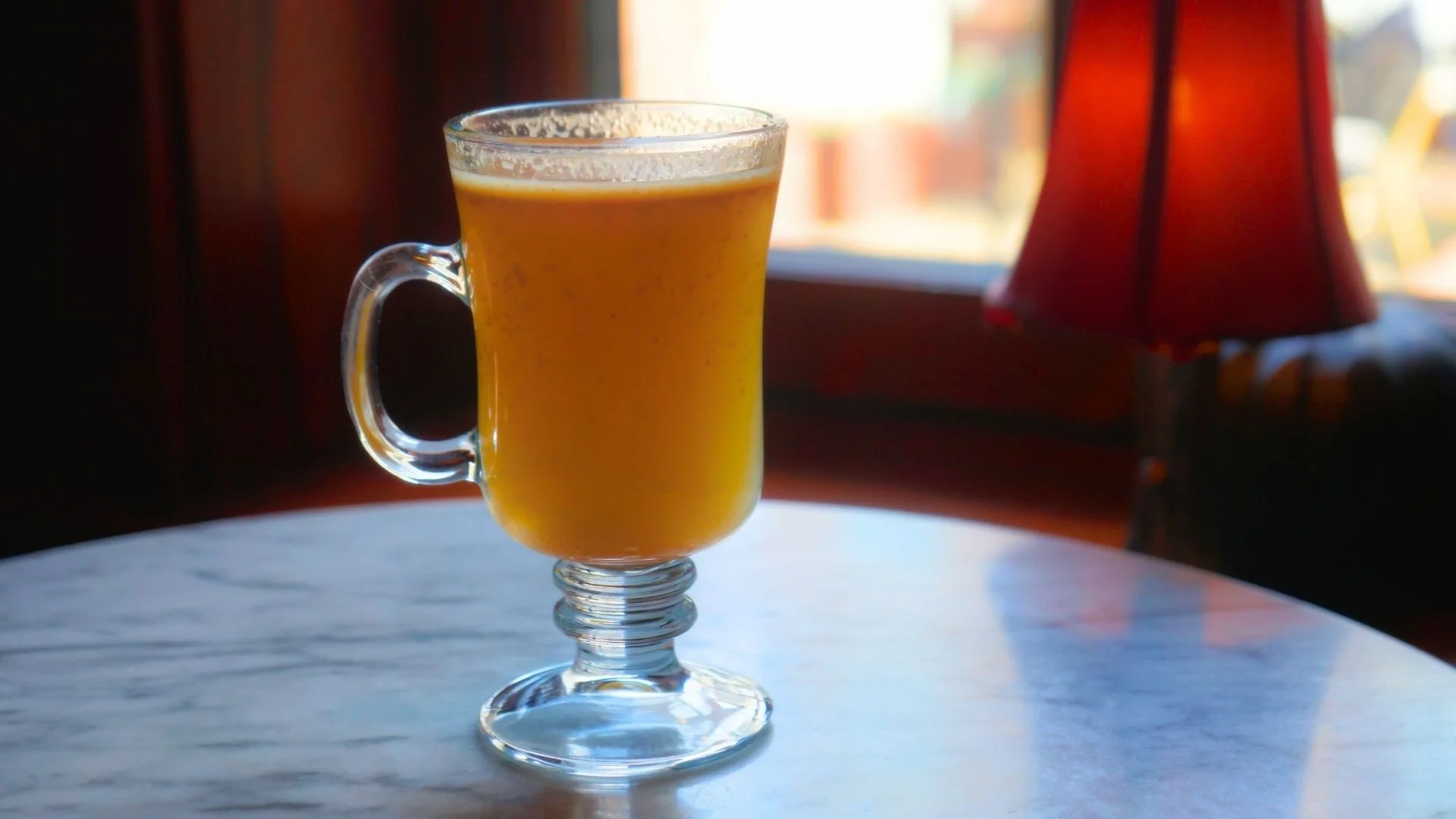
Hot Buttered Single Malt
For those who share a deep, warm, and cozy love, this riff on the Hot Buttered Rum is for you. The Hot Buttered Rum cocktail is a hot cocktail typically served with rum and a batter typically made of butter, brown sugar, cinnamon, and nutmeg.
This cocktail originated in the colonial era when rum had become popular, but a written recipe emerged as early as 1594 in Thomas Dawson’s The Good Huswifes Handmaid. This recipe used beer instead of rum, but otherwise looks similar.
This Valentine’s Day cocktail is perfect for the cold February weather, and we simply swap out the rum for our American Single Malt, which is well rounded with toasty notes of chocolate. Of the Valentine’s Day cocktails, this one is the best to prepare ahead of time.
Once dinner is finished, the dishes are cleaned, the candles are lit, and you’re ready to settle into each other’s arms, you can simply boil up some water, take out the premade batter and your Chemist American Single Malt Whiskey and get to Hot Buttering.
Hot Buttered Single Malt Recipe
Although we use our American Single Malt in this recipe, you can always swap that out for whatever spirit floats your boat. Rum is the typical spirit used, but this can range from a Jamaican Rum which has a grassier profile, to a Black Strap Rum, which is darker more molasses profile.
Ingredients for Batter:
1 cup of unsalted butter
2 cups of brown sugar
1 teaspoon of grated cinnamon
1 teaspoon of grated nutmeg.
Allow the butter to soften in a large bowl. Add brown sugar, cinnamon, and nutmeg to the butter and stir until completely combined. Put in the refrigerator until ready to serve.
Ingredients for Cocktail:
1 teaspoon of batter (Or tablespoon, you’re the chemist, after all)
1 ½ oz of Chemist American Single Malt Whiskey
Hot Water
Instructions:
Place teaspoon of batter into a 8oz heat-safe glass or coffee mug
Add Whiskey
Fill the glass with hot water and mix to combine
Garnish with grated nutmeg and serve.
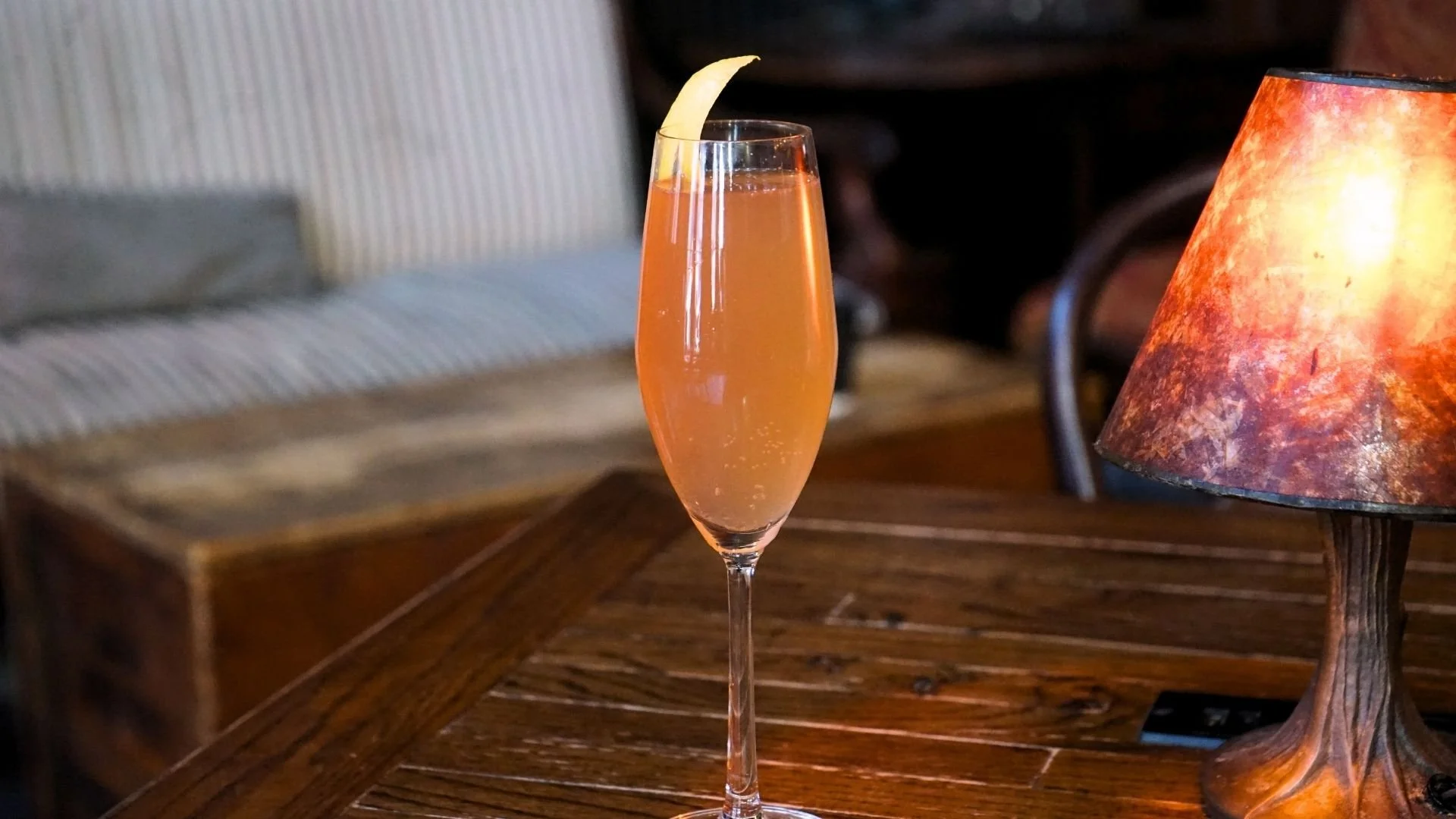
Chambord 75
This take on the French 75 gets its color from Chambord, a black raspberry liqueur. A small addition turns this French 75 from a simple champagne cocktail into something with more class and color.
The French 75 itself doesn’t have romantic origins and is possibly named from a French artillery piece the Americans encountered during WWI. It has also gone through a variety of adaptations.
The one that is most popular today is, as Jeffey Morgenthaler states, an evolution of the Tom Collins and uses gin, simple syrup, and lemon juice which is shaken, strained into a champagne flute, and topped with champagne.
The Chambord 75 Recipe
This cocktail can be altered in many ways. You can substitute the Chambord for a completely other liquor, say a passionfruit liquor, creme de cassis, or creme de mure, if you have some of that lying around.
You can also just switch it out for a fruit puree, but then you’re certainly entering Bellini territory. Then you’re talking brunch, but that’s a different conversation altogether. If you want a weightier gin, we also recommend a Navy Strength Gin, like our own that uses Thai ginger for a little more heat and spice.
Ingredients:
1 oz Chemist Navy Strength Gin
½ oz Chambord
½ oz Lemon Juice
Top with Champagne or Sparkling Wine
Instructions:
Pour gin, lemon juice, and Chambord into a shaker tin.
Shake with ice for 10-15 seconds or until thoroughly chilled.*
Strain into a flute and top with champagne.
Express lemon oil over the top and garnish with lemon peel.
*If you don’t want to shake all of the ingredients, this cocktail can also be built in the glass.
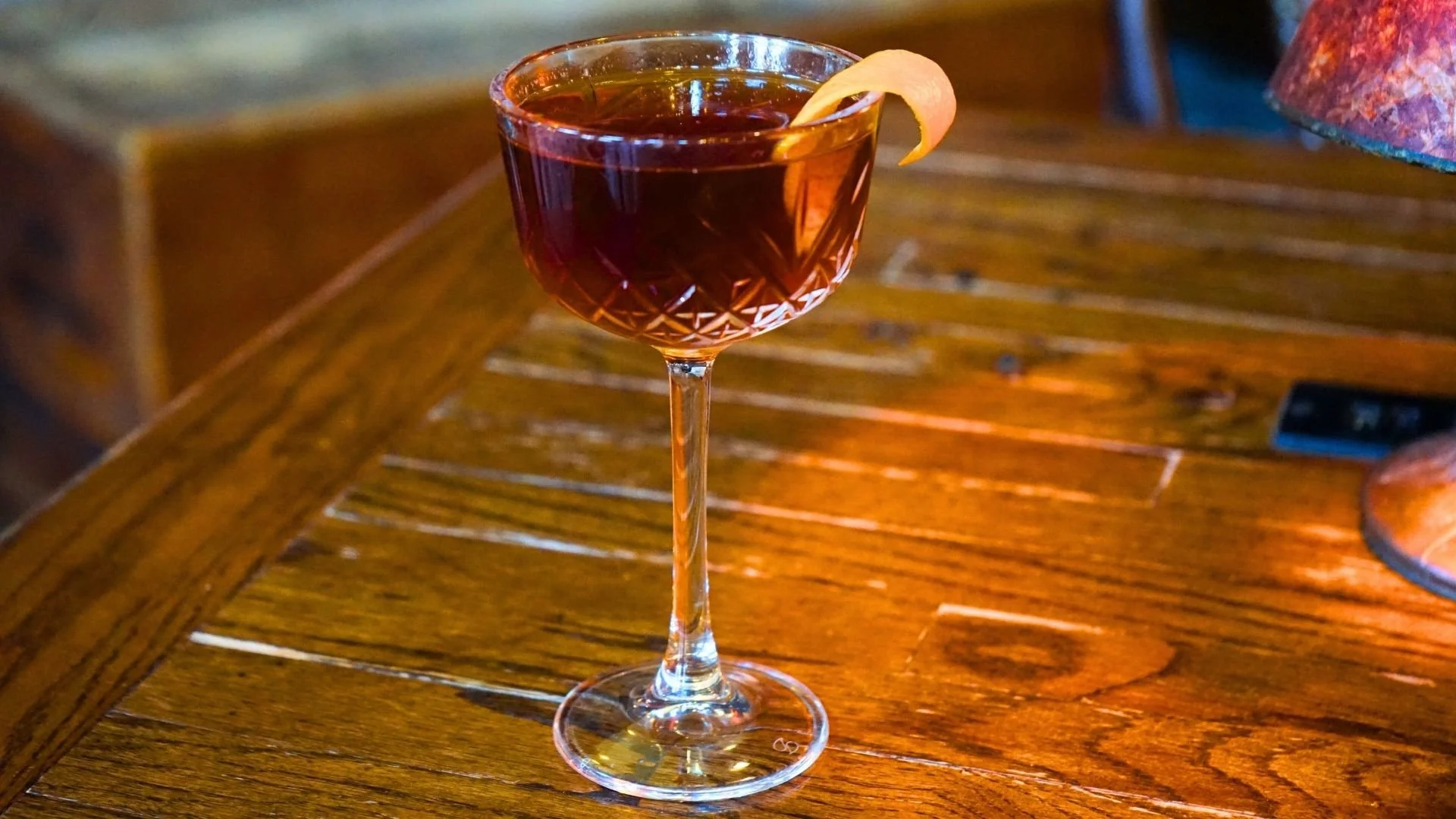
The Hanky Panky
No, not that kind of hanky panky, but hopefully that is in your future as well. This cocktail’s name is more likely associated with magic and trickery as it’s believed to be related to the term, “hocus pocus.” I mean, isn’t love a kind of magic?
It is said that in the 1920s Ada Coleman, the head bartender at London’s Savoy Hotel, made this cocktail for Sir Charles Hawtrey, an actor who was looking for a sort of pick-me-up. Some tales say that Hawtrey himself referred to it as “the real hanky panky” after downing it, and others state that Coleman named it.
Regardless, this cocktail is perfect for those who enjoy a Martini or Manhattan.
Hanky Panky Cocktail Recipe
This cocktail can be delicate or difficult depending on the type of spirits you use. We like to go with a floral and citrusy gin, like our Chemist America Gin, and a rich sweet vermouth, like Carpano Antica.
As for the Fernet, the recipe typically calls for Fernet Branca, but we like local, so we always reach for Eda Rhyne’s Appalachian Fernet. We find that the rich and complex botanicals match well with the florality of our gins, both sharing the botanicals of the region. It also can be nice to add a couple of dashes of orange bitters, although, then you’re entering Martinez territory.
But, we all do hanky panky in our own way, so, you know…you do you.
Ingredients:
1 ½ oz Chemist American Gin
1 ½ oz Sweet Vermouth
2 Dashes of Eda Rhyne Appalachian Fernet
Orange peel
Instructions:
Put the American Gin. Sweet Vermouth, and Fernet into a mixing glass with ice*
Stir for 30 seconds or until thoroughly chilled.
Strain into a chilled coupe.
Express orange oil over top and throw the garnish away.
*Technique Tip: Ice
If you want to properly chill a stirred drink, you want to make sure you have plenty of ice in the glass. Stirring the cocktail won’t dilute it as much since there is far less agitation than shaking, but that also means you need plenty of ice. If liquid comes above the ice in a mixing glass, you need more ice.
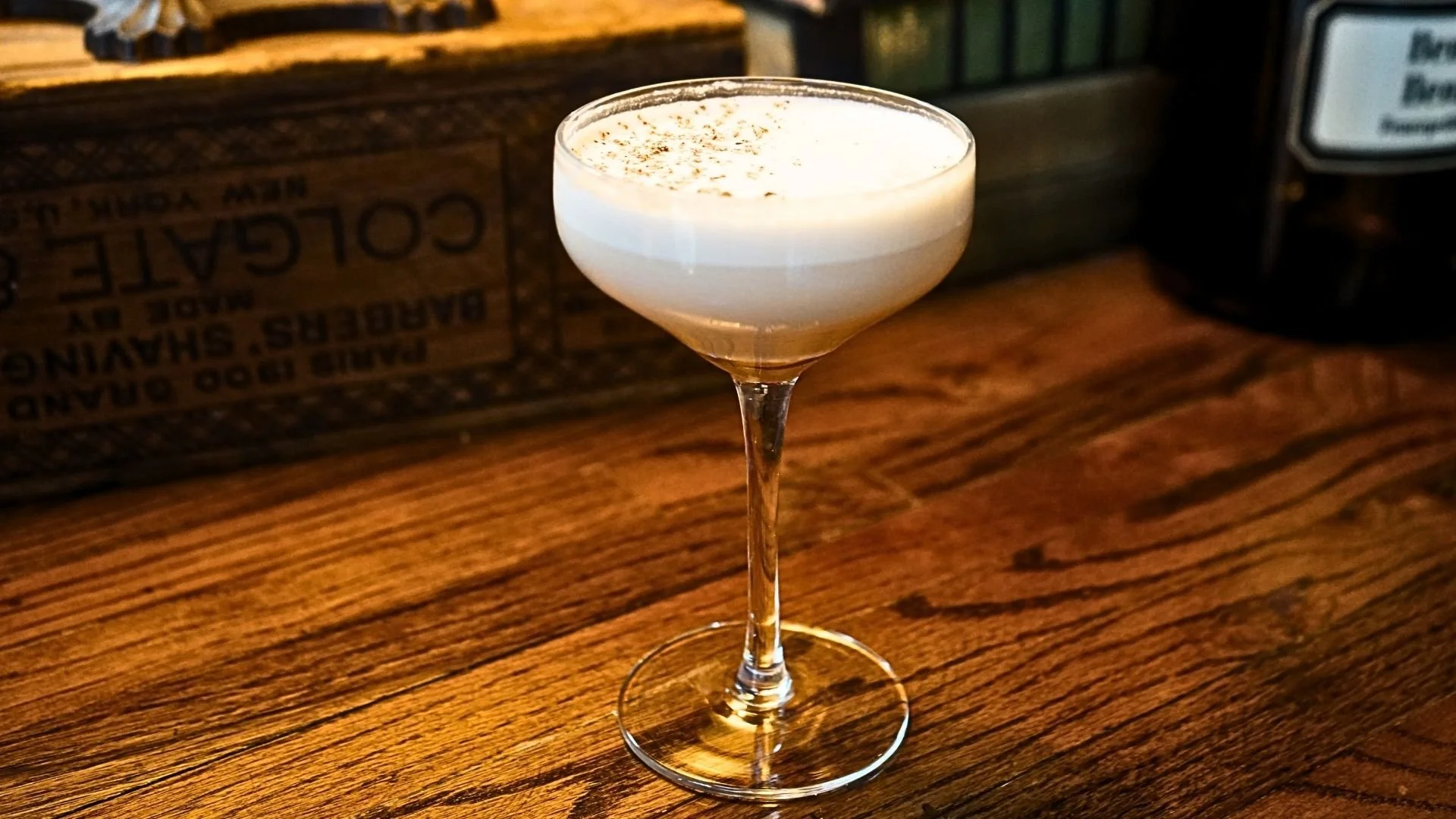
Chemist Alexander- A Before-Bed Libation
The Chemist Alexander is a riff on the Alexander cocktail which uses equal parts gin, creme de cacao, and heavy cream for a decadent drink. It originated in the early 20th century, although the origins are contested.
The story that seems to be the most likely is that Troy Alexander, the bar manager of New York City’s Rector, made the cocktail for officials of the Lackawanna Railroad. The result was a white cocktail as a nod to the new smokeless coal used in train travel.
The most popular rendition of this cocktail, and what people typically think of, is the Brandy Alexander, which traded out the Gin for Brandy.
Chemist Alexander Recipe:
Since the Alexander’s inception it has branched off into several renditions other than the Brandy Alexander, Vodka, Sherry, and Triple Sec have all hopped in to add variety to the name. For this, we use our Chocolate Orange Liqueur for a more luscious mouth feel and our American Single Malt to add a level of depth and heat.
The other change you can make is to use egg white instead of cream. Many find that egg white is the real way to make an Alexander, although the first printed recipe for the cocktail (appearing in Hugo Enslin’s Recipe’s for Mixed Drinks used cream.
That being said, allow this cocktail to be a starter template for your own ideas and creations.
Ingredients:
½ oz Chemist Chocolate Orange Gin Liqueur
½ oz American Single Malt
1 oz Heavy Cream
1 oz Creme de Cacao
Nutmeg for garnish.
Instructions:
Pour ingredients, except nutmeg, into a shaker tin with ice.
Shake for 10-15 seconds or until chilled thoroughly.
Strain into a chilled coupe.
Garnish with fresh nutmeg.
Give the Gift of Gin this Valentine’s Day
Hopefully these easy Valentine’s Day cocktails make it to your special dinner or date night this Valentine’s Day. And if you’re still looking for a gift to get that special someone, take a look at our lineup of Chemist Spirits. With gins, whiskeys, and liqueur, we have something for everyone.
Thanks for reading, and if you have any questions, don’t be afraid to reach out to us. Or visit our cocktail bar and try our spirits in some seasonal concoctions, curated by our own creative chemists.
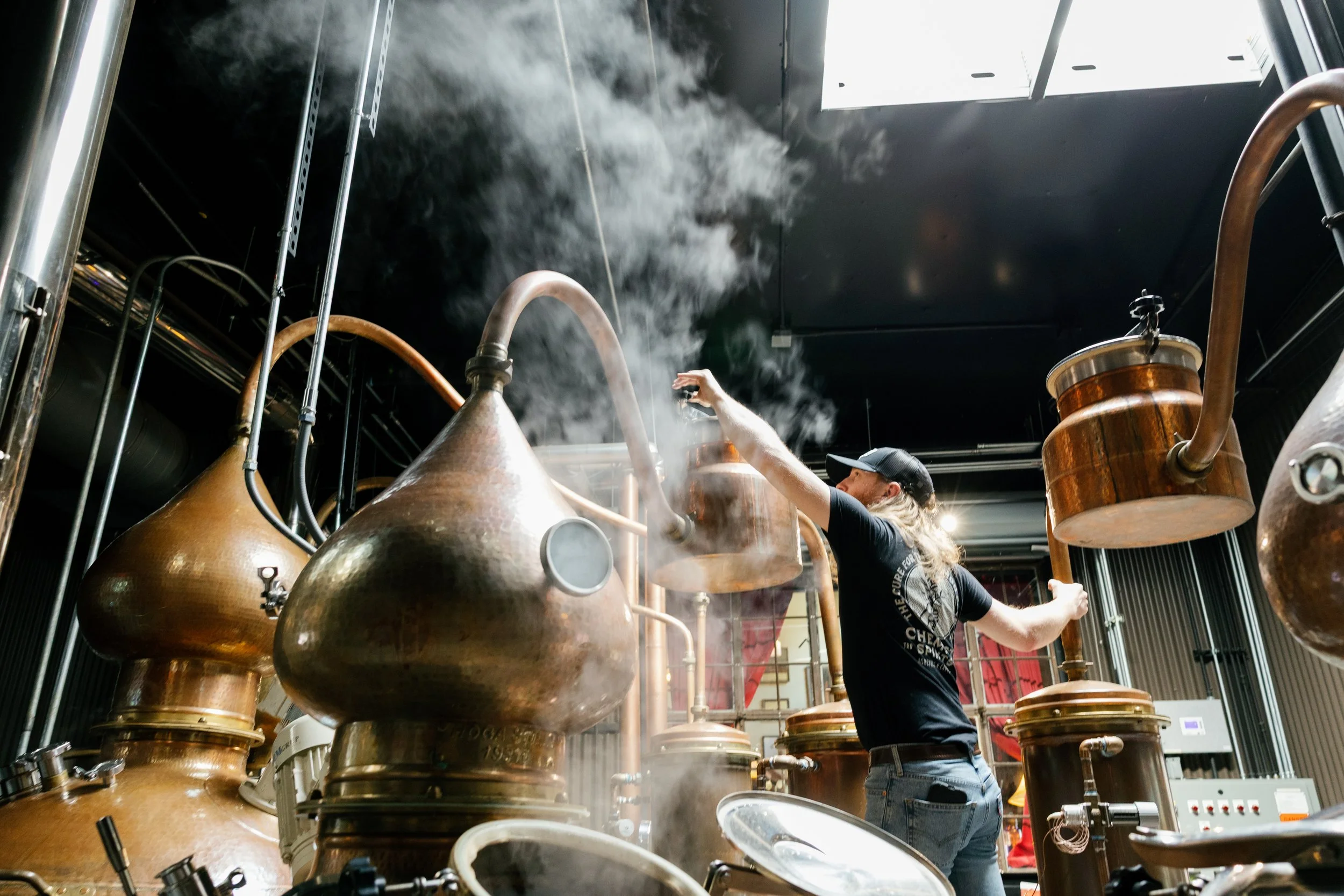
How is Gin Made? A Brief Guide of How to Make Gin
By Andrew Tardif

There’s something mysterious about a clear liquor with luscious and pronounced flavors. How can something so serene and simple taste so profound? At Chemist we are drawn into the mystery since we confront it everyday.
Tinkering in our lab with gin has taught us a lot, from the inception of the Chemist American Gin made by Debbie and Danielle Donaldson and James Donaldson, to the creation of spirits like our Chocolate Orange Gin Liqueur and Herbal Revenge, the gin making process has remained the foundation of our work.
So, how is gin made to be that juniper based spirit the world loves? A lot of it comes down to great ingredients and a perfected process, not to mention the passion that those of us at Chemist Spirits share for our gins and other spirits.
So what is gin made from and how is gin made? Let’s take a look.
What is Gin Made From?
Gin is made from three main ingredients, the neutral spirit; the botanicals, most notably juniper berries; and water. Since the ingredients are minimal, their quality and the balance between them is crucial in creating gin. The intricacies of how gin is made depend on the varying ingredients used and the distillation process.
The Neutral Spirit
First, in order to make gin you need a neutral spirit to serve as your base. For gin, this spirit is typically grain based, but technically it can be made with any neutral spirit. Genever, gin’s predecessor, was made with malted grain before it was then flavored with juniper berries.
The base will provide for the base flavor and mouthfeel. There is a reason something like a Vodka made from potatoes has a different mouthfeel than a Vodka made from grain. And then there are variations between the grains themselves.
At Chemist, we begin our gin-making process with smooth and creamy distilled wheat, which we also produce as our Chemist Vodka. It makes for a smoother finish and works well with our method of vapor infusion (more on that later).
These neutral spirits are of an extremely high ABV to start (higher than 90%), while the ABV of the final spirit will be between 40%-60%.
The Botanicals
Gin has typically been made with the same type of botanicals for centuries, but with the advent of American/Contemporary Gins, the range of botanicals, spices, herbs, etc. has expanded.
The main botanical that is necessary for a gin to be labeled as such is juniper berries. This lends to gin’s dry, pine flavor, but is also a necessary ingredient and flavor for it to legally be called gin. Gin is made from not only juniper berries, but also commonly includes orris root, angelica root, coriander, cardamom, and citrus peels.
The balance of these botanicals is what sets apart the different types of gins. A London Dry Gin is typically going to use a higher ratio of juniper berries to achieve the dryness it’s known for. Plymouth Gin will increase the amount of citrus and roots to achieve the earthy quality.
Old Tom Gin will have the addition of sugar to sweeten the final product. Meanwhile our American Gin balances the flavor of juniper with that of rose, citrus, and the introduction of our own local botanicals from the Western North Carolina mountains.
Water
An overlooked ingredient in the making of gin, and all other spirits, water can serve as nearly half the volume of the gin since the end of the distillation process results in a liquor that has a high proof and must be diluted. This means the quality of the water matters.
How Is Gin Made? - The Distillation Process
The distillation process is where the fermented substance (neutral spirit) is heated and cooled in stills to extract the ethanol. For gin, this is generally when the botanicals are introduced either via direct contact with the spirit or infusion. Before distillation, water is added to dilute the spirit.
Steeping
The botanicals can be steeped in two ways. One is to simply let it macerate or steep in the neutral spirit for a period of time and then to distill it (commonly referred to as “Steep and Boil”). The other option is to just heat the liquid immediately after the botanicals have been added.
Vapor Infusion
During vapor infusion the botanicals never make contact with the neutral spirit and are instead held in a basket in the Lyne Arm. When the spirit is heated and the alcohol turns to vapor, it is then sent into the Lyne Arm and through the basket of botanicals.
This vapor then extracts the oils and aromas in the botanicals. At Chemist, we use vapor infusion for our gins, using our Portuguese Copper Pot Stills. This method of extracting flavor is what gives gins like our Navy-Strength Gin its bright yet smooth flavors.
Compounding
As opposed to the first two forms of flavor extractions, compounding is typically done after the distillation process. This is either by adding ingredients to the distilled spirit to allow it to steep and extract the flavors or through the addition of essences. This method was typical in the “bathtub gin” of the prohibition era.
The Types of Stills
The vessel in which the neutral spirit is heated for the distillation process is the still. The two main types of stills that you will find in gin making are copper pot stills and column stills, although these can also be combined to make a hybrid still.
Pot Stills
Pot stills have been in use for centuries and were adopted by monks who had a knack for distilling. This still is simple: The spirit or mash is placed in a still the shape of a pot where it is heated. The alcohol turns to vapor and travels up to the Still Head where an exit pipe is located.
This exit pipe is called the Lyne Arm, and it travels to the Condenser, a cylindrical copper structure that is pumped with cold water. This causes the vapor to condense back to liquid which then drips down and out a pipe in the form of the finished spirit and nonpotable spirit, which are kept separate.
We use these types of stills for our distilling process with the addition of a botanical basket in the Lyne Arm.
Column Stills
A slightly more complicated still, the column still typically includes two tall copper columns that allow for continuous distillation.This means the mash or the neutral spirit can continually be pumped in resulting in a constant flow of spirit whereas a pot still requires cleaning and a new neutral spirit after each distillation.
The column still is heated at the bottom and is divided into different sections by trays that make sure there is consistent condensation as the vapor rises up the column.
Hybrid Stills
A hybrid still combines both of these ideas but allows the distiller some versatility, opening the door for distillers to produce a wide array of spirits including whiskey, gin, rum and vodka. While the flexibility is tempting, nothing beats the flavor of a classic pot still for a single malt whiskey.
Other Stills
Those are the typical stills used in gin making but there are some other stills that are rare and intriguing. The Bennett Still is common with Hendrick’s Gin which uses the still for a “steep and boil” method.
The Carterhead Still is a rare still that uses vapor infusion. Instead of having the botanical basket located in the Lyne Arm, the Carterhead Still has a basket for botanicals placed at the top of the column still.
Why Copper?
Copper is the common choice for still material because of how it conducts heat and purifies the spirit. Its antimicrobial qualities as well as its ability to strip the liquid of sulphuric compounds make it a prime choice for making gin.
Taking the Heads and Tails
In the beginning of the distillation process, the run off will include some dangerous compounds like methanol called the “heads” or “foreshots”, which are not safe to drink but can be reused in future batches for redistillation. Keeping this in the finished product is not only dangerous but also unpleasant.
The ‘heart’ of the gin comes after the heads and is what ends up being used in the final product. This is where the cleanest and highest quality contents are. At the end of the distillation are the “tails" which have less alcohol - since by now what is vaporizing is the water that is still left in the still. Although not as dangerous as the heads, the tails have unpleasant compounds that make it unpalatable, so they are typically tossed or redistilled.
Diluting and Bottling the Gin
After the gin has been distilled, the resulting product is going to have a high ABV and therefore must be diluted. This is where at Chemist we use clean and crisp filtered Appalachian Mountain water to proof our spirits down. We find that this adds to the crisp and clean flavor of our Chemist American Gin and our other gins.
Dilution also helps the distiller bring it to a desired proof. For instance, we bring our Navy-Strength Gin down to a high proof of 114, or 57% ABV, maintaining a strong gin profile while being drinkable.
Once diluted, the gin is ready to be bottled. But the process doesn’t end with bottling, since while in the bottle the gin has the opportunity to mellow and blend over time.
Barrel Resting Gin - An Optional Step
How is gin made to be a smoother and richer liquor? This is where the optional step of barrel resting comes in. After dilution, a gin can be put in a barrel to rest or finish. This imparts deeper flavors while mellowing out the intensity of the botanicals.
We make our Chemist Barrel-Rested Gin by aging our American Gin in oak barrels for 6 to 8 months. It creates a notable difference, adding hints of vanilla and caramel, and making it smooth for a Gimlet cocktail that is complex yet refreshing.
Conclusion
The gin making process can be boiled down to a few steps, but these steps have their own intricacies and variables that alter the flavor, texture, and finish of the gin. This leads to a wide array of flavors that we at Chemist love to play with.
If you want to see how we make gin at Chemist Spirits, come down to Asheville, North Carolina and take a tour of our distillery. Stop by our cocktail lounge next door, Antidote, to sample our spirits in classic elixirs and modern remedies. Or taste the results of our process from the comfort of your own home with a bottle of one of our gins.
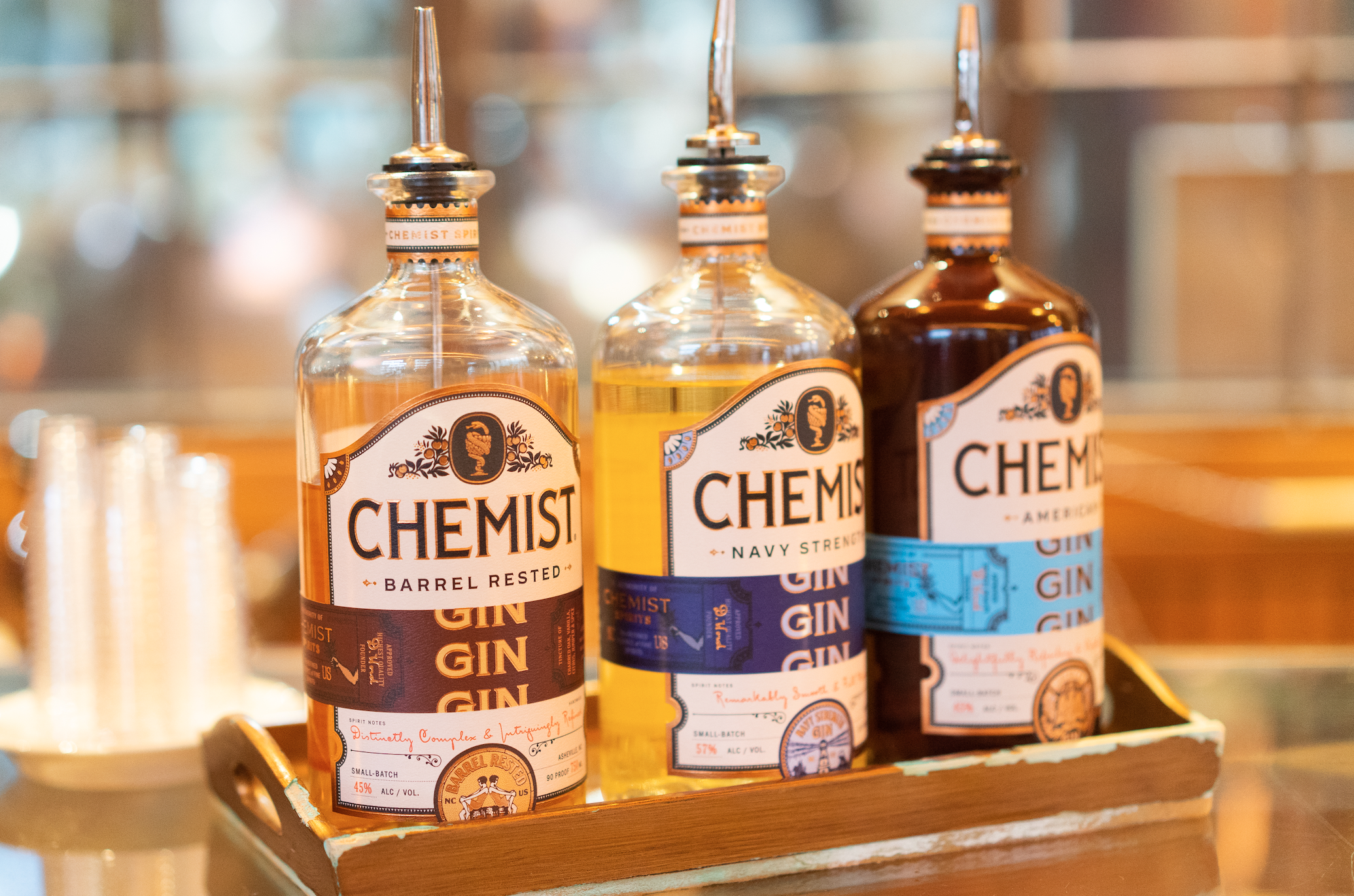
The Different Types of Gin and How To Use Them
By Andrew Tardif
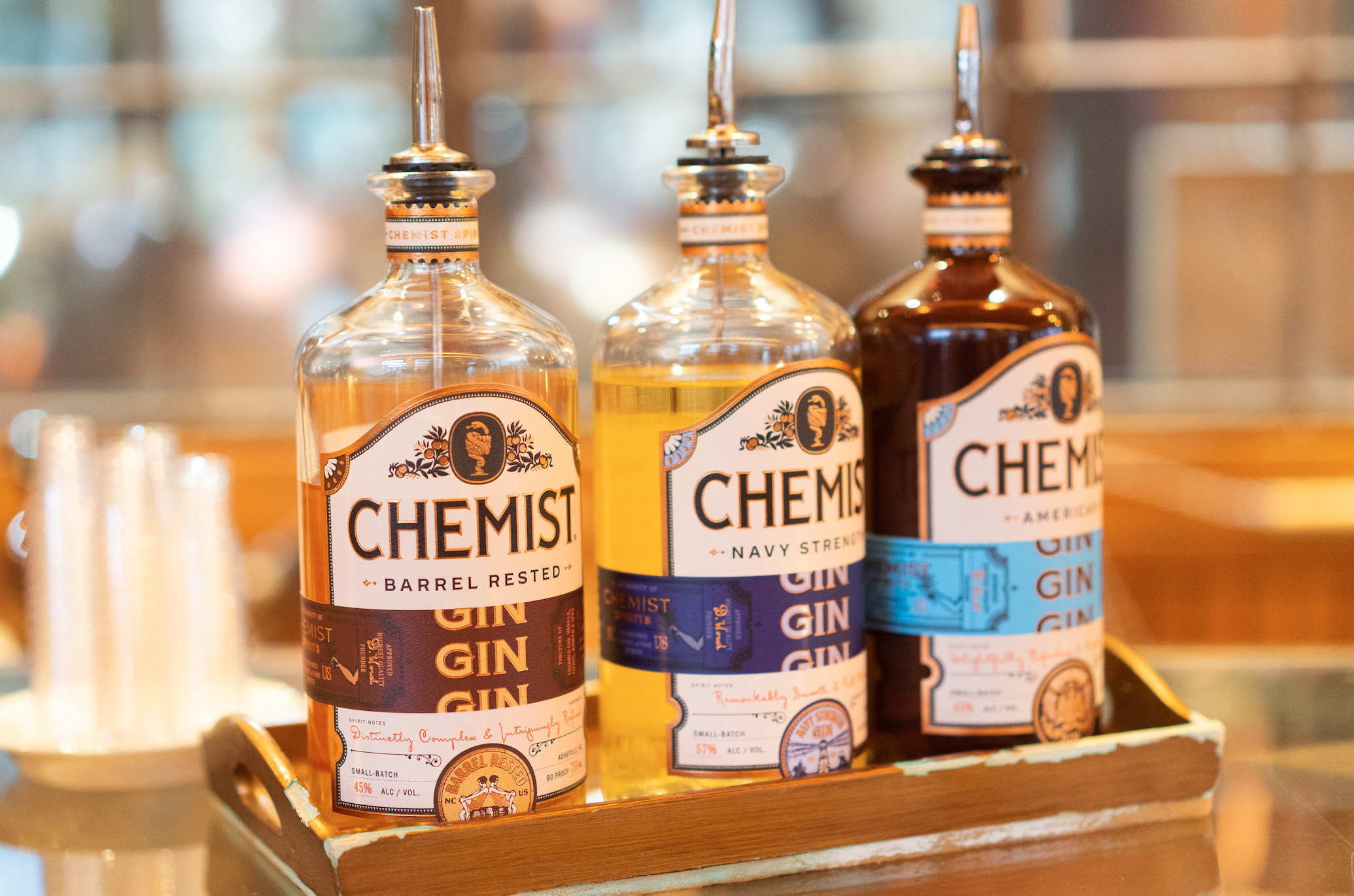
The world of gin is vast and expands beyond what many think of as gin. The dry juniper taste, which has held many back from the spirit, has been expanded into an ever-growing diversity of flavors.
We at Chemist Distillery love to experiment and play with many types of gin with our particular taste and vision. Here are the main types of gin you’ll run into and a couple of ways you can experiment with them in your lab.
What is Gin?
Simply put, gin is a distilled spirit flavored with juniper. The juniper must be a dominant ingredient and flavor in order for it to be considered gin, but it can include citrus, spices, and roots.
Typically, a standard gin will be made with a neutral spirit that is grain based and then flavored through distillation, infusion, or compounding with juniper berries, angelica root, lemon peel, coriander, orris root, and more.
Genever (Jenever) - Gin’s Granddaddy
Genever, or more accurately Jenever, is a Dutch spirit distilled from grain and flavored with juniper berries. Now, just to be clear, this is not technically a gin, but without it, gin wouldn’t exist today. This spirit was brought back to Britain after British soldiers witnessed its vigorous effects on Dutch soldiers who would drink it before they entered battle.
As Britain acquired a taste for what they called “Dutch Courage”, they went on to make their own Genever. Using different bases, adding different botanicals, and taking it through a different distillation, this spirit became its own class: gin. The name derives from the word “Genever.”
In terms of taste, because Genever typically has a base of malted grain, the flavor profile leans more towards a whiskey than a gin, especially since the base spirit isn’t covered up or overlooked by more botanicals.
How to Drink Genever
Although you may find Genever in some cocktails these days, the most traditional way is to drink it straight, chilled, and possibly alongside a beer, something very few would do with, say, a London Dry Gin.
One popular cocktail you will find Genever in is the Flying Dutchman. This recipe calls for Yellow Chartreuse, Benedictine, lemon juice, and Genever. We like to switch out the Genever for the Chemist Navy-Stength Gin and we use Liquor Strega when it’s tough to find Yellow Chartreuse:
The Flying Dutchman Cocktail Recipe
1 ½ oz Genever or Chemist Navy-Strength Gin*
½ oz Strega
½ oz Benedictine
¾ oz Lemon Juice
Put ingredients in a shaker tin with ice and shake for 10 - 15 seconds.
Strain into a chilled coupe.
Express lemon oil over top and garnish with the lemon peel.
*Another option we enjoyed was an idea from Paulina, one of the many chemists at Antidote Cocktail Lounge. This involves doing a split base: ¾ oz Genever and ¾ Chemist Navy Strength Gin and then the same amount of Strega, Benedictine, and Lemon Juice.
London Dry Gin
When people think of gin, London Dry is typically what they’re thinking of. Sadly, the market of London Dries has become synonymous with the many cheap gins imbibed at college parties and added to store brand tonic. I mean, in that case, no wonder people get an aversion to it.
But London Dry Gin, which doesn’t have to be made in London, is the main type of gin that has a dominant juniper flavor and is therefore dry on the palate. This gin is traditionally crisp and clean, and plenty of gin brands out there produce a quality London Dry that makes for a spirituous elixir as opposed to a red solo cup of debauchery and regret.
This is one of the types of gin that is still as popular today as it was in nineteenth century Britain.
How to Drink London Dry Gin
London Dry Gin can generally be used in many cocktails, especially if you prefer that dry, juniper-forward quality. It goes especially well with a quality tonic water. Otherwise, you can use it in a citrus forward drink to accentuate the dryness or offset that flavor in something a bit sweeter, like a Bee’s Knees.
For those looking for something dryer than our floral and citrusy American Gin, this cocktail may be a great choice. Be warned, these get pretty piney…
Bee’s Knees Recipe
1 ½ oz London Dry Gin or Chemist American Gin
¾ oz Honey Syrup
¾ oz Lemon Juice
Place ingredients in a shaker tin with ice and shake for 10-15 seconds
Strain into a chilled coupe.
Express lemon oil over the top and garnish a lemon peel.
Old Tom Gin
This sweeter take on the London Dry came into prominence as a cordial gin since it was cut with water and sweetened with sugar. This process was done by retailers who bought gin at a stronger proof from rectifiers. Old Tom Gin had the highest proof of these cordial gins and therefore was the least sweet.
This gin still meets the minimum alcohol required to be considered a gin, while many cordial gins today don’t meet the minimum and are instead labeled as “gin liqueurs.”
Of the different types of gin, Old Tom is considered to be on the sweeter side and therefore is best for those who like the flavor of juniper but don’t want it so dry. There are over a dozen brands of Old Tom Gin that are in production today.
How to Drink Old Tom Gin
On the opposite end of the spectrum from London Dry Gin is the Old Tom Gin, so if you want to balance the Old Tom Gin, a citrus forward cocktail isn’t a bad idea, or even one that uses the addition of a dry bubbly buddy.
This means cocktails like the French 75 and Gin Fizz can benefit from its smooth and sweet taste.
The cocktail that is believed to have gained its name from Old Tom Gin is the Tom Collins. Originally called the “John Collins” since it was served in a Collins glass, it underwent a name change either from a barroom gag or due to its typical usage of Old Tom Gin.
Tom Collins Recipe:
2 oz Old Tom Gin or Chemist Conservatory Rose Gin
1 oz Lemon Juice
½ - ¾ oz Simple Syrup
Soda Water
Place gin, lemon juice, and simple syrup into a shaker tin with ice.
Shake for 10 seconds
Strain into a Collins glass filled with ice.
Top with soda water
Garnish with a lemon wedge
Plymouth Gin
This is not only a type of gin but also a brand that has lasted centuries. In order to be considered Plymouth Gin, the gin must be made in Plymouth, England. This was a popular gin for naval officers who were allowed money for gin rations, especially since Plymouth served as a major naval port.
The juniper flavor of this gin is toned down while other flavors like lemon peel, sweet orange peel, green cardamom, and coriander become more pronounced. This gin will have an earthier flavor also because of the orris and angelica root.
How to Drink Plymouth Gin
Since Plymouth Gin has been around for so long, it is one of the main types of gins that has served as the base for many popular classic cocktails. It’s mentioned with frequency in The Savoy Cocktail Book by Henry Craddock. Because the juniper profile on Plymouth Gin is softened, this Gin is great in cocktails that have gin as the star.
What better cocktail is there to showcase a gin than a martini? Although the Martini is a cocktail that’s hard to pin down, with its complicated history and ever-changing nature, here’s a Gin Martini recipe we find to be standard and balanced.
Plymouth also makes a Navy Strength Gin and we find that our Chemist Navy-Strength Gin serves as a great substitute, providing more earthy spice and citrus notes.
Gin Martini Recipe*:
2 oz Plymouth Gin or Chemist Navy-Strength Gin
1 oz Cocchi Americano Vermouth
2 Dashes Orange Bitters
Lemon Peel
Pour the gin, vermouth, and bitters into a mixing glass with ice.
Stir for at least 30 seconds to chill.
Strain into a chilled coupe or Nick and Nora glass.
Express lemon oil over top and garnish with lemon peel. Another option is to garnish with an olive.
*Like your martini a little dirty? Instead of 1oz vermouth, do ¾ oz olive brine and a bar spoon of vermouth. After all, you’re the chemist.
Barrel-Rested Gin
One method to mellow out the flavor of a gin and impart a deeper quality is to rest gin in barrels, typically oak. This practice of resting or finishing the gin in barrels adds extra depth and can soften some of the sharp flavors from the botanicals.
Barrel resting came about by accident, at least the results. In order to transport gin at sea, gin makers in the 19th century would store the spirit in barrels so it could safely make it to its destination. The gin would sit in barrels for extended periods of time, sloshing around.
This prolonged time resting and added agitation imparted many of the elements of the wood barrel itself resulting in this type of gin. Now the gin is purposely put in barrels, not for transportation but for the resulting flavor profile: we rest our Barrel-Rested Gin in oak barrels for 6 to 8 weeks to achieve a smooth finish with notes of caramel and vanilla.
Out of the different types of gin, this one is going to be closest to a whiskey. For whiskey lovers who are cautious about trying gin, this is the type to reach for. In the US, because the TTB defines gin as an “unaged spirit,” you legally cannot say a gin is “barrel-aged.”
How to Drink Barrel-Rested Gin
Since the botanicals are slightly mellowed, the finish is smoother, and the flavor is deeper, a barrel-rested gin can be enjoyed neat or on the rocks like a whiskey. An oaky finish can make it an easy sipper, or you can use it instead in a whiskey cocktail.
A Barrel-Rested Gin Old Fashioned can be a lighter take on the classic while adding a whole other range of flavors. However, if you want a cocktail that the Barrel-Rested Gin is meant to be in, it would have to be the Martinez. The Martinez is considered one of the predecessors to the classic martini. Look at that recipe, and you’ll see the similarities.
Martinez Cocktail Recipe:
2oz Chemist Barrel-Rested Gin
¾ oz Sweet Vermouth
¼ oz Luxardo Maraschino Liqueur
2 Dashes Orange Bitters
Put ingredients into a mixing glass with ice and stir for at least 30 seconds to chill.
Strain into a chilled coupe.
Express lemon or orange oil over the top
Garnish with a maraschino cherry. *
*You can garnish with the citrus peel, but the cherry is a nod to the Martinez as an adaptation of the Manhattan.
Navy-Strength Gin
Back in the 19th century, gin was a possible ration for officers of the British Royal Navy. Rum was already a popular ration for the average sailor, but initially it was a problem to transport.
Because the high seas could cause a barrel of rum or gin to spill on the gunpowder, it was important that the spirit didn’t hinder its ability to ignite, lest the ship would have limited defenses in the event of a battle.
The solution? Make the spirit high enough in alcohol content that it can ignite. Thus was born Navy-Strength. Both Navy Strength Rum and Gin provide a high proof and therefore a very strong flavor.
Although Navy Strength Gins back in the Royal Navy mostly had an ABV of 54.5%, many Navy Strength Gins including our own Chemist Navy-Strength Gin have a minimum of 57%, making it the strongest of the different types of gin.
How to Drink Navy-Strength Gin
Navy-Strength is a potent brew and therefore serves well in cocktails that may have other ingredients that could overtake the gin’s flavor. The strength in flavor can stand up against other ingredients so you can still taste the gin.
Keep in mind, it is strong, so whenever replacing it in a cocktail with a standard gin, be prepared for the results. We love to put it in a Last Word, where the Maraschino Liqueur and Chartreuse risk overpowering the gin.
Last Word Recipe:
¾ oz Chemist Navy-Strength Gin
¾ oz Green Chartreuse (Faccia Brutto Centebre, Genepy le Chamoise or Luxardo Del Santo to substitute)
¾ oz Luxardo Maraschino Liqueur
¾ oz Lime Juice
Place ingredients into a shaker tin with ice and shake for 10-15 seconds
Strain into a chilled coupe
Garnish with a Maraschino Cherry.
American or New World Gins
Also referred to as New Style, Contemporary, and Western Gin, these types of gin essentially does what the British did to Genever, adding more botanicals and experimenting with new ways of distilling the spirit.
Different types of citrus, different flavors, and a new use of local ingredients are the hallmark of this type of gin, although in some ways the flavors may journey further and further from its primordial essence of juniper.
What kind of flavors? Well, Aviation is known for having a predominantly lavender flavor, Hendrick’s has a cucumber and rose flavor, and our own American Gin has flavors of mountain botanicals foraged from the Western North Carolina highlands.
How to Drink New World and American Gins
With such a wide variety out there, it’s hard to pinpoint the perfect way to drink a New World or American Gin. This category is so diverse, and some of these gins may steer so far from juniper that it may be difficult to consider them gins.
This being said, different cocktails may work with different types of gins from this category. We find that our American Gin is very versatile and can mix well in a variety of cocktails from a Vesper Martini to a Gin Mule. Oh, that sounds good. How about a recipe?
Gin Mule Recipe:
2 oz Chemist American Gin
¾ oz Fresh Lime Juice
¾ oz Ginger Syrup
Soda Water
Place gin, lime juice, and ginger syrup in a shaker tin with ice and shake for 10 - 15 seconds.
Strain into a Collins glass filled with ice.
Top with soda water.
Garnish with a lime wedge.
Flavored or Cordial Gins
Many gins at the eve of the Gin Craze in London were cut with sugar making them sweeter and a lower proof. This made them more comparable to a cordial gin which is typically sweeter and can be flavored with various fruits or other berries.
Since many of these types of gin have a lower alcohol content, they don’t always meet the minimum alcohol requirements to be considered “gins.” Of the different types of gin, this category is one of the most vast, resulting in a wide range of flavors, similar to contemporary gins.
How to Drink Cordial and Flavored Gins
How you drink your cordial or flavored gins depends greatly on the type of gin it is. Sloe gin is a popular cordial gin that is flavored with sloe berries and sweetened. It is famous for being in the Sloe Gin Fizz which is simply Sloe Gin, lemon juice, simple syrup, and club soda.
For something on the sweeter and more voluptuous side like our Chocolate Orange Liqueur, we recommend sipping it straight or on the rocks with an orange peel. If you want to get a little fancy, you can toss it in your Negroni for a sweet concoction after dinner.
Ingredients:
1 oz Chemist Spirits Chocolate Orange Gin Liqueur
1 oz Eda Rhyne Bitter Tooth
1 oz Sweet Vermouth (Cocchi Di Torino)
2 Dashes Aromatic Bitters
Garnish: Orange Peel
Instructions
Combine all ingredients into a cocktail stirrer with ice.
Stir ingredients until chilled.
Strain into a coupe glass.
Garnish with an orange peel expression. Enjoy!
Conclusion
Many of these types of gin have been around for centuries while others have gained popularity over the last couple of decades. Regardless, they have a special place in cocktails or on the rocks.
If you want to taste high-quality takes on these types of gin, visit Chemist Spirits in person or online and order a bottle of gin or one of our Single Malt Whiskeys. We concoct each one of our spirits in our laboratory with precision and passion.
Hopefully you found this article a helpful guide to the different types of gin, and we hope you get to try them as well as the listed cocktails in your own lab.
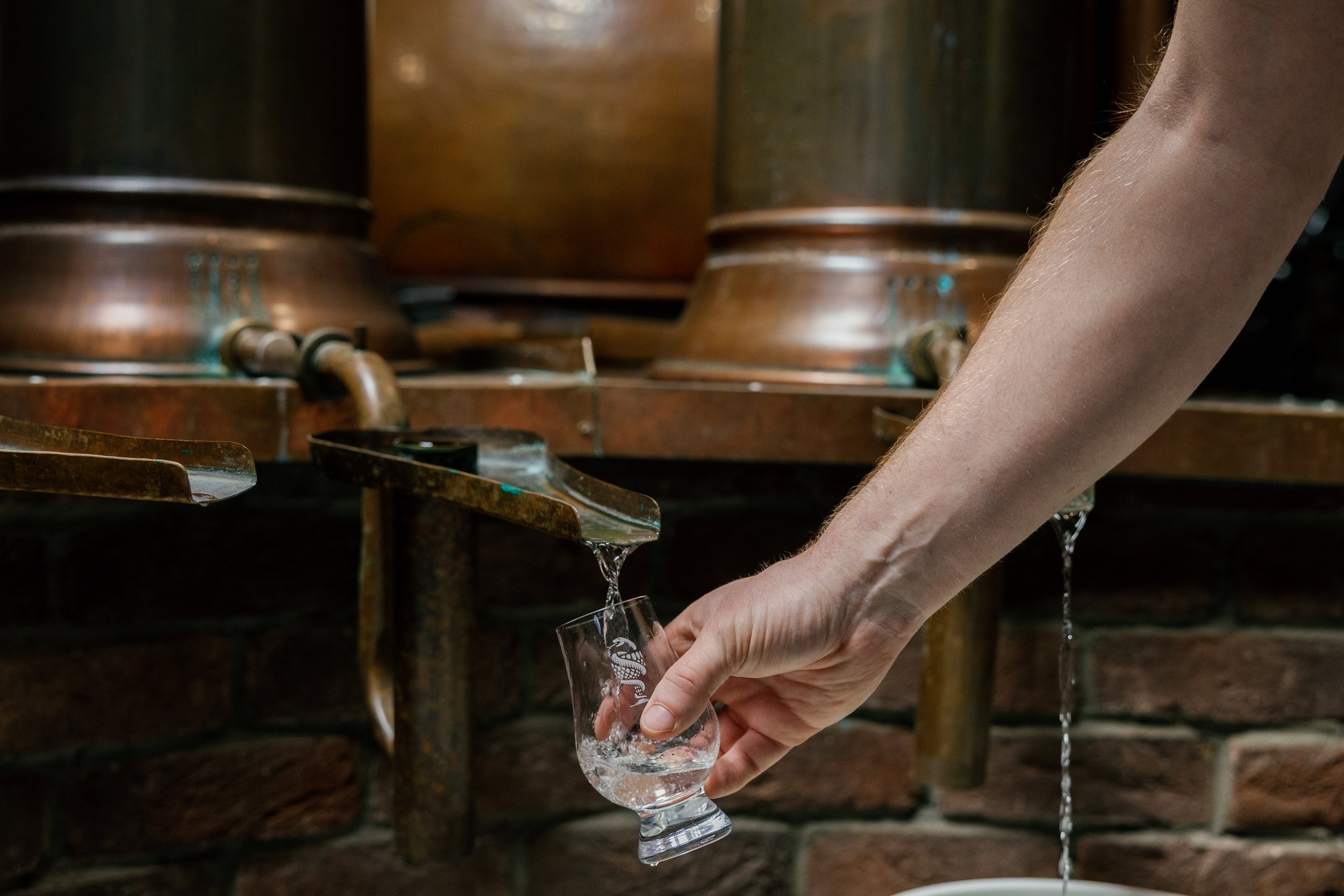
What is Gin? A Brief History and Quick Overview of the Botanical Beverage
By Andrew Tardif
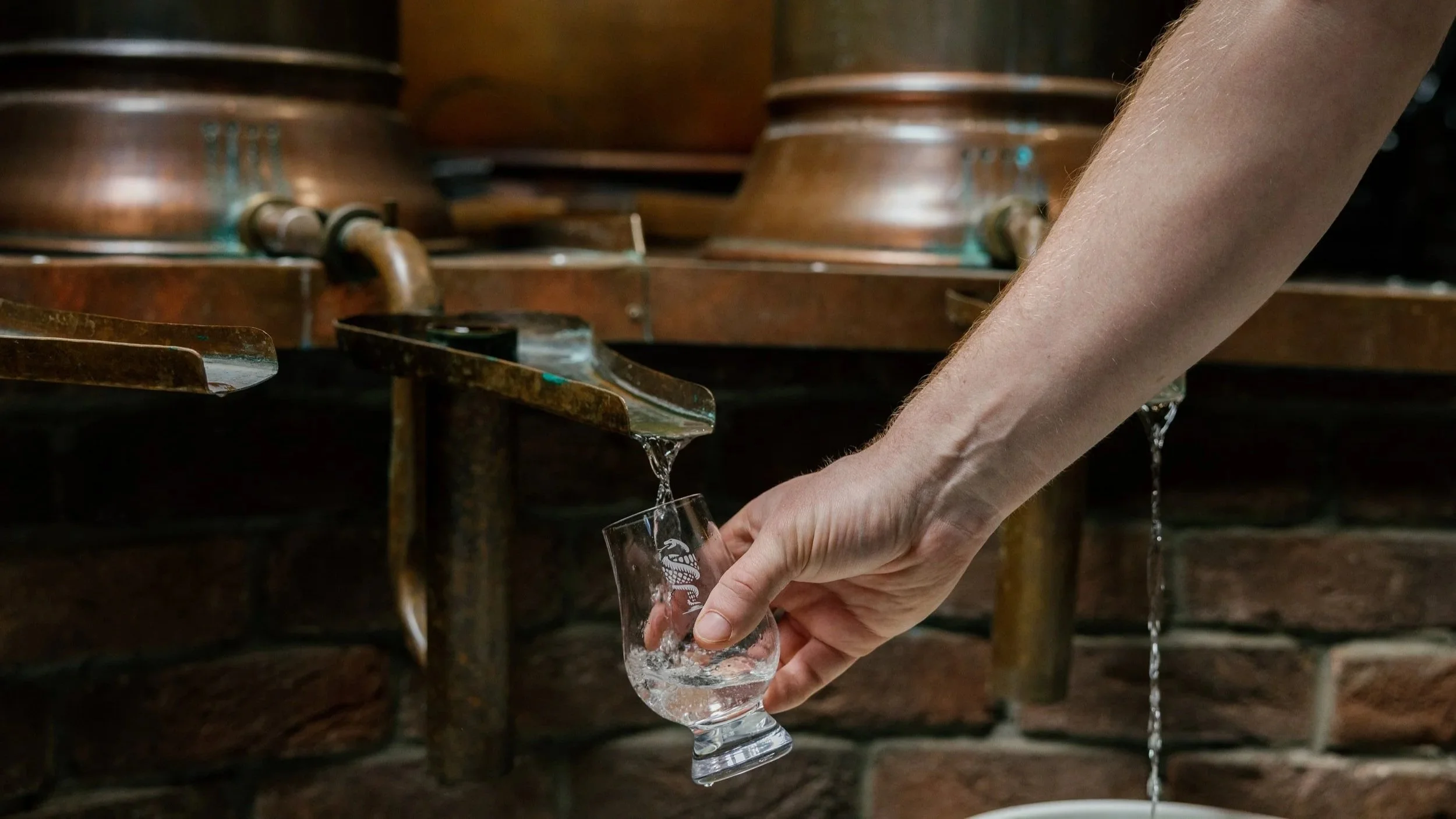
Whether it’s in a gin and tonic, the base of a Last Word, or just on the rocks, gin is a spirit that stands out with its distinct juniper flavor. At Chemist Spirits, we’re known for our gin, especially as the spirit that got us started.
But what is gin? Where did it come from? What are the different types, and why don’t I have a Gin and Tonic in my hand right now?
In this article, we’ll break down what gin is, its history, and some of the main types you can choose from.
What Is Gin?
To put it simply, gin is a distilled grain spirit that is flavored with juniper berries and other botanicals. In order for a spirit to be considered gin it must follow these rules:
Juniper (juniperus communis) must be the main characteristic or flavor
Must meet a minimum Alcohol by Volume (ABV) of 40% in the US and 37.5% in the UK/EU (80 proof and 75 proof respectively).
The juniper flavor can be imparted through distillation, infusion, or compounding.
Since those rules aren’t so restrictive, there can be, and are, a wide variety of types of gins that result in different flavors, colors, and potencies. To understand gin a little bit more, let’s delve into the history and different types:
How is Gin Made?
The process of making gin is simple but not easy.
Step 1: The Neutral Spirit
First, a neutral spirit must be made to form the base of the gin. This neutral spirit is most commonly made from grains like wheat, rye, corn, or barley. The fermented liquid is distilled to separate and purify the alcohol and make a spirit that is clear, similar to vodka.
Our neutral spirit is made from wheat, which, after the final distillation process, results in a creamy mouth feel and smooth finish.
Step 2: The Botanicals
The next step is to infuse the gin with botanicals, mostly juniper berries. This process is typically done through vapor infusion or steeping.
Our gin is vapor infused, meaning the botanicals are placed in a basket outside of the main still which the vapor passes through. This imparts a smoother finish since the neutral spirit isn’t in direct contact with the botanicals, a method which can draw out more intense flavors.
Other spices or botanicals that are typically added include coriander, citrus peels, and angelica root. In our Navy-Strength Gin, we use Thai Ginger and Spanish Sweet Orange to give it a smooth yet distinctive spice.
Step 3: Final Bottling
Once the gin has been flavored with the botanicals it is then diluted to an ABV of 40% at the least and is bottled. Some gins, like our Barrel-Rested Gin, spend time in a barrel, typically Oak, to create a smoother finish.
A Brief History of Gin
Alcohol had been distilled centuries before the time of gin, and even juniper berries were known for their medicinal purposes, being used to cure Jaundice in Egypt and Colic in Ancient Greece. The first spirit to resemble modern day gin, however, was a Dutch spirit named Genever.
The Original Gin
The main predecessor to gin is a spirit called Genever, or Jenever (YE-NE-VEAR) in Dutch. It’s a Dutch spirit using malted grains, more comparable to whiskey. The flavor was abrasive, so the Dutch added juniper berries to make the spirit palatable.
Genever was used medicinally for years and caught the eyes of British troops when they encountered Dutch soldiers drinking it before engaging in battle. This led to Genever gaining the nickname “Dutch Courage.” The Earl of Leicester, Robert Dudley, brought the spirit back home to England after witnessing its impassioned effects.
Britain Turns Genever to Gin
When William of Orange took the throne in 1689, he encouraged the distillation of the spirit domestically while also placing a tax on French imports. This stuck it to the French and also made gin more accessible and widespread.
By now, gin was being made with English grain and, with no regulation, was being made by anyone. Either from pure ignorance or attempting to cut corners in the distilling process, much gin at the time was dangerous to drink, sometimes resulting in blindness or death.
“Mother’s Ruin” and the London Gin Craze
Would you rather be drinking gin or water from the River Thames? For many London residents the former was the preferred beverage, and many Londoners were drinking the stuff to the point of ruin.
The first half of the 18th century was characterized by the “Gin Craze,” a time in London where heavy gin consumption led to lawlessness and gin dependency. The high gin consumption and lack of regulation led to The Gin Acts: one in 1736, another in 1743, and the final in 1751.
The final Gin Act limited consumption of the spirit by making it illegal for distillers to sell directly to the consumer and limiting access to low-quality gins.
Prohibition and Bathtub Gin
On January 17th, 1920 the U.S. bans alcohol nationwide, the beginning of a legislation termed Prohibition that would last for the next thirteen years. The distilling or consumption of any spirit was deemed illegal, leading many, even those with little to no experience, to make gin in their own home - hence the term “Bathtub Gin.”
This period also saw the popularization of the cocktail. Since alcohol was being produced under cover in guerilla operations, many times by amateurs, spirits were hard to drink on their own. This meant mixing cocktails with other spirits, sweeteners, citruses, and more.
This underground cocktail culture gave way to the Speakeasy, bars designed with tunnels to illegally transport alcohol and architectural add-ons to hide the true intentions of the establishment.
Thankfully, Prohibition ended in 1933, and we no longer have to endure the flavor of bathtub gin.
The Modern Cocktail Renaissance and The Gin Revival
In the early 2000s, cocktails experienced a resurgence in popularity with classic cocktail bars opening in places like Chicago and New York City. The cocktail became cool again and therefore gin took the spotlight.
Classic gin cocktails like The Last Word, Negroni, and French 75 became bar staples and new gin distilleries emerged focusing mainly on American or New World style gins.
The exploration of gin was taken on by people with no distilling experience like Debbie Word, her daughter Danielle, and James Donaldson, who had a passion for the spirit and the vision to create Chemist American Gin. This gin uses local ingredients from North Carolina and, like many American gins, softens the juniper flavor.
As you can see, gin isn’t sequestered to one flavor profile; there are plenty of gins out there and each type is geared toward a different palate.
Types of Gin
There are many different types of gin and different gins are being made all of the time, but there are some main types you should familiarize yourself with. This will come in handy when you’re shopping for a gin at the liquor store or trying to discover which gin is right for your palate.
Genever (Gin’s Ancestor)
As mentioned earlier, this spirit is considered the predecessor to gin, and the name “gin” comes from Genever. This spirit uses distilled malt and juniper berries and is actually more similar to whiskey in its base than gin.
Although not commonly used in America in cocktails, it has been known to show up in cocktail bars more recently. You can use it to replace gin in many cocktails like a Tom Collins or Gimlet, but a popular modern cocktail that uses Genever is the Flying Dutchman.
London Dry
This gin is going to be crisp and dry, using juniper as its dominant ingredient and flavor. The resulting spirit has no added coloring or flavors after the distillation process. The heavy use of juniper gives this the signature pine flavor that many associate with gin.
A London Dry Gin is great for those who love a dryer Martini or enjoy a Gin and Tonic that crisp and pine forward.
Old Tom Gin
In order to cut the dryness common in a London Dry gin, many distillers would add sugar to the distilled product. This resulted in a sweeter gin, called Old Tom Gin, that was easier to drink and perfect for, most popularly, the Tom Collins.
Plymouth Gin
This gin is only produced in Plymouth, England and has a softer flavor compared to a London Dry. This is thanks to the addition of lemon, orange, and roots like angelica and orris that provide an earthy layer.
The juniper flavor is toned down in Plymouth Gin since it uses a higher proportion of roots and citrus to juniper berries. Plymouth-style gin can only be found from one brand, Plymouth, distilled at the Black Friars Distillery in Devon,
Navy-Strength Gin
The British Royal Navy in the mid-18th century faced a big issue: what if you’re out at sea, hit turbulent waters, and your gin rations topple and spill all over your gunpowder? Well, you’re in trouble if you come across an enemy ship and your gunpowder is now soaking wet and useless.
So what do you do? Get rid of your gin rations altogether? You’d have a mutiny on your hands after telling your sailors the gin rations are over for the good of the Queen. Instead, you make Navy Strength gin. This gin was distilled and left at a higher proof so that in the case it spilled on gunpowder, its proof was high enough to still ignite.
Fun Fact: The benefit of its combustibility was also the ability to show “proof” of its potency. Back in the 16th century, the best way to show that a spirit had the strength promised, was to mix it with gunpowder and attempt to ignite it. If it was successful, it was “proof” of the spirit’s potency, hence the term’s use today.
We love to use our Chemist Navy-Strength Gin in cocktails when the gin flavor has to stand out next to other bold ingredients, i.e. a Gin and Tonic or a Negroni.
Barrel-Rested Gin
In order to achieve a smoother and deeper flavor, some gins were left to rest or finish in barrels. The result is a gin perfect for beginner gin drinkers who are partial to whiskey. Because gin is considered an unaged spirit by the US Alcohol and Tobacco Tax and Trade Bureau (TTB), gin can only be called barrel-rested, barrel-finished, barreled gin, or oak-rested.
We like using our Barrel-Rested Gin in cocktails like a Martinez or Gimlet since it adds a depth of flavor with notes of Oak. Since the botanicals don’t bite so hard, barrel-rested gin creates a rounder mouth feel and smoother finish.
American (New World) Gin
American, or New World, Gins tend to dial down the juniper flavor and introduce different botanicals, fruits, flowers, spices, and other ingredients for a more complex flavor profile. This results in more complex gins that can range anywhere from sweet to dry.
Our American Gin uses many botanicals local to Western North Carolina and can be used in a wide range of cocktails since it’s floral, citrusy, and slightly dry. Since American Gins range in flavor so much, it’s tough to pinpoint any particular cocktail that they’re most appropriate for, but we love to put our American Gin in something like a Bee’s Knees or Vesper Martini.
Gin Liqueurs
Gin Liqueurs are more cordial versions of gin, typically using additional sugars and flavors to add sweetness and a rounder mouth feel. Gin Liqueurs are typically not classified as gin since many don’t meet the minimum ABV requirements.
A common gin liqueur is Sloe Gin which uses gin as a base but adds sugar and sloe berries and also lowers the ABV below the necessary minimum for gin. Another example of a gin liqueur is our Chocolate Orange Liqueur which uses Spanish Orange peels and cacao husks for a luxuriant mouth feel and flavor.
Sloe Gin is commonly found in a Sloe Gin Fizz while something like our Chocolate Orange Liqueur can be used in something like a White Russian or even a Negroni or Old Fashion to give it dessert vibes.
Conclusion
From a malty Dutch spirit to one that is now hard to define, since its flavors range so much, gin now dominates much of the spirit and cocktail world.
It’s definitely dominated our passion over the years, and we at Chemist continue to experiment with new flavors and ideas with the same fervor that put our American Gin and our single malt whiskeys on the map
So, go to your liquor store and buy a new bottle, ask the bartender to make you their favorite gin cocktail, or invite a Chemist gin to a gin-tasting party.
After all, it’s only by tasting gin that you can really answer the question, what is gin?
Frequently Asked Questions About Gin
Can You Make Gin from Vodka?
Yes, you can make gin from vodka. Since vodka is a neutral spirit that can be made from a variety of bases, many gins are made from some kind of Vodka. Our Vodka uses wheat, which can add a smooth finish to a gin.
What Does Gin Taste Like?
Since gin is made primarily from juniper berries, the flavor of gin will be piney and slightly dry. Different types of gin will have different flavor profiles. With the advent of new world gins, like those from Chemist, gin can also have more citrus or ginger spicy notes or can even be floral, sweet, and more.
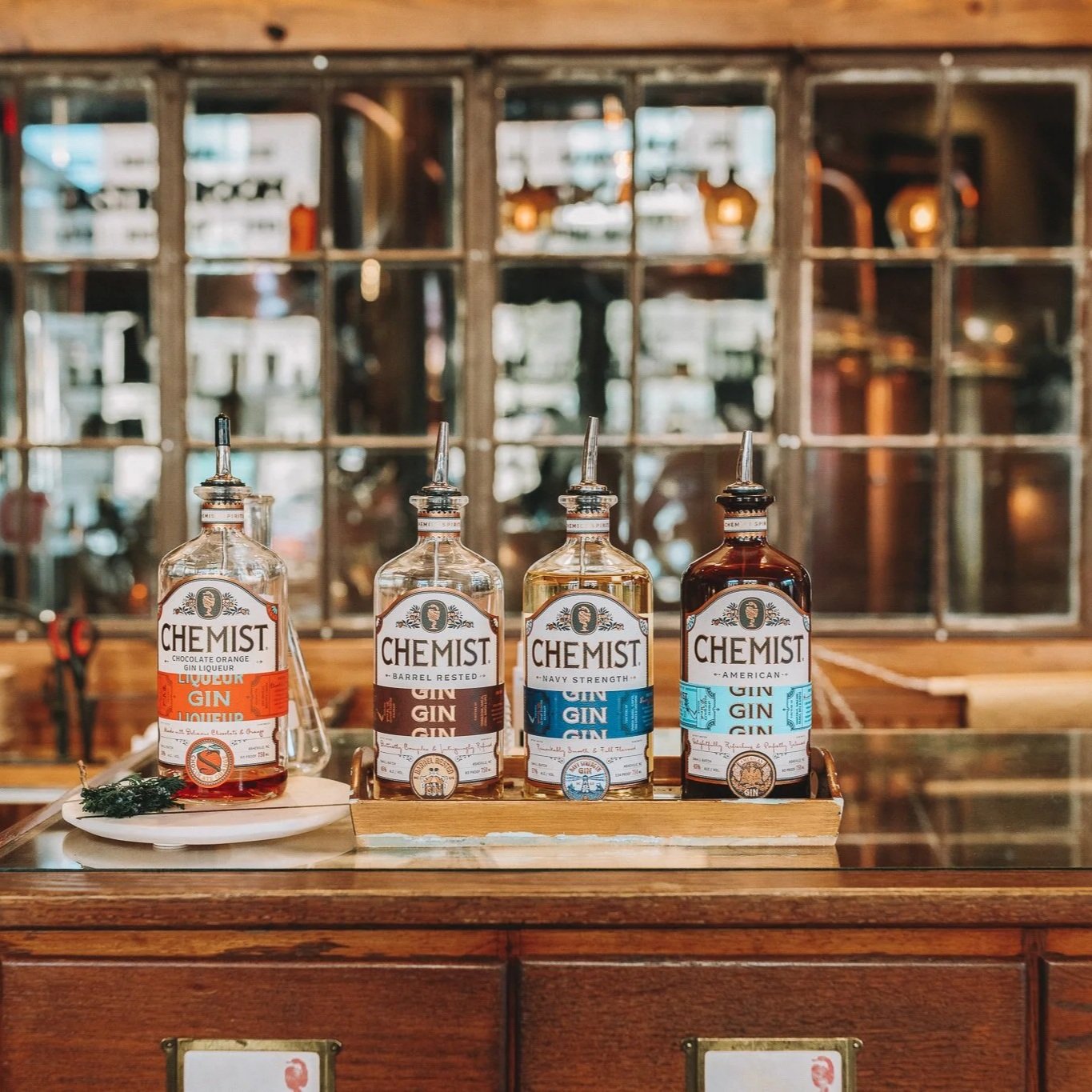
Top 4 Easy Gin Cocktails to Make at Home
by Andrew Tardif
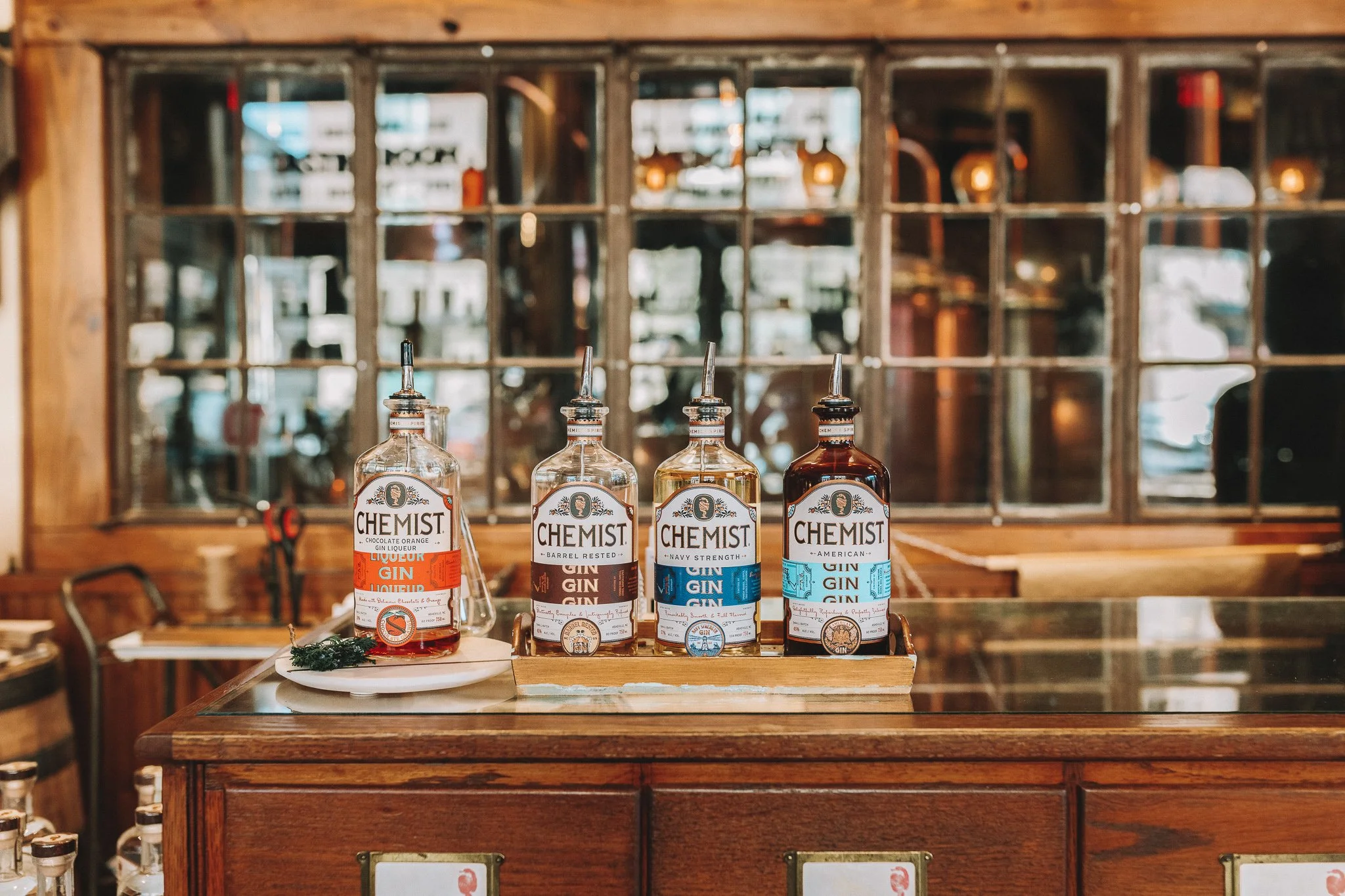
Mixology can be a daunting task, luckily you have some Chemists here who have done the necessary experimentation to bring you 4 easy gin cocktails you can make at home. These cocktails are simple and have survived for at least a century, holding up as some of the most popular gin cocktails.
And remember, these recipes are guides, never rules. At your laboratory you’re the chemist, so you can adjust the ratios to your liking. Just because that’s the way they made it in 1919, or something, doesn’t mean that’s the way you have to make it to enjoy it!
What Barware You’ll Need to Make Your Own Gin Drinks
To us, easy gin cocktails use ingredients that are easy to get, but are more involved than something like a Gin Rickey or Gin and Tonic. That means they will require some tools. Here’s what you need to make these easy gin cocktails at home:
Shaker Tin
Jigger
Strainer
Mixing Glass
Stirring Spoon
Ice
Glassware: Coupe, Rocks Glass, Collins Glass, and/or Champagne Flute
What Type of Gin To Use
The type of gin you use is dependent on your own personal tastes, but can be defined by the specific cocktail. For instance, dry gin is very common in a Martini, but if you prefer something sweeter, an Old Tom Gin will be better suited for you, while a Plymouth Gin will give an earthier more rounded Martini.
For the more spirit-forward Negroni, we recommend experimenting with a barrel-rested gin, which can impart more depth to the cocktail. If not, a more potent, spicy, and citrus forward gin like our Navy Strength can keep up with the bitterness of the Campari.
For a gin cocktail with lemon or other citrus, like the Gimlet and French 75, you may want a drier gin to stand out against the sweetness from the simple syrup and the bitterness from the citrus. More floral and citrusy New World Gins can really meld well with the citrus as well.
The Gin Martini and Some Variations
Made popular by Ian Fleming’s James Bond series, the Martini has been a favorite gin cocktail for gin drinkers because the spirit is the main star. The word “martini” can also serve as a blanket term for a sea of different cocktails, but we’ll just be discussing a standard martini, while mentioning some common variations.
The History of the Gin Martini
The history of the Martini, like many cocktails, is a little murky, but it seems to have evolved from the Martinez cocktail, which evolved from the Manhattan. While a Manhattan is Whisky (Rye), Sweet Vermouth, and Bitters, the Martinez swapped out the Whiskey for Gin and added in some Maraschino Liqueur.
The Martini we know today is closer to a Marguerite cocktail, which uses equal parts Gin (Plymouth, to be exact), French Vermouth (Dry), orange bitters, and anisette, but it seems many of these variations were existing around the same time with the first iterations emerging in the 1880s and 1890s.
The original written recipe for the Martini can be first found in the Bartender Manual by Harry Johnson and included gum syrup, a sweet syrup made of gum arabic, curacao, bitters, Old Tom Gin, sweet vermouth, and a lemon peel garnish.
Over time the Martini switched out the sweet vermouth for dry, and got rid of other ingredients like the bitters and anisette. The equal parts gin and vermouth changed to two parts gin and one part vermouth, and then continued to lessen the vermouth ratio until it was up to nine parts gin to one part vermouth.
At this moment in time, the ratios for the Martini are as varied as the people that drink them. When people order a Dirty Martini it’s always important to qualify just how “dirty” someone likes it. When people order a Dry Martini you have to know how dry they want it. Some folks want a Martini with no vermouth at all, known as an Extra Dry Martini.
There are many intricacies to the history of the drink, too much to properly put into a blurb, but one final thing to note is its popularity thanks to Ian Fleming’s James Bond novel, Casino Royal, which includes a recipe for a Vesper Martini. The recipe calls for three parts Gordon’s Gin to one part vodka and and half of Kina Lillet shaken, strained, and garnished with a lemon peel.
The Recipe

A Gin Martini*:
2 ½ oz Chemist American Gin
¾ oz Dry Vermouth
Place ingredients in a mixing glass.
Fill the mixing glass with ice.
Stir for at least 30 seconds
Strain into a chilled coupe or Nick and Nora
Garnish with a lemon peel, olive, or both. Whatever it is, the way you tell your story online can make all the difference.

The Vesper Martini*:
1 ½ oz Chemist American Gin
1 oz Chemist Vodka
½ oz Lillet Blanc or Cocchi Americano
Lemon Peel for garnish
Place ingredients in a mixing glass.
Fill the mixing glass with ice.
Stir for at least 30 seconds
Strain into a chilled coupe or Nick and Nora
Express lemon oil and garnish with a lemon peel

A Dirty Martini*:
2 ½ oz Chemist American Gin
¾ oz Olive Brine
Barspoon Dry Vermouth
Olive(s) for garnish
Place ingredients in a shaker tin
Shake with ice for 10 - 15 seconds
Strain into a chilled coupe or Nick and Nora
Garnish with an olive.
*These recipes are always starting points. Feel free to adjust ratios according to your own palette.
Negroni - A Popular Italian Gin Cocktail
This cocktail has regained popularity since the cocktail renaissance at the turn of the millenium, and many distilleries and cocktail bars celebrate Negroni week in September with their own renditions of the cocktail, but the basic Negroni is simple and can easily be batched for big parties.
The History
Although the origins of the cocktail are disputed, the main story has the Negroni being made in Italy as an evolution of a Milano-Torino, also called an Americano, a cocktail made of Italian Sweet Vermouth (from Torino) and Campari (from Milan) and then topped with sparkling water. The Negroni simply switches out the soda water for Gin, although in Italy the Negroni is typically served with a splash of soda water.
Two main stories circulate referencing the beverage. The first is the story of Count Camillo Negroni in 1919 who apparently asked Fosco Scarselli, bartender at the Caffe Casoni in Florence, to make him a stronger version of the Milano-Torino cocktail. This gave birth to the Negroni and resulted in the Negroni family founding their own distillery which still stands today.
However, this story is believed to have been a marketing ploy and another story involves a Count Pascal Olivier de Negroni, a French brigadier general stationed in Senegal creating the cocktail for his wife.
Regardless of its origins, the Negroni saw a boom in popularity in France and survived through the decades, then to be rejuvenated in the early 2000s. Multiple iterations exist of the cocktail including a Mezcal Negroni, switching out the Gin for Mezcal.
The Recipe

Chemist Negroni:
1 oz Campari
1 oz Sweet Vermouth (Carpano Antica, Cocchi de Torino, etc.)
Soda Water (optional)
Orange peel
Place the gin, Campari, and sweet vermouth in a mixing glass
Fill mixing glass with ice
Stir for at least 30 seconds
Strain over ice in a rocks glass
Express orange oil and garnish with orange peel
French 75 - Add Bubbles for One of the Most Popular Fancy Gin Drinks
The French 75 is one of those fancy gin drinks you may see at parties, a champagne flute adorned with a lemon twist, but it has gone through many iterations, and in many ways can just be considered a Tom Collins with Champagne instead of soda water.
The History
Most research points to the French 75 getting its name from a French artillery gun during World War I, the Soixante-Quinze (75-millimeter), which American soldiers preferred over their own weaker artillery guns.
Since it was of French origin, the soldiers would call it the French 75, so there is speculation and stories related to American soldiers making a gin and champagne concoction in empty shells.
The first written version of the French 75 was in The Washington Herald in 1915. Called “Soixante-Quinze,” the cocktail had London Dry Gin, Applejack (Apple Brandy), Grenadine, and lemon juice, and was served up in a Nick & Nora glass.
From there you have the 75 Cocktail, which used more gin and grenadine, MacElhone’s 75 Cocktail, which added absinthe, and then Judge Jr’s French 75, which is the predecessor to the gin cocktail with lemon and champagne we know today. This was a Tom Collins that swapped out the soda water for champagne. This was also served in a champagne glass
With the high variety in drinks with gin with some variation of the name, it seems that these gin cocktails weren’t necessarily related and could have all been birthed separately with many bartenders having known of or heard tales of the French artillery.
The French 75 took off in America during the prohibition era. It’s possible that it was simply built in the glass so it could be made and imbibed quickly in the event the police came knocking, and since champagne was a popular drink, it would make sense that many wanted to strengthen the cocktail with something like gin.
The Recipe

Chemist French 75:
1 ½ oz Gin (The floral and citrus present in our Chemist American Gin makes it great compliment with champagne)
¾ oz lemon juice
¾ oz simple syrup
~ 3 oz Champagne
Lemon twist
Place gin, lemon juice, and simple syrup in a cocktail shaker with ice.
Shake for about 10 - 15 seconds
Strain into a Champagne Flute
Top with Champagne*
Express lemon oil and garnish with a lemon peel.
*Although it’s been common since the 1980s to serve the French 75 in a flute, for many years it was served on ice in a Collins glass. Try both variations to see what you like! I personally enjoy serving it on ice in a white wine glass, to keep it fancy but keep it cool.
Gimlet - A Gin Cocktail Fighting Scurvy Since 1867
The Gimlet is a one of many gin drinks with a history attached to the sea, alongside the Gin and Tonic and the Grog. The Gimlet is an easy gin cocktail with simple ingredients, and we’ll tell you how we prefer to make it.
The History
The eve of the Gimlet came in 1867 when lime juice was required on British merchant ships to help its crew fight off scurvy. Rear-Admiral Sir Thomas Desmond Gimlette suggested the lime juice be added to gin rations, and thus was born this easy gin cocktail.
At the same time, lime cordial was developed, using sugar to preserve the lime juice for travel at sea. Rose’s Lime Cordial by Lauchlin Rose became the main cordial used for a century and the cocktail was typically cut with soda water. Rose’s dropped out of popularity since it became viewed as a low-quality ingredient for most cocktail bars.
Now, many bartenders will typically make their own lime cordial or just use fresh lime juice and simple syrup for their Gimlets.
The origin of the name is still up for debate with two main possibilities. The first is that it was named after Admiral Thomas Gimlette while the second is that it was named after a Gimlet, a tool used on ships to bore into spirit barrels.
The Recipe

Chemist Gimlet:
¾ oz Simple Syrup
¾ oz Lime Juice
Place ingredients in a cocktail shaker with ice
Shake for 10-15 seconds
Strain into a chilled coupe
Garnish with a lime wedge or lime peel.
*At Chemist’s Antidote Cocktail Lounge, we like to use the Chemist Barrel-Rested Gin to add more body and depth. However, the Navy Strength Gin really matches its maritime origins.
Conclusion
With so many easy gin cocktails out there, it seems strange to only stick to 4, but these gin cocktails have a rich history, with many surviving at least a century.
And of course, no gin cocktail is at its best without a well-crafted gin. So when you go to stir up your favorite concoction, make sure to elevate it with quality gin like those from Chemist Distillery. We can’t imagine indulging in a gimlet without our Barrel-Rested Gin, and we think you’ll feel the same.
We hope you found this article helpful and that you get a chance to throw on your lab coat and concoct one of these 4 easy gin cocktails!
References:
The Oxford Companion to Spirits and Cocktails
Difford’s Guide

3 Patriotic 4th of July Cocktails: White Negroni, Blue Bayou & Blushing Ambrosia
The fireworks won’t be the only things lighting up your Fourth of July. This year, celebrate America’s birthday with a trio of bold, beautiful cocktails that bring the red, white, and blue to your bar cart. Featuring handcrafted spirits from Chemist Spirits in Asheville, these drinks are made for backyard gatherings, rooftop fireworks, and porch-sippin’ in the summer sun.

The fireworks won’t be the only things lighting up your Fourth of July. This year, celebrate America’s birthday with a trio of bold, beautiful cocktails that bring the red, white, and blue to your bar cart. Featuring handcrafted spirits from Chemist Spirits in Asheville, these drinks are made for backyard gatherings, rooftop fireworks, and porch-sippin’ in the summer sun.
Meet the stars of the show: White Negroni, Blue Bayou, and the blushing beauty herself, Blushing Ambrosia. Let’s raise a glass to flavor, freedom, and a little Southern mischief.


Discover How Chemist Spirits Turned Adversity Into Community Connection
Chemist Spirits’ Antidote Cocktail Lounge in Asheville has transformed its business after Tropical Storm Helene, expanding from a renowned cocktail bar into a vibrant community hub with a full coffee, tea, and mocktail menu.


Asheville’s vibrant beverage scene is no stranger to innovation, but few stories capture the city’s spirit quite like the recent evolution of Chemist Spirits and their Antidote Cocktail Lounge. After Tropical Storm Helene brought severe flooding and left much of Asheville without potable water, the team at Antidote stepped up in a big way—offering free water, coffee, and even Wi-Fi to neighbors in need.
This act of service did more than help the community recover; it inspired a fresh direction for the business. Antidote now boasts a full cafe menu, featuring coffee, tea, pastries, and creative zero-proof mocktails like the Cold Brew Old Fashioned and Cold Brew Mojito. As General Manager Philip Szobody put it, “A part of what inspired me in this journey was creating a space where anyone in our community could stop in and find a beverage that they enjoy and suitable for their lifestyle.”
As the article by Tiana Kennell notes:
“Antidote, a three-story Prohibition Era-style cocktail bar inspired by a turn-of-the-20th century apothecary, opened in 2018. It has contributed to the diversification of the downtown area, known as the South Slope brewing district, due to its high volume of craft beer breweries.”
The article also highlights Chemist Spirits’ upcoming expansion to a second location in historic Biltmore Village, their commitment to local partnerships, and the way adversity has strengthened their resolve to serve Asheville with creativity and heart.
Want to read the full story? Visit the Asheville Citizen Times for the complete article by Tiana Kennell.

A Cuban-inspired Cortado sits on the bar at Antidote Cocktail Lounge at Chemist in downtown Asheville, June 25, 2025. Credit: Josh Bell/Asheville Citizen Times

A Bold History of American Single Malt Whiskey
Hey Scotch! Make room at the bar—America is making a single malt with swagger, and it’s shaking up the industry faster than a bartender making a whiskey sour.

From Bootleggers to Barrel Aged Craft Spirits
Hey Scotch! Make room at the bar—America is making a single malt with swagger, and it’s shaking up the industry faster than a bartender making a whiskey sour. While the term American Single Malt Whiskey might sound like something a distilling industry association brainstormed in a busy boardroom, its history is as rebellious, spirited, and slightly unhinged as the country that birthed it.
Once Upon a Time in a Land of Whiskey and Wild Men & Women
The history of whiskey in America isn’t a polished fairy tale. It’s more like a bare-knuckle bar brawl that turned into a revolution. The first whiskey-makers—mostly Scottish and Irish immigrants—weren’t the suit-and-tie type. They were bootlegging badasses who brought their distilling traditions to the New World, setting up shop in the backwoods and hollers where the taxman feared to venture.
While their European ancestors were busy perfecting the art of single malt in Scotland, American distillers had other priorities—primarily pumping out whiskey fast and cheap. This led to the dawn of bourbon and rye, which became America’s go-to spirits while single malt was left to age in the barrels of history.
Prohibition: The Party Foul of the Century
Just as whiskey was settling into its bottle per se, the U.S. government slammed a shotglass of buzzkill—Prohibition. Distilleries shut down, bootleggers ran wild, and the country pretended it wasn’t drinking while secretly drinking more than ever. American single malt whiskey? It was left to gather dust, forgotten in favor of corn-heavy spirits that could be churned out quicker than backroom blackjack.
By the time Prohibition ended in 1933, bourbon and rye were back in business, but single malt whiskey was about as relevant as a telegram. The Scots kept doing their thing across the pond, while American distillers doubled down on the corn-based stuff.
The Great American Single Malt Revival
Fast-forward to the 21st century. Craft distilling is booming, hipsters are discovering they actually like whiskey, and suddenly, American Single Malt is the new darling of the craft whiskey world. It turns out that some distillers, tired of being in bourbon’s shadow, decided to bring single malt back with a vengeance—only this time, with an American twist.
Instead of sticking to Scotland’s rulebook, American distillers are doing what they do best: breaking the rules. Using unique grains, experimenting with different barrels, and aging in unpredictable climates, they’re crafting single malts that are bold, complex, and distinctly not Scotch.
What Actually Is American Single Malt?
Glad you asked! While there’s no centuries-old royal decree defining it (we like our independence, thank you very much), the American Single Malt Whiskey Commission and TTB laid out some basic rules that were finally ratified by the U.S. government on January 19th, 2025.
100% malted barley (no corn, no rye—just the good stuff)
Distilled at one distillery (hence the single part)
Aged in oak barrels (new or used, dealer’s choice, barrel aged perfection)
Distilled in the U.S. (because ‘Merica)
At least 40% ABV (anything weaker is just an insult)
Why You Should Care (And Drink Up)
American Single Malt whiskey is proof that history doesn’t have to repeat itself—it can evolve, innovate, and get a little rowdy along the way. Whether you’re a die-hard Scotch fan looking to branch out or a bourbon lover ready to flirt with cheeky American sophistication, there’s never been a better time to sip on some rebellious, homegrown single malt.
So, pour yourself a dram (preferably our small batch Chemist American Single Malt), raise a glass to the whiskey makers who refused to fall in line, and remember: history tastes better with a whole lot of malted barley and a little irreverence.

Proudly distilled in North Carolina, our American Single-Malt Whiskey embodies the spirit of local craftsmanship.
Recipe Suggestions


