

What is Bottled-in-Bond Whiskey: The Rules, History, and Taste
By Andrew Tardif
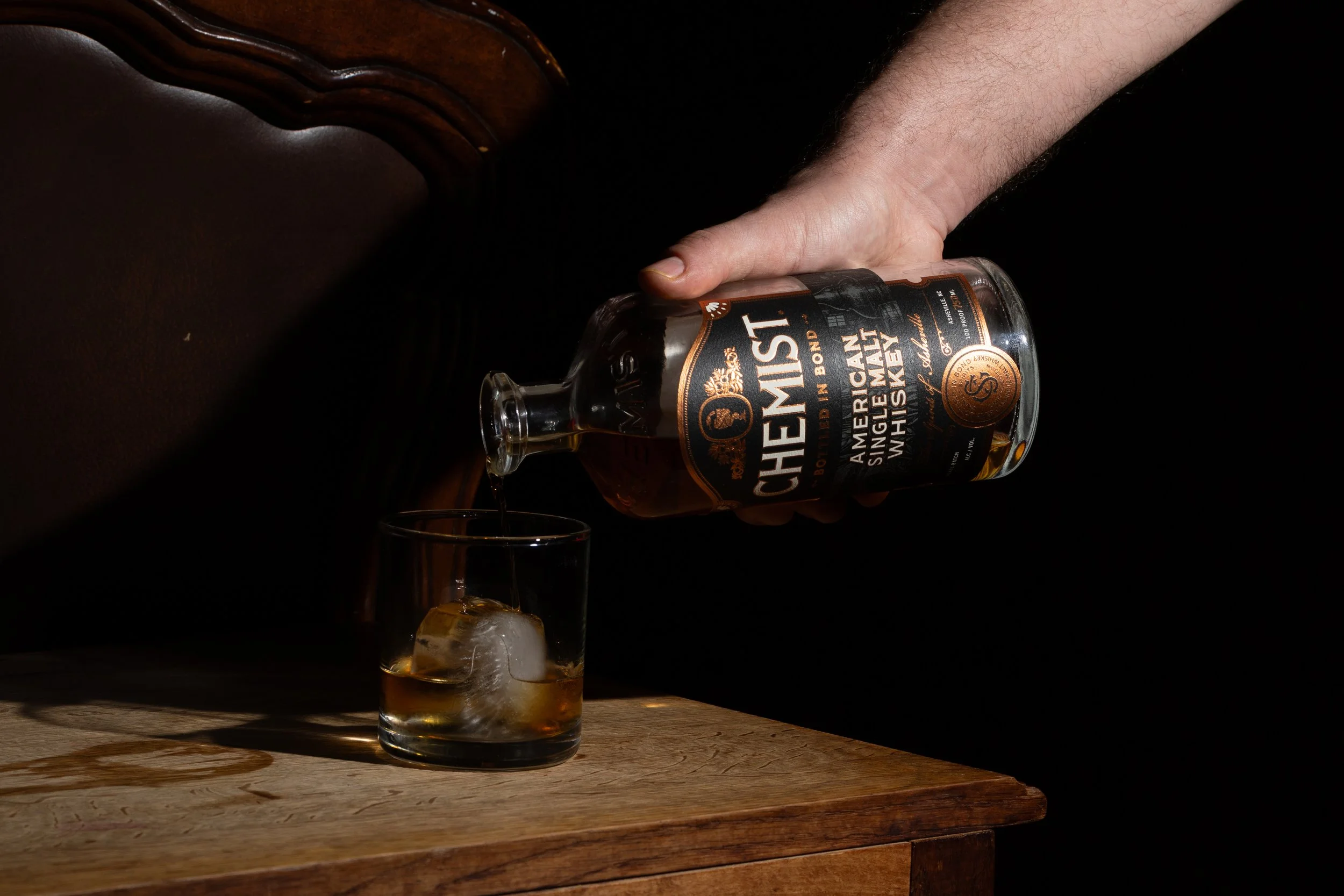
The history of American whiskey is riddled with moments of deception, dodging the law, and great risk. But before Prohibition, the American government moved to incentivize transparency and high-quality whiskey.
With the release of our first Bottled-in-Bond (BIB) Single Malt Whiskey, we at Chemist wanted to take a closer look at what Bottled-in-Bond really means, how the designation came to be, and how it fits into the modern-day world of spirits.
What is Bottled-in-Bond?
Bottled-in-Bond Whiskey is a federally regulated designation for whiskeys that meet a list of requirements set by the federal government. These whiskeys can be considered “bonded,” “aged in bond,” “bottled in bond,” or, simply, “bond.”
This classification was established to ensure transparency for American consumers after years of whiskey producers swindling and deceiving whiskey buyers with poor-quality and dangerous whiskey.
What is the History of Bottled-in-Bond?
At the end of the 19th century, whiskey production was unregulated. Whiskey, most notably bourbon, was produced and sold without honest labeling and was typically cut or colored using things like tobacco spit, fruit juice, or dangerous chemicals like turpentine and iodine.
This process of artificially coloring whiskey allowed producers to skip the long aging process, which not only gives whiskey its color, but also its distinct flavor. Producers would also cut batches with chemicals to make it last longer. The result was a low-quality whiskey that could make folks ill or kill them.
Because of the health risks and drop in quality, the U.S. government stepped in and ratified the Bottled-in-Bond Act of 1897. The main advocate was Colonel E.H. Taylor, grandnephew of President Zachary Taylor. E.H. Taylor had produced bourbon for years successfully before becoming a politician who advocated for high-quality whiskey.
In advocating for the Bottled-in-Bond Act of 1897, Taylor was advocating for hard-working whiskey producers who were continually being sidelined by the whiskey hacks cutting corners and sacrificing quality for profits. This act was one of the first consumer protection acts and set a standard for the whiskey we drink today.
When people saw the Bottled-in-Bond label on their whiskey, they knew they were purchasing a quality product. At the same time, it gave distillers tax incentives and highlighted their distillery as producing a quality whiskey.
What are the Requirements for a Bottled-in-Bond Whiskey?
The Bottled-in-Bond Act of 1897 created this new category of whiskey with rules and regulations. This act also benefited the U.S. government because while some whiskey producers were able to avoid being taxed, Bottled-in-Bond was an assurance that the government would get its cut through federal supervision of the aging process.
The rules a whiskey has to follow to be considered Bottled-in-Bond are:
The whiskey must be produced by one distillery
The whiskey must be produced under the supervision of one distiller
The whiskey must be produced during one distilling season: fall (July-December) or spring (January-June)
The whiskey must be bottled at 100 proof (50% ABV)
The whiskey must be aged for at least 4 years in wooden containers
There shall be no additives, colorings, or preservatives added to the whiskey, except water.
The whiskey must be aged in a federally bonded warehouse.
The Bottled-in-Bond Act has undergone some revisions, adding vodka and gin to the legislation, which can also be aged, or, more appropriately, “rested.” However, a whiskey still must meet all of the above criteria to be considered Bottled-in-Bond.
What Does Bottled-in-Bond Taste Like?
Although whiskeys must follow the same criteria to be labeled as Bottle-In-Bond whiskey, the tasting notes can vary. This is because there are no specific distinctions between what grains must be used, the foundation for any whiskey.
For example, you can have a Bottled-in-Bond bourbon, which has a majority of corn in its mash bill, or a Bottled-in-Bond rye, which is primarily composed of rye grain. Both result in different flavor profiles.
This means a Bottled-in-Bond whiskey can vary in taste. However, because it must be aged in wooden containers for a minimum of 4 years, and be bottled at 100 proof, the result is going to be a fuller-bodied whiskey with a richer profile.
Our American Single Malt Whiskey, for example, uses three different types of malted barley, which already yields notes of honey, chocolate, light caramel, stone fruit, and soft spice. Our Bottled-in-Bond expression of the same whiskey produced characteristics reflecting the whiskey’s maturity and proof, with notes of vanilla, cherry, rich chocolate, toffee, coffee, and warm baking spices. We can certainly say that you can “taste the quality.”
What Cocktails Can You Make with Bottled-in-Bond Whiskey?
A Bottled-in-Bond whiskey can be appropriate for any whiskey cocktail, but you should consider that using it in a cocktail can overshadow the depth and beauty of the whiskey itself. That being said, Jac from the Chemist Tasting Room and I tried it in an Old Fashioned, which you can check out here.
I will say, this Old Fashioned was probably the best I had ever had in my life; it nearly brought me to tears. It was rich, balanced, and still had those notes of tart green apple, chocolate, and baking spice. Even though the whiskey was rich, the cocktail was bright and fresh, with layers of flavor that kept coming on. Jac was clearly moved by it, as well.
We find that this Bottled-in-Bond works best in cocktails that highlight the whiskey, such as spirit-forward cocktails. Trying it neat or over a big ice cube is also an excellent way to enjoy it, and is just as likely to bring you to tears…or maybe that’s just me.
Where to Find Bottled-in-Bond Whiskey
Although distilleries today are more transparent with their whiskeys, quality remains a key factor for many whiskey lovers. This is why Bottled-in-Bond Whiskey still has a place in today’s spirit world.
Whiskey companies around the U.S. produce Bottled-in-Bond versions of their whiskeys, communicating the standards of craft and quality that their products have met, ensured by the federal designation (of products which may already be high quality and delicious).
While we have always been proud of our American Single Malt, we jumped at the opportunity to showcase its complexity and unique character in a new way. Our flagship whiskey is a Small Batch;, blending barrels to create both balance and complexity, resulting in a consistent spirit that is soft on the palate and versatile enough to enjoy on its own or in cocktails. The Bottled-in-Bond, also a single barrel,, is a more singular expression of the whiskey, designed to highlight its mash bill, maturity and distinct character while honoring the craft of the distiller through the Bottled-in-Bond designation.
Want to taste the difference? Come in to the Chemist Tasting Room or Antidote Cocktail Lounge to get a taste of our limited-edition Bottled-in-Bond whiskey.
