

By Andrew Tardif
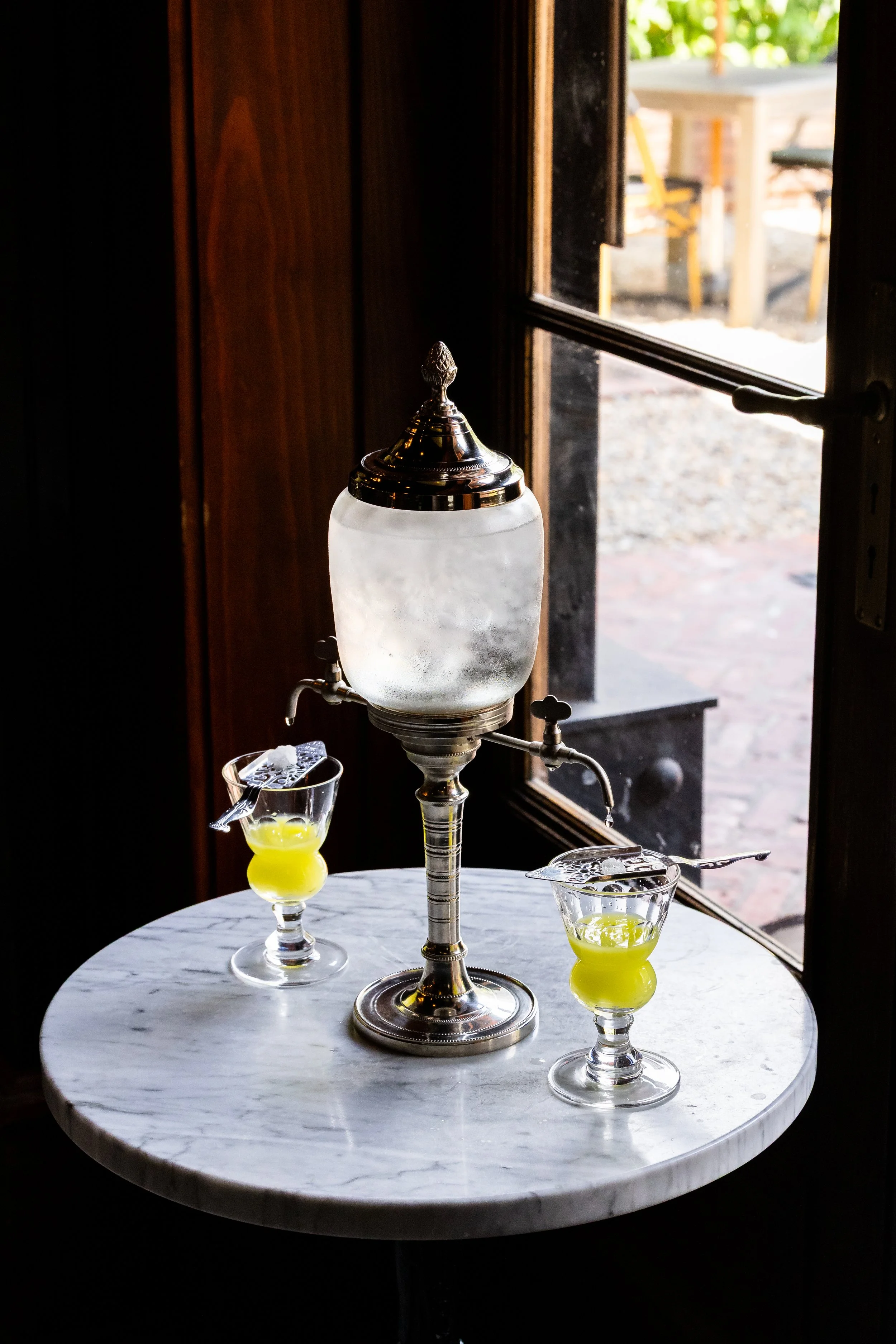
Few spirits have a history as ominous as absinthe. Once one of Europe's most popular spirits, it became the subject of widespread fear, accused of causing hallucinations, madness, and even murder. Its reputation was so notorious that governments across Europe and the United States eventually banned it.
Known as La Fée Verte, or "The Green Fairy," absinthe has since made a remarkable comeback, reclaiming its place behind the bar as an essential ingredient in some of the world's most celebrated cocktails.
In our latest Instagram video, Jac from the Chemist Tasting Room explores the fascinating history of absinthe while preparing a fittingly named cocktail, the Obituary. But there's much more to this controversial spirit than we could fit into one video.
[Embed Jac's Instagram Reel here]
What Is Absinthe?
Absinthe is a botanical spirit traditionally enjoyed as an aperitif to stimulate the appetite. Its defining ingredients are wormwood, anise, and fennel, although distillers often incorporate additional botanicals to create more complex flavors.
Typically bottled at a higher proof than many other spirits, absinthe is known for its distinctive herbal character and pronounced anise flavor. While its natural color can range from clear to green, its unmistakable appearance and storied reputation helped earn it the nickname "The Green Fairy."
The History of Absinthe
The use of wormwood in medicinal preparations dates back thousands of years, with records reaching as far back as ancient Egypt. Historically, the bitter herb was used in remedies for digestive ailments and other conditions, long before it became associated with the spirit we recognize today.
Who Created the First Absinthe?
One detail Jac and I left out of our video was just how complicated the origins of absinthe really are. While the spirit is often associated with a single inventor, its creation is the subject of considerable historical debate.
English herbalist Nicholas Culpeper documented medicinal preparations involving wormwood in the 17th century, but these early remedies were not the same as modern absinthe.
The spirit's recognizable origins are generally traced to 18th-century Switzerland, particularly the village of Couvet. The Henriod family and French physician Dr. Pierre Ordinaire are among those credited with developing and popularizing early absinthe recipes.
By the late 1790s, commercial production had begun under Major Daniel-Henri Dubied and his associates, including Henri-Louis Pernod. Pernod would eventually establish one of the most recognizable names in absinthe production, helping transform a medicinal preparation into an internationally celebrated spirit.
How the Green Fairy Took Over Europe
During the 19th century, absinthe grew from a medicinal tonic into a fashionable drink throughout France.
French soldiers serving in North Africa were reportedly given absinthe as part of their military rations, where it was associated with attempts to make drinking water safer and prevent illness. Returning soldiers helped introduce the taste for absinthe to French cafés, where its popularity flourished.
Meanwhile, European vineyards were devastated by phylloxera, an insect that attacked grapevines and severely disrupted wine production. As wine became more expensive and difficult to obtain, absinthe offered an increasingly popular alternative.
By the late 19th century, the Green Fairy had become a fixture of Parisian café culture, particularly among artists, writers, and bohemians.
Oscar Wilde, Ernest Hemingway, and Vincent van Gogh are among the famous figures associated with the spirit. Absinthe's reputation as an artistic muse was so powerful that it became entangled with some of history's most infamous stories.
One persistent belief is that Van Gogh was intoxicated by absinthe when he cut off his ear in 1888. While the incident itself is well documented, there is no conclusive evidence that absinthe caused or contributed to it. Nevertheless, stories like these helped cement the spirit's association with madness and artistic excess.
Why Was Absinthe Banned?
Despite its popularity, absinthe became the subject of an increasingly aggressive campaign against its consumption.
Several factors contributed to its downfall, including concerns about alcohol abuse, questionable production practices, scientific misunderstandings, and competition from the wine industry.
As demand increased, some unscrupulous producers reportedly used potentially dangerous additives to imitate absinthe's signature green appearance. At the same time, researchers became concerned about thujone, a naturally occurring compound found in wormwood.
Early studies associated thujone with seizures, hallucinations, and erratic behavior, contributing to the belief that absinthe caused a unique condition known as "absinthism." Modern research has challenged these conclusions, finding little evidence that traditionally produced absinthe caused the extraordinary effects attributed to it.
Public fears intensified following several violent incidents, most notoriously a 1905 murder case in Switzerland involving a man who had consumed absinthe alongside substantial quantities of other alcohol. Although absinthe was far from the only substance involved, the case became a rallying point for prohibition advocates.
The wine industry and growing temperance movement further fueled opposition to the Green Fairy. By the early 20th century, bans had spread across numerous countries, including Switzerland in 1910, the United States in 1912, and France in 1915.
For decades, a spirit once synonymous with Parisian nightlife was pushed into obscurity.
The Absinthe Renaissance
Absinthe never disappeared entirely. Production continued in some regions, while underground traditions preserved the spirit in places where it remained prohibited.
In the 1990s, British entrepreneur George Rowley helped reintroduce absinthe to international markets after encountering the spirit in Prague. His efforts coincided with renewed interest in historical cocktails and traditional spirits.
European restrictions gradually eased, and in 2007, the United States clarified the requirements under which qualifying absinthe products could be marketed and sold.
Today, absinthe has reclaimed an important place in cocktail culture, no longer defined solely by the myths that once surrounded it.
Although its reputation for causing hallucinations has largely been discredited, absinthe remains a high-proof spirit and should be enjoyed responsibly.
What Does Absinthe Taste Like?
At Antidote Cocktail Lounge, guests are often curious about our traditional absinthe service, and one of the most common questions is whether they'll enjoy the flavor.
If you appreciate black licorice, absinthe might be right up your alley.
Its flavor is typically herbal, earthy, and distinctly anise-forward, with varying degrees of bitterness and botanical complexity depending on the producer.
Unlike sweet liqueurs, traditional absinthe contains no added sugar. This is one reason the classic absinthe ritual involves slowly dripping ice-cold water over a sugar cube suspended above the spirit.
As the water dilutes the absinthe, its aromatic oils create a cloudy effect known as the louche, transforming the appearance and softening the intensity of the spirit.
[Suggested image: Traditional absinthe service at Antidote, ideally showing the louche effect.]
Classic Cocktails Featuring Absinthe
Although absinthe can be enjoyed on its own with water, its intense botanical character also makes it a distinctive cocktail ingredient.
In many classic recipes, just a rinse, spray, or few drops are enough to transform the finished drink.
The Sazerac and Corpse Reviver No. 2 are two familiar examples. Ernest Hemingway famously favored Death in the Afternoon, a simple combination of absinthe and Champagne. Another lesser-known classic, the Momisette, combines absinthe with orgeat, lemon, and soda water.
But with Halloween approaching, there's one cocktail that feels particularly appropriate.
The Obituary Cocktail
With a name like the Obituary, this cocktail practically demands a place in our Halloween celebrations.
Associated with New Orleans cocktail culture, the Obituary is a spirit-forward variation on the classic martini, combining gin, dry vermouth, and absinthe.
The gin provides a botanical foundation, while the absinthe introduces a distinctive herbal intensity that makes this deceptively simple cocktail memorable.
At Chemist, we prepare our version with Chemist American Gin, bringing together the spirit's botanical character with the unmistakable flavor of the Green Fairy.
[Suggested image: Jac's finished Obituary cocktail in the Chemist Tasting Room.]
Obituary Cocktail Recipe
Ingredients
2 oz. Chemist American Gin
¼ oz. dry vermouth
¼ oz. absinthe
3 dashes orange bitters (optional)
Lemon peel, for garnish
Instructions
Combine the gin, dry vermouth, absinthe, and optional orange bitters in a mixing glass.
Add ice and stir for approximately 30 seconds, or until thoroughly chilled.
Strain into a chilled coupe glass.
Express the oils from a fresh lemon peel over the cocktail.
Garnish with the lemon peel and enjoy.
For a closer look at the cocktail and the history behind its infamous ingredient, watch Jac prepare the Obituary in our latest Instagram Reel.
[Link to Jac's Instagram Reel]
Experience the Green Fairy for Yourself
Absinthe's reputation may have changed over the centuries, but its ability to captivate curious drinkers remains.
For those interested in experiencing the traditional ritual, visit Antidote Cocktail Lounge in Asheville's South Slope, where our absinthe service offers a taste of the spirit's history.
Or bring a little of the Green Fairy's mystique into your own cocktail collection. Pick up a bottle of Chemist American Gin and recreate the Obituary at home, just in time for Halloween.
After all, a cocktail with this much history deserves a proper introduction.
Frequently Asked Questions About Absinthe
Can absinthe make you hallucinate?
Modern absinthe is not known to cause the extraordinary hallucinations historically associated with the spirit. Much of that reputation originated from flawed research, exaggerated claims about thujone, and the broader effects of excessive alcohol consumption.
Absinthe can, however, contain a high concentration of alcohol and should be consumed responsibly.
How is absinthe traditionally served?
Traditional absinthe service involves pouring absinthe into a glass and slowly adding ice-cold water, often over a sugar cube resting on a slotted spoon.
As the water mixes with the spirit, the liquid turns cloudy, releasing its botanical aromas and creating the characteristic louche effect.
Does absinthe still contain wormwood?
Yes. Wormwood remains one of the defining botanicals in traditional absinthe.
Modern production is subject to applicable regulations governing thujone content. Absinthe-style spirits such as Herbsaint, which emerged in New Orleans during the prohibition era, offer a related anise-forward flavor without using wormwood in the same way as traditional absinthe.
