

What is the Martini? How to Make the Best Gin Martini
By Andrew Tardif
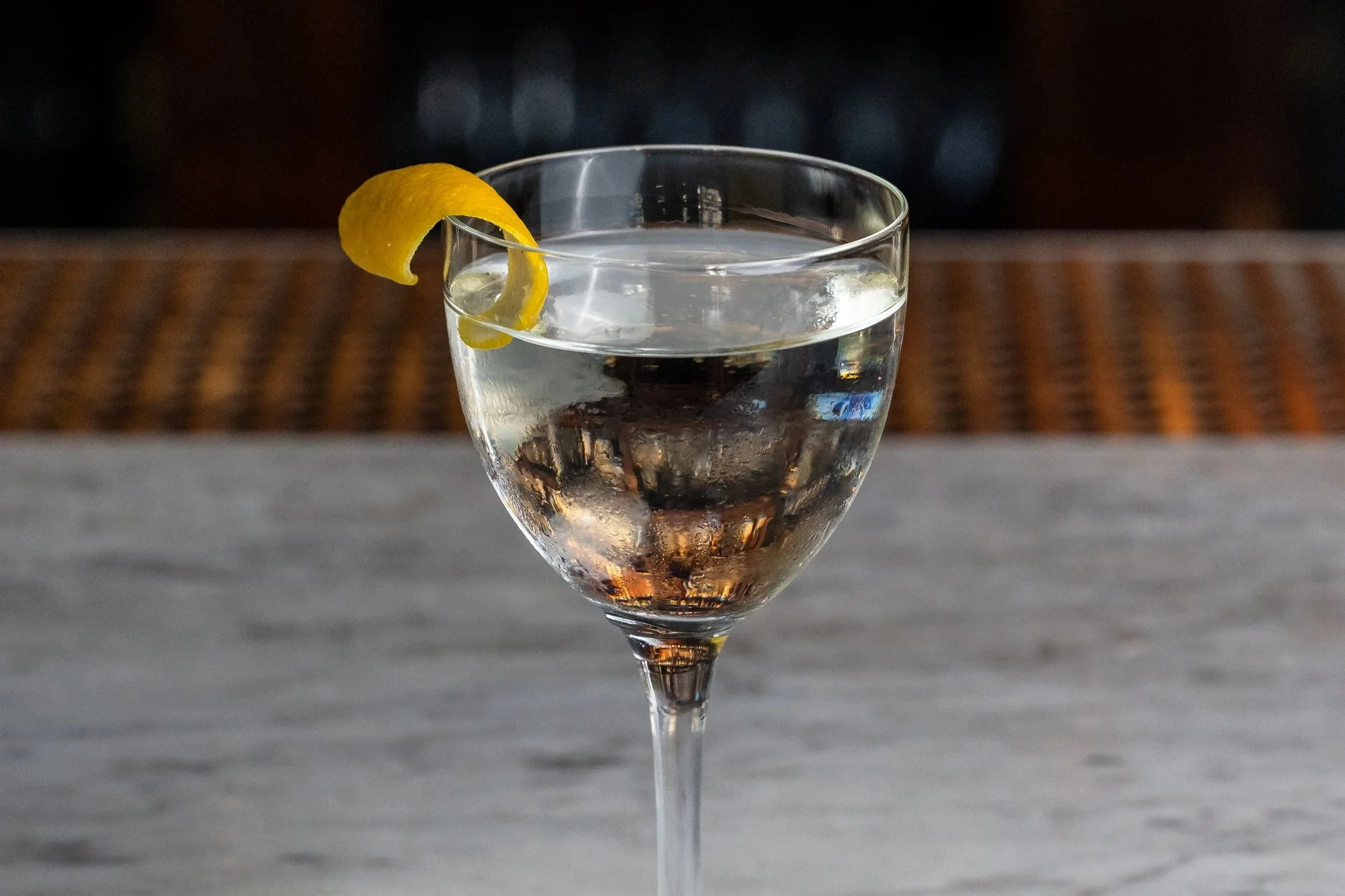
Ah, the martini. Nothing screams elegance and class like that signature glass filled with clear spirits garnished with a twist or olive. But this simple cocktail has been marred by many different renditions, from the chocolate martini to something as experimental as a kimchi or caesar salad martini.
Don’t get us wrong, experimenting with flavors is a trademark of mixology and something we at Chemist Spirits strive to do with our libations. But it has led to a simple question: what is the martini? If you put something in a martini glass, is it then a martini?
In this article we want to discuss what a martini is, its contested history, as well as recipes for the most common types of martinis so you can make the best gin martini at home.
Martini 101: What Is a Martini + Core Ingredients
So what is a martini? Any bartender knows that when a patron comes to their bar and orders a martini there is a slew of questions that must follow:
Gin or vodka?
Dry? How Dry?
Dirty? How dirty?
Stirred or shaken?
Bitters? Gibson? Vesper?
If you don’t know what some of these terms mean, don’t worry, we’ll elaborate in this article.
A martini cocktail in its simplest form is:
Base spirit: Gin (traditionally) or vodka
Modifier: Dry vermouth
Method: Stirred with ice
Glassware: Martini or coupe glass
Garnish: Lemon twist or olive
Flavor profile: Spirit-forward, herbal, dry
This results in a spirit forward cocktail where the gin is the star. Since the martini is made of these two basic spirits, the quality of the spirit and its overall flavor profile is crucial to the resulting cocktail.
What Type of Gin Should You Use in a Martini?
Over the years the type of gin typically used in a martini has changed.
Old Tom Gin – Slightly sweeter, rounder
Plymouth Gin – Earthier, softer botanicals
London Dry Gin – Crisp, juniper-forward
With so many different gins available, it’s really up to you what kind of gin you want to use. We love to use our Chemist American Gin for our martinis because it is citrus forward and floral.
Prefer something bolder? Navy Strength Gin makes a more spirit-forward martini. Looking for depth? A Barrel Rested Gin adds warmth and complexity. Choose a gin you genuinely love — the martini will showcase it.
What is Vermouth and What is the Best Vermouth to Use in a Martini?
Vermouth is a fortified wine, typically fortified with a fruit spirit like a grape brandy, that is “aromatized,” or elevated with botanicals and herbs. The fortification process stops fermentation, adding strength and complexity.
There are two primary styles:
Dry vermouth – Crisp, herbal, lighter in color
Sweet vermouth – Richer, darker, spiced
Modern martinis typically use dry vermouth, though sweet vermouth played a larger role in early versions of the drink. Vermouth is wine, so once opened, store it in the refrigerator. Fresh vermouth makes a dramatically better martini.
Vermouth has changed dramatically since the birth of the Martini, and with different vermouths and gins entering the market, the Martini as a cocktail has and continues to take on many different forms.
Dry Martini vs Classic Martini: Ratios & Differences
If you ordered a dry Martini at the beginning of the 20th century, you would be served a cocktail with dry vermouth, especially since it had to be differentiated from its sweeter predecessor which used Italian (sweet) vermouth.
However, modern day has seen a complete shift of the terminology. Now, the drier the martini, the smaller the vermouth ratio.
Common Martini Ratios
1:1 – Early historical style
2:1 – Balanced classic
4:1 – Dry
8:1 or 9:1 – Very dry
No vermouth – “Bone dry”
Yes, it’s counterintuitive. Modern martini culture is about vermouth reduction, which completely takes from the cocktail, in my humble opinion.
Martini History: Origins of the Classic Cocktail
Now, we aren’t cocktail historians, but we’ll do our best to paint a picture of the cloudy history surrounding the martini.
Where the Martini Comes From
The origins of the martini can be traced back to the late 19th century with ties to the popular Manhattan cocktail, the Manhattan being made of Whiskey (typically Rye), sweet vermouth, and bitters.
This was adapted by taking out the whiskey, replacing it with gin, and adding a cherry liqueur to make the Martinez cocktail. When tracing the history of the martini, you’re tracing the use of the name itself. Recipes that called for gin and vermouth emerged in the 19th century, but the drink itself became popular in the New York clubs and hotels.
How The Martini Got its Name
The name “Martini” likely gained traction because of the common vermouth used for the cocktail: Martini & Rossi, a vermouth brand still common today. Olive brine was a common ingredient in the Martini since the beginning of the 20th century, but it finally gained the name Dirty Martini in the 1980s.
The Classic Martini Returns
The popularity of the martini began to drop in the 70s and as time went on, variations of the cocktail took it far from its simple origins i.e. the Lemon Drop Martini, Chocolate Martini, or whatever concoction ended up in a martini glass.
With the resurgence of cocktail culture in the 1990s and early 2000s came a new interest in the martini, especially in its traditional form.
How to Make the Best Martini at Home
How to make the best gin martini comes down to what type you like and how dry, wet, or dirty you want it. Here are a couple of popular martini recipes to get you started. Remember, you’re the chemist, and you can alter these amounts how you please. You can even get very ornery about it like the great Alton Brown.
Classic Martini Recipe
Making something “original” is somewhat silly to us. Many of the recipes that have lasted through time were simply the ones that were written or documented. The chances are great that different bartenders in different geographical locations and bars were experimenting with various ratios and approaches on what would eventually be dubbed “the martini.”
In other words, play with this to your heart’s content and don’t feel pressured to make “the original” or “the classic” martini. With that being said, here’s our take on a “classic” martini.
Classic Gin Martini Ingredients:
2 oz Chemist American Gin (or Chemist American Vodka)
1 oz Dry Vermouth (or Sweet)
2 Dashes Orange Bitters (Optional)
1 Dash Absinthe (Optional)
Classic Gin Martini Recipe
Place ingredients into a mixing glass with ice
Stir for 30 seconds or until ingredients are thoroughly chilled
Strain into a chilled coupe
Express lemon oil over the top
Garnish with the lemon peel (or olive)
Dirty Martini Recipe
Dirty Martini Ingredients:
2 ¼ oz Chemist American Gin (or Chemist American Vodka)
¾ oz Olive Brine
Barspoon of Dry Vermouth
Dirty Martini Recipe
Place ingredients into a shaker tin with ice *
Shake for 10-15 seconds or until thoroughly chilled
Double strain into a chilled coupe
Garnish with an olive
*Technique Tip: Shaken or Stirred
This is a greatly contested issue. Many say that shaking a martini is blasphemy since it can “bruise” the liquor. This just means you over dilute it, and therefore can ruin an otherwise silky quality. With a dirty martini it can be important to shake it to properly dilute it, but feel free to stir your dirty martini, just be prepared for it to be very briney.
Dry Martini Recipe
Dry Martini Ingredients:
2 ½ oz Chemist American Gin
¼ oz Dry Vermouth
Dry Martini Recipe
Place ingredients into a mixing glass with ice
Stir for 30 seconds or until thoroughly chilled
Strain into a chilled coupe
Express lemon oil over the top’
Garnish with lemon peel or olive
Vesper Martini Recipe
This gin martini variation was named after the Vesper Lynd character in the James Bond novel, Casino Royale. We also enjoy our Navy Vesper variation which utilizes our more potent Chemist Navy Strength Gin.
Vesper Martini Ingredients:
1 ½ oz Chemist American Gin
½ oz Cocchi Americano Vermouth
Vesper Martini Recipe:
Place ingredients into a mixing glass with ice
Stir for 30 seconds or until thoroughly chilled
Strain into a chilled coupe
Express lemon oil over the top
Garnish with the lemon peel
How to Make a Gibson Martini
This final gin martini variation is another savory option and utilizes olive brine. Its origins go as far back as the original martini itself. It was created in 1898 at the Bohemian Club in San Francisco and simply removed the orange bitters, so it was just gin and dry vermouth.
It got its iconic onion garnish in the 1920s. Although the classic Gibson didn’t use olive brine, we like to throw some in ours to amplify its savory nature.
Gibson Martini Ingredients:
2 ½ oz Chemist American Gin
½ oz Onion Brine
Barspoon Dry Vermouth
Gibson Martini Recipe
Place ingredients into a mixing glass with ice
Stir for 30 seconds or until thoroughly chilled
Strain into a chilled coupe
Garnish with a pearl onion
How to Order a Gin Martini Like a Pro
Now that you know some of the main martinis, you should be able to order a gin martini at a bar.
To confidently order a martini, specify:
Gin or vodka
Dry, wet, or dirty
Stirred or shaken
Twist, olive, or onion
Examples:
“Gin martini, 4:1, stirred, lemon twist.”
“Dirty vodka martini, extra dirty, shaken.”
“Gin Gibson, classic ratio.”
Feeling daring? Try a gin martini with a couple dashes of Absinthe. Any cocktail bar like Antidote Cocktail Lounge is accustomed to the seasoned and novice martini drinker and seeks to make a martini to their liking.
Where to Get a Perfect Gin Martini in Asheville
The gin martini is a simple drink that has been clouded by an uncertain origin and convoluted imposters, but at its heart, it is simply a combination of gin and vermouth that emphasizes the botanicals and herbaceousness of its ingredients.
How to make the best gin martini depends on what you love. So, take out your best bottle of gin, favorite vermouth, and most sumptuous olive brine and concoct your perfect antidote to the most common cocktail, the gin martini
If you’re in Asheville and want to experience a carefully built gin martini, visit Antidote Cocktail Lounge at Chemist. Want to recreate it yourself? Take these ratios, experiment, and explore our full collection of gins and vodka to craft your perfect martini.
Martini FAQ: Tips for Making, Storing & Serving (H2)
Can I Make a Martini With Flavored Gin?
Yes! Flavored gins, such as citrus or floral varieties, can add a unique twist to your martini. Keep the garnish and vermouth simple to let the gin’s flavors shine.
What is the Best Glassware for a Martini?
Martinis are best served in a martini glass or coupe. The wide rim lets aromas fully develop, while the stem keeps your drink from warming too quickly.
Can I Make a Martini at Home Without a Shaker or Mixing Glass?
Absolutely. Stir ingredients in any clean glass or jar with ice, then strain into a chilled martini glass. Chilling and proper dilution are key to a smooth martini.
What Are Some Popular Gin Martini Variations?
Popular gin martinis include the Duke (very dry), Fifty-Fifty (equal gin and vermouth), and Rose (floral). These variations let you adjust sweetness, strength, and flavor to your taste.
Is a Martini Gin or Vodka?
A Martini is made with gin and was originally the go-to spirit for decades since vodka was hard to come by in the U.S. Vodka didn’t take off in America until after prohibition and became mainstream after WWII.
