

The Different Types of Gin and How To Use Them
By Andrew Tardif
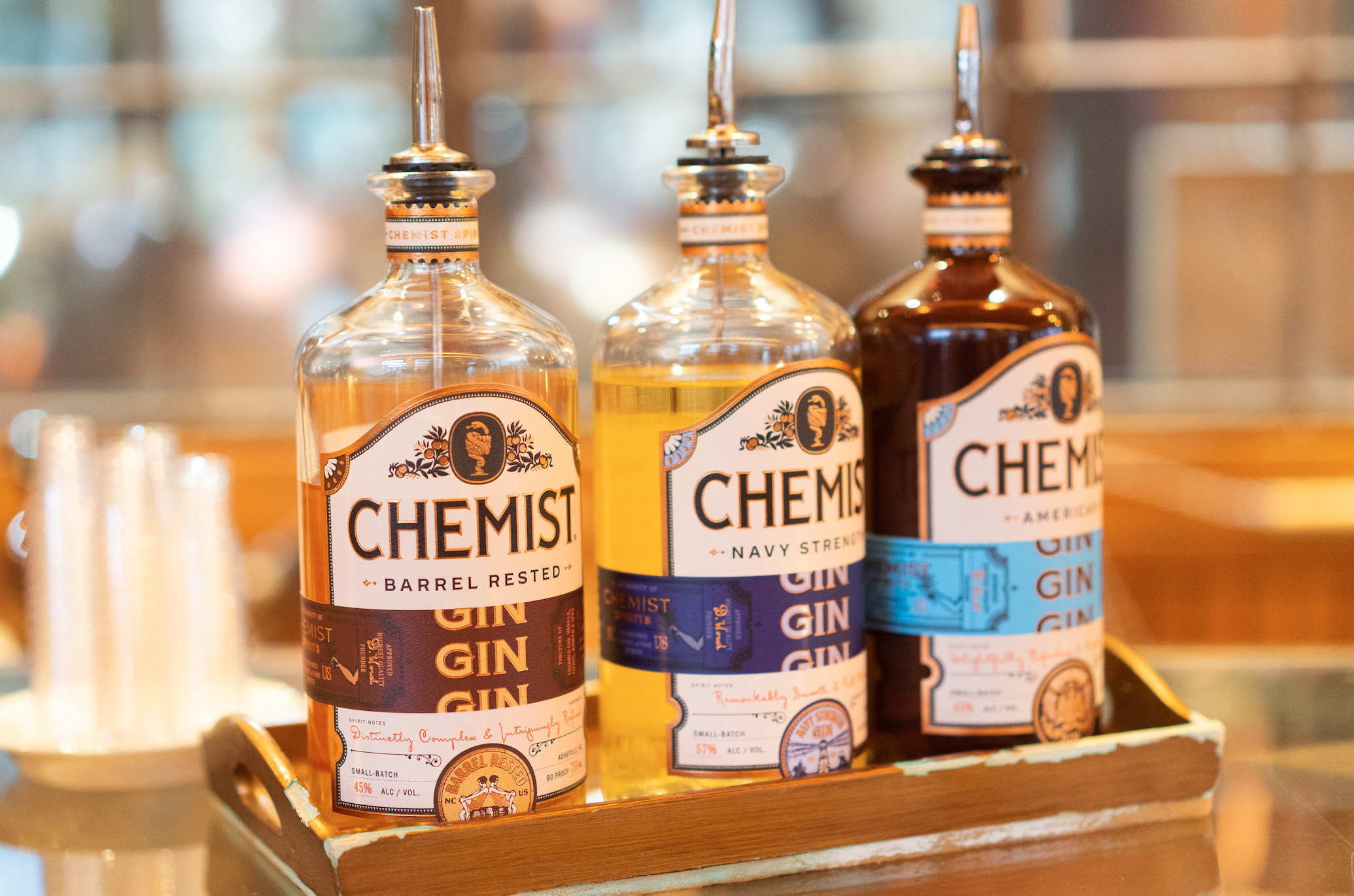
The world of gin is vast and expands beyond what many think of as gin. The dry juniper taste, which has held many back from the spirit, has been expanded into an ever-growing diversity of flavors.
We at Chemist Distillery love to experiment and play with many types of gin with our particular taste and vision. Here are the main types of gin you’ll run into and a couple of ways you can experiment with them in your lab.
What is Gin?
Simply put, gin is a distilled spirit flavored with juniper. The juniper must be a dominant ingredient and flavor in order for it to be considered gin, but it can include citrus, spices, and roots.
Typically, a standard gin will be made with a neutral spirit that is grain based and then flavored through distillation, infusion, or compounding with juniper berries, angelica root, lemon peel, coriander, orris root, and more.
Genever (Jenever) - Gin’s Granddaddy
Genever, or more accurately Jenever, is a Dutch spirit distilled from grain and flavored with juniper berries. Now, just to be clear, this is not technically a gin, but without it, gin wouldn’t exist today. This spirit was brought back to Britain after British soldiers witnessed its vigorous effects on Dutch soldiers who would drink it before they entered battle.
As Britain acquired a taste for what they called “Dutch Courage”, they went on to make their own Genever. Using different bases, adding different botanicals, and taking it through a different distillation, this spirit became its own class: gin. The name derives from the word “Genever.”
In terms of taste, because Genever typically has a base of malted grain, the flavor profile leans more towards a whiskey than a gin, especially since the base spirit isn’t covered up or overlooked by more botanicals.
How to Drink Genever
Although you may find Genever in some cocktails these days, the most traditional way is to drink it straight, chilled, and possibly alongside a beer, something very few would do with, say, a London Dry Gin.
One popular cocktail you will find Genever in is the Flying Dutchman. This recipe calls for Yellow Chartreuse, Benedictine, lemon juice, and Genever. We like to switch out the Genever for the Chemist Navy-Stength Gin and we use Liquor Strega when it’s tough to find Yellow Chartreuse:
The Flying Dutchman Cocktail Recipe
1 ½ oz Genever or Chemist Navy-Strength Gin*
½ oz Strega
½ oz Benedictine
¾ oz Lemon Juice
Put ingredients in a shaker tin with ice and shake for 10 - 15 seconds.
Strain into a chilled coupe.
Express lemon oil over top and garnish with the lemon peel.
*Another option we enjoyed was an idea from Paulina, one of the many chemists at Antidote Cocktail Lounge. This involves doing a split base: ¾ oz Genever and ¾ Chemist Navy Strength Gin and then the same amount of Strega, Benedictine, and Lemon Juice.
London Dry Gin
When people think of gin, London Dry is typically what they’re thinking of. Sadly, the market of London Dries has become synonymous with the many cheap gins imbibed at college parties and added to store brand tonic. I mean, in that case, no wonder people get an aversion to it.
But London Dry Gin, which doesn’t have to be made in London, is the main type of gin that has a dominant juniper flavor and is therefore dry on the palate. This gin is traditionally crisp and clean, and plenty of gin brands out there produce a quality London Dry that makes for a spirituous elixir as opposed to a red solo cup of debauchery and regret.
This is one of the types of gin that is still as popular today as it was in nineteenth century Britain.
How to Drink London Dry Gin
London Dry Gin can generally be used in many cocktails, especially if you prefer that dry, juniper-forward quality. It goes especially well with a quality tonic water. Otherwise, you can use it in a citrus forward drink to accentuate the dryness or offset that flavor in something a bit sweeter, like a Bee’s Knees.
For those looking for something dryer than our floral and citrusy American Gin, this cocktail may be a great choice. Be warned, these get pretty piney…
Bee’s Knees Recipe
1 ½ oz London Dry Gin or Chemist American Gin
¾ oz Honey Syrup
¾ oz Lemon Juice
Place ingredients in a shaker tin with ice and shake for 10-15 seconds
Strain into a chilled coupe.
Express lemon oil over the top and garnish a lemon peel.
Old Tom Gin
This sweeter take on the London Dry came into prominence as a cordial gin since it was cut with water and sweetened with sugar. This process was done by retailers who bought gin at a stronger proof from rectifiers. Old Tom Gin had the highest proof of these cordial gins and therefore was the least sweet.
This gin still meets the minimum alcohol required to be considered a gin, while many cordial gins today don’t meet the minimum and are instead labeled as “gin liqueurs.”
Of the different types of gin, Old Tom is considered to be on the sweeter side and therefore is best for those who like the flavor of juniper but don’t want it so dry. There are over a dozen brands of Old Tom Gin that are in production today.
How to Drink Old Tom Gin
On the opposite end of the spectrum from London Dry Gin is the Old Tom Gin, so if you want to balance the Old Tom Gin, a citrus forward cocktail isn’t a bad idea, or even one that uses the addition of a dry bubbly buddy.
This means cocktails like the French 75 and Gin Fizz can benefit from its smooth and sweet taste.
The cocktail that is believed to have gained its name from Old Tom Gin is the Tom Collins. Originally called the “John Collins” since it was served in a Collins glass, it underwent a name change either from a barroom gag or due to its typical usage of Old Tom Gin.
Tom Collins Recipe:
2 oz Old Tom Gin or Chemist Conservatory Rose Gin
1 oz Lemon Juice
½ - ¾ oz Simple Syrup
Soda Water
Place gin, lemon juice, and simple syrup into a shaker tin with ice.
Shake for 10 seconds
Strain into a Collins glass filled with ice.
Top with soda water
Garnish with a lemon wedge
Plymouth Gin
This is not only a type of gin but also a brand that has lasted centuries. In order to be considered Plymouth Gin, the gin must be made in Plymouth, England. This was a popular gin for naval officers who were allowed money for gin rations, especially since Plymouth served as a major naval port.
The juniper flavor of this gin is toned down while other flavors like lemon peel, sweet orange peel, green cardamom, and coriander become more pronounced. This gin will have an earthier flavor also because of the orris and angelica root.
How to Drink Plymouth Gin
Since Plymouth Gin has been around for so long, it is one of the main types of gins that has served as the base for many popular classic cocktails. It’s mentioned with frequency in The Savoy Cocktail Book by Henry Craddock. Because the juniper profile on Plymouth Gin is softened, this Gin is great in cocktails that have gin as the star.
What better cocktail is there to showcase a gin than a martini? Although the Martini is a cocktail that’s hard to pin down, with its complicated history and ever-changing nature, here’s a Gin Martini recipe we find to be standard and balanced.
Plymouth also makes a Navy Strength Gin and we find that our Chemist Navy-Strength Gin serves as a great substitute, providing more earthy spice and citrus notes.
Gin Martini Recipe*:
2 oz Plymouth Gin or Chemist Navy-Strength Gin
1 oz Cocchi Americano Vermouth
2 Dashes Orange Bitters
Lemon Peel
Pour the gin, vermouth, and bitters into a mixing glass with ice.
Stir for at least 30 seconds to chill.
Strain into a chilled coupe or Nick and Nora glass.
Express lemon oil over top and garnish with lemon peel. Another option is to garnish with an olive.
*Like your martini a little dirty? Instead of 1oz vermouth, do ¾ oz olive brine and a bar spoon of vermouth. After all, you’re the chemist.
Barrel-Rested Gin
One method to mellow out the flavor of a gin and impart a deeper quality is to rest gin in barrels, typically oak. This practice of resting or finishing the gin in barrels adds extra depth and can soften some of the sharp flavors from the botanicals.
Barrel resting came about by accident, at least the results. In order to transport gin at sea, gin makers in the 19th century would store the spirit in barrels so it could safely make it to its destination. The gin would sit in barrels for extended periods of time, sloshing around.
This prolonged time resting and added agitation imparted many of the elements of the wood barrel itself resulting in this type of gin. Now the gin is purposely put in barrels, not for transportation but for the resulting flavor profile: we rest our Barrel-Rested Gin in oak barrels for 6 to 8 weeks to achieve a smooth finish with notes of caramel and vanilla.
Out of the different types of gin, this one is going to be closest to a whiskey. For whiskey lovers who are cautious about trying gin, this is the type to reach for. In the US, because the TTB defines gin as an “unaged spirit,” you legally cannot say a gin is “barrel-aged.”
How to Drink Barrel-Rested Gin
Since the botanicals are slightly mellowed, the finish is smoother, and the flavor is deeper, a barrel-rested gin can be enjoyed neat or on the rocks like a whiskey. An oaky finish can make it an easy sipper, or you can use it instead in a whiskey cocktail.
A Barrel-Rested Gin Old Fashioned can be a lighter take on the classic while adding a whole other range of flavors. However, if you want a cocktail that the Barrel-Rested Gin is meant to be in, it would have to be the Martinez. The Martinez is considered one of the predecessors to the classic martini. Look at that recipe, and you’ll see the similarities.
Martinez Cocktail Recipe:
2oz Chemist Barrel-Rested Gin
¾ oz Sweet Vermouth
¼ oz Luxardo Maraschino Liqueur
2 Dashes Orange Bitters
Put ingredients into a mixing glass with ice and stir for at least 30 seconds to chill.
Strain into a chilled coupe.
Express lemon or orange oil over the top
Garnish with a maraschino cherry. *
*You can garnish with the citrus peel, but the cherry is a nod to the Martinez as an adaptation of the Manhattan.
Navy-Strength Gin
Back in the 19th century, gin was a possible ration for officers of the British Royal Navy. Rum was already a popular ration for the average sailor, but initially it was a problem to transport.
Because the high seas could cause a barrel of rum or gin to spill on the gunpowder, it was important that the spirit didn’t hinder its ability to ignite, lest the ship would have limited defenses in the event of a battle.
The solution? Make the spirit high enough in alcohol content that it can ignite. Thus was born Navy-Strength. Both Navy Strength Rum and Gin provide a high proof and therefore a very strong flavor.
Although Navy Strength Gins back in the Royal Navy mostly had an ABV of 54.5%, many Navy Strength Gins including our own Chemist Navy-Strength Gin have a minimum of 57%, making it the strongest of the different types of gin.
How to Drink Navy-Strength Gin
Navy-Strength is a potent brew and therefore serves well in cocktails that may have other ingredients that could overtake the gin’s flavor. The strength in flavor can stand up against other ingredients so you can still taste the gin.
Keep in mind, it is strong, so whenever replacing it in a cocktail with a standard gin, be prepared for the results. We love to put it in a Last Word, where the Maraschino Liqueur and Chartreuse risk overpowering the gin.
Last Word Recipe:
¾ oz Chemist Navy-Strength Gin
¾ oz Green Chartreuse (Faccia Brutto Centebre, Genepy le Chamoise or Luxardo Del Santo to substitute)
¾ oz Luxardo Maraschino Liqueur
¾ oz Lime Juice
Place ingredients into a shaker tin with ice and shake for 10-15 seconds
Strain into a chilled coupe
Garnish with a Maraschino Cherry.
American or New World Gins
Also referred to as New Style, Contemporary, and Western Gin, these types of gin essentially does what the British did to Genever, adding more botanicals and experimenting with new ways of distilling the spirit.
Different types of citrus, different flavors, and a new use of local ingredients are the hallmark of this type of gin, although in some ways the flavors may journey further and further from its primordial essence of juniper.
What kind of flavors? Well, Aviation is known for having a predominantly lavender flavor, Hendrick’s has a cucumber and rose flavor, and our own American Gin has flavors of mountain botanicals foraged from the Western North Carolina highlands.
How to Drink New World and American Gins
With such a wide variety out there, it’s hard to pinpoint the perfect way to drink a New World or American Gin. This category is so diverse, and some of these gins may steer so far from juniper that it may be difficult to consider them gins.
This being said, different cocktails may work with different types of gins from this category. We find that our American Gin is very versatile and can mix well in a variety of cocktails from a Vesper Martini to a Gin Mule. Oh, that sounds good. How about a recipe?
Gin Mule Recipe:
2 oz Chemist American Gin
¾ oz Fresh Lime Juice
¾ oz Ginger Syrup
Soda Water
Place gin, lime juice, and ginger syrup in a shaker tin with ice and shake for 10 - 15 seconds.
Strain into a Collins glass filled with ice.
Top with soda water.
Garnish with a lime wedge.
Flavored or Cordial Gins
Many gins at the eve of the Gin Craze in London were cut with sugar making them sweeter and a lower proof. This made them more comparable to a cordial gin which is typically sweeter and can be flavored with various fruits or other berries.
Since many of these types of gin have a lower alcohol content, they don’t always meet the minimum alcohol requirements to be considered “gins.” Of the different types of gin, this category is one of the most vast, resulting in a wide range of flavors, similar to contemporary gins.
How to Drink Cordial and Flavored Gins
How you drink your cordial or flavored gins depends greatly on the type of gin it is. Sloe gin is a popular cordial gin that is flavored with sloe berries and sweetened. It is famous for being in the Sloe Gin Fizz which is simply Sloe Gin, lemon juice, simple syrup, and club soda.
For something on the sweeter and more voluptuous side like our Chocolate Orange Liqueur, we recommend sipping it straight or on the rocks with an orange peel. If you want to get a little fancy, you can toss it in your Negroni for a sweet concoction after dinner.
Ingredients:
1 oz Chemist Spirits Chocolate Orange Gin Liqueur
1 oz Eda Rhyne Bitter Tooth
1 oz Sweet Vermouth (Cocchi Di Torino)
2 Dashes Aromatic Bitters
Garnish: Orange Peel
Instructions
Combine all ingredients into a cocktail stirrer with ice.
Stir ingredients until chilled.
Strain into a coupe glass.
Garnish with an orange peel expression. Enjoy!
Conclusion
Many of these types of gin have been around for centuries while others have gained popularity over the last couple of decades. Regardless, they have a special place in cocktails or on the rocks.
If you want to taste high-quality takes on these types of gin, visit Chemist Spirits in person or online and order a bottle of gin or one of our Single Malt Whiskeys. We concoct each one of our spirits in our laboratory with precision and passion.
Hopefully you found this article a helpful guide to the different types of gin, and we hope you get to try them as well as the listed cocktails in your own lab.
