

What Are The Different Types of Whiskey?
By Andrew Tardif
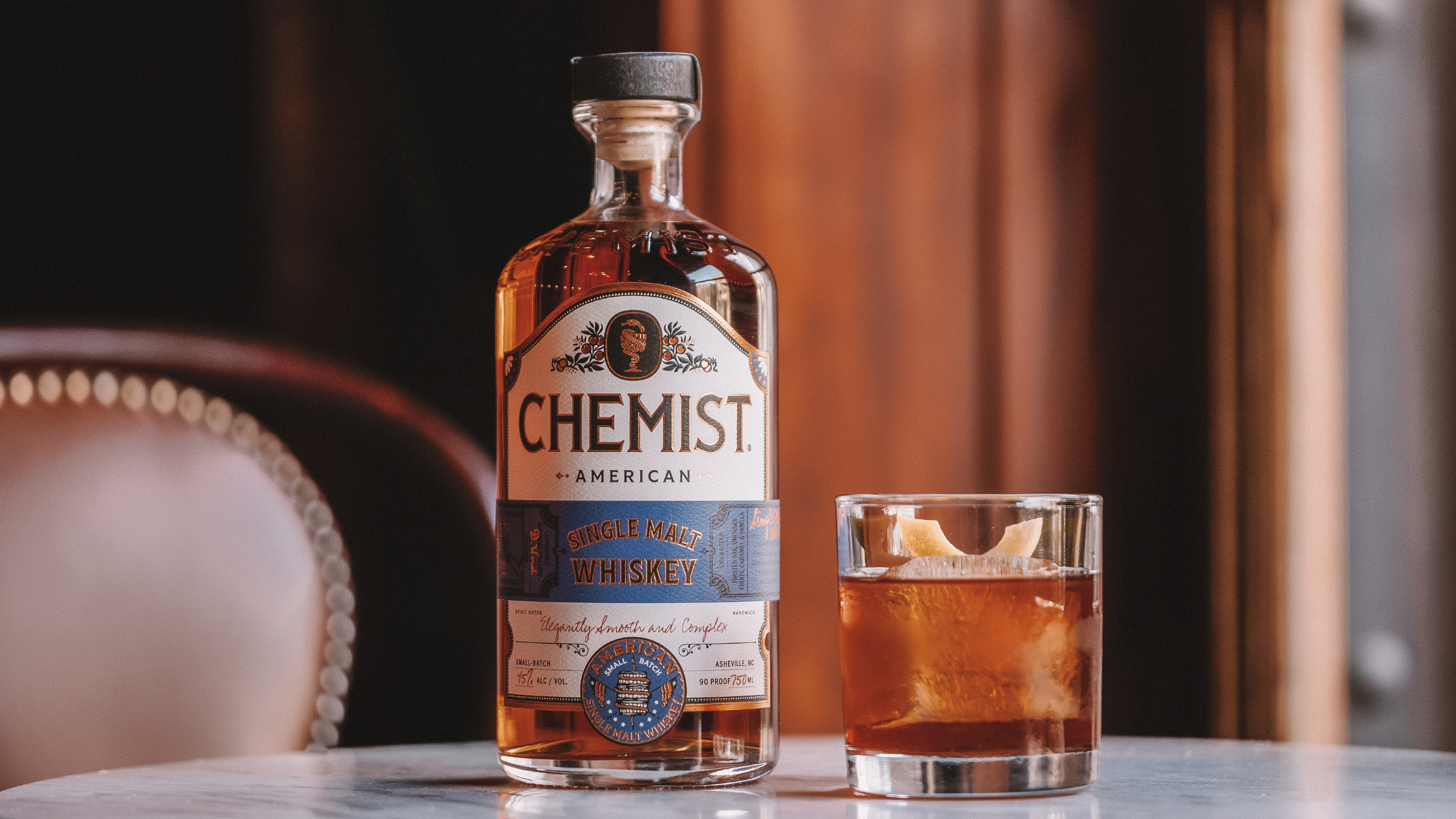
Hello fellow chemists, today we want to delve into the wild world of whiskey. Do you like Bourbon, Rye, or maybe even Scotch? These are all whiskeys, but they are also so vastly different that one tippler may loathe one and adore another.
At Chemist Spirits, we love to explore the many types of whiskey out there, in an attempt to better develop our own American Single Malt Whiskey, in its many iterations. So, join us in our lab as we discuss the different types of whiskeys, what sets them apart, and some of the cocktails that commonly use them.
What is Whiskey?
Whiskey is, simply said, a non neutral spirit made of cereal grains and aged in barrels. This leaves a lot of room for different varieties making different types of whiskeys diverse in flavor. This is especially since there are a wide range of cereal grains as well as different aging techniques and types of barrels.
What Are the Different Types of Whiskey?
The different types of whiskey are Scotch, Irish Whiskey, Canadian Whiskey, Bourbon Whiskey, Rye Whiskey, and American Single Malt Whiskey. Whiskey is mainly differentiated by region which can lend to different flavors.
This is especially true when considering the water used in the process. Water and grains from Islay, Scotland are going to make for different flavors than water and grains from, say, Lawrenceburg, Indiana.
Being in Appalachia, our spirits benefit greatly from our fresh mountain water, which is most apparent in our Chemist American Vodka, but a key characteristic to all of our spirits, including our whiskeys.
Scotch Whisky
Let’s start with Scotch Whisky since both Scotch and Irish Whiskey are the delicious primordial goo from which all future whiskeys would sprout.
It’s difficult to know which came first, Scotch or Irish Whiskey. The first written record of Scotch is in the Exchequer Rolls in 1494; these were tax records that specified malt purchased to make “aqua vitae.”
Aqua Vitae is Latin for “water of life,” the gaelic for that being “uisce beatha,” the uisce eventually evolving to the term whiskey.
The first written record, however, doesn’t dictate when whiskey started being made, and this grain spirit was most likely being made for centuries prior.
What Makes Scotch Whisky?
As of now, Scotch Whisky has some stringent rules it must follow. As laid out by the Oxford Companion to Spirits and Cocktails, Scotch must be:
a. Produced at a distillery in Scotland from water and malted barley (to which only the whole grains of other cereals may be added), all of which have been: (i) processed at that distillery into a mash; (ii) converted to a fermentable substrate only by endogenous (i.e., not added) enzyme systems; (iii) fermented only by the addition of yeast
c. Matured in an excise warehouse in Scotland in oak casks of a capacity not exceeding 700 liters, the period of that maturation being no less than three years
d. In retention of the color, aroma, and taste derived from the raw materials used in, and the method of, its production and maturation
e. Free from the addition of any substance other than water and spirit caramel
f. Bottled at a minimum of 40 percent alcohol by volume
(Wondrich & Rothbaum, 2021)
What Does Scotch Whisky Taste Like?
Of the types of whiskey, many will consider Scotch to be defined by a peaty/smoky flavor since the malted barley is eventually dried out by the smoke of peat, organic material that has layered due to waterlogging and other causes.
Peat was used out of necessity as an alternative fuel source in the 17th and 18th centuries, and eventually became a defining characteristic of Scotch. This is not required for Scotch, however, and many Scotch whiskies won’t peat their malted barley.
In time, peated Scotch whisky may even become phased out due to its environmental impact (Littler 2025), but Scotch will certainly continue to exist in its non-peated form. The taste of a Scotch is dependent on the type it is and where it is produced.
Types of Scotch
Single Malt Scotch: This Scotch must be produced in one distillery and is made of 100% malted barley
Single Grain Scotch: This Scotch must be produced in one distillery and made of a malted barley and other grains.
Blended Malt Scotch: This Scotch is a blend of Single Malt Scotches from two or more distilleries.
Blended Grain Scotch: This Scotch is a blend of Single Grain Scotch from two or more distilleries.
Blended Scotch: This Scotch is a blend of Single Malt Scotch and Single Grain Scotch from two or more distilleries.
Scotch Regions
Scotch is produced in five regions, each region lending a different flavor profile:
Islay Scotch: This Scotch is made on the Isle of Islay and is typically identified by its bold and peaty flavors.
Highland Scotch: This Scotch has a wide range of flavors since it is produced in a large area of Scotland. These Scotches can range from light and fruity to more full bodied and smokey.
Speyside Scotch: These Scotches are made around the River Spey in Strathspey located in the Highlands. They can range from grassy and light to full bodied.
Lowlands Scotch: Compared to Highland Scotch, these Scotches are lighter and more approachable. These are good for beginner Scotch drinkers.
Campbeltown Scotch: These Scotches are typically pungent and are described as “smoky” and “oily.”
Irish Whiskey
Although many a joke has been made at the expense of the Irish regarding their whiskey consumption, they are one of the oldest sources of the spirit.
One of the earliest written records dates back to 1405 when it was mentioned in the Annals of Clonmacnoise, and the earliest written recipe for whiskey dates back to 1324 in the Red Book of Ossory.
The distilling of the spirit could have gone as far back as the 6th century when monks came over to Ireland with their skill of distilling for medicinal purposes.
As mentioned earlier, peat was used for whisk(e)y production in both Ireland and Scotland, but Ireland eventually moved away from peat. A main distinction between Irish Whiskey and Scotch is the region of production as Irish Whiskey must be malted, distilled, and bottled in Ireland.
Irish Whiskey typically uses pot stills which is a more time-consuming and intensive process, but makes for a more robust and well rounded flavor compared to column still distilled whiskey, which can typically taste lighter.
Types of Irish Whiskey
Irish Whiskey can be broken down into similar categorizations as Scotch Whiskey. Here are the four main types of Irish Whiskey:
Single Malt Irish Whiskey: This Irish Whiskey is made entirely of malted barley and must be produced by one distillery. This is the one type of Irish Whiskey that is typically double distilled.
Single Grain Irish Whiskey: This Irish Whiskey uses a mix of malted barley and other grains, and it must be produced by one distillery using column stills.
Single Pot Still Irish Whiskey: This Irish Whiskey is the trademark, triple distilled in pot stills and made with a combination of malted and unmalted barley. It must have a minimum of 30% each of both types of barley.
Blended Irish Whiskey: One of the most popular exports from Ireland, Blended Irish Whiskey is a blend of at least two of the three types of Irish Whiskey: Single Malt, Single Grain, and Single Pot Still. Some common brands include Jameson and Tullamore D.E.W.
How Does Irish Whiskey Taste?
As with Scotch, the flavor of Irish Whiskey is dependent on the type. Single Pot Still Irish Whiskey is going to have a more forward spiciness from the combination of malted and unmalted barley and from the pot still.
Blended Irish Whiskey varies based on the combination, but these generally are smoother, more approachable whiskeys. In general, Of the different types of whiskey, Irish Whiskeys will have a flavor profile that is light, smooth, and creamy.
Irish whiskey is also aged in used barrels, typically bourbon barrels, which impart another layer of flavor that you wouldn’t get with whiskeys aged in new oak barrels.
Canadian Whisky
As immigrants from Europe came over to North America, they took their distilling practices with them, including their small stills. Those that were up in Canada along the coast were using molasses at first to distill liquor, but as those colonizers moved more inland, grains became a more feasible distillate, thus was born Canadian Whisky.
The main feature of Canadian Whisky that sets it apart from other types of whiskey is the blending process. Canadian whiskies are made with a base which carries the flavor of the wood and flavoring which carries the flavor of the grain. These spirits are distilled and aged separately and then blended together.
Canadian whiskies must be made in Canada and aged for at least three years. They are typically made with a blend of corn, barley, rye, and/or wheat. Corn is typically the dominant grain while rye comes in second lending a dominant flavor.
How Does Canadian Whisky Taste?
The taste of Canadian whisky can vary based on the brand and mash bill, but the blending process that is inherent in the making of Canadian Whisky does lend itself to a somewhat smoother and lighter whisky.
Bourbon Whiskey
As we step more into the American types of whiskeys (although these types aren’t necessarily limited to America), we see them becoming more popular in cocktails. This is due to the fact that the cocktail became an American institution in the 19th century.
Certainly other countries mix spirits, but America, as a melting pot of cultures, becomes a place where the spirit of many cultures mix in a variety of ways to make a variety of cocktails.
Bourbon is a true American spirit. This spirit came about thanks to the prevalence of local corn (maize) in addition to the distilling skills the colonizing groups brought with them. Bourbon must be made of at least 51% corn in its mash build, and for the remaining build uses barley, rye, and/or wheat.
Unlike other types of whiskey which can require aging in barrels for a minimum of three years (Scotch and Irish Whiskey), Bourbon doesn’t have a minimum aging requirement. It can quite literally be stored for a day in a charred oak barrel and be called “Bourbon,” although no respectable distillery would do that.
However there are Bourbons that are flash-aged, that is, aged for shorter amounts of time in smaller barrels. These are becoming more popular because of high demand.
As for other requirements, Bourbon can only be made in America, and, despite popular belief, can be made outside of Bourbon County, Kentucky. Kentucky is the origin of the spirit, as Kentucky farmers would typically mix their corn with other spent grains for distillation.
Bourbon Whiskey Taste
Since Bourbon is going to be made primarily of corn, the result is going to be on the sweeter side. This doesn’t mean it’s necessarily smooth, and many bourbons can have an in-your-face quality while having that sweet corn flavor.
The taste also depends on the length of aging and char of the barrel. Some bourbons will be smoother, especially “straight” bourbons, that is, bourbons that have been aged a minimum of 2 years.
Our American Single Malt Whiskey uses three different types of malted barley which impart an approachable sweetness similar to a bourbon, which is why we take any opportunity possible to use it in a typically Bourbon-focused cocktail.
Rye Whiskey
German settlers to North America had been well practiced at distilling rye, and so rye became the popular whiskey in America. Many of the classic cocktails we know today most likely used rye whiskey since it was so popular and was accessible in the north, where many cocktails developed.
Rye Whiskey must be made of at least 51% rye. The remaining 49% is made up of corn, barley, and/or wheat. We at Chemist recently made a Rye Whiskey that does well as a sipper since it has a great deal of spice but still has a smooth finish.
How Does Rye Whiskey Taste?
Since it is primarily made of rye grain, Rye Whiskey is spicier and has more of a bite. Many of the cocktails that emerged using Rye Whiskey tried to balance out the spiciness with sweeter elements, although some rye whiskeys will use more corn to achieve that balance.
American Single Malt Whiskey
American Single Malt Whiskey became an official classification recently, although it has been produced for a while by many distilleries. Single malt as a classification has also been around for a while as you can see in the classification of Scotch and Irish Whiskeys.
American Single Malt Whiskey is like other types of whiskey labeled as “single malt”; it must be made of 100% malted barley (the malt part) and distilled entirely at one distillery (the single part), but this classification also must be distilled in the United States of America.
It must also be aged in oak casks “not exceeding 700 liters.” American Single Malt Whiskeys is something we specialize in at Chemist Spirits. As of now, we have a variety of single malts including our American Single Malt Whiskey, Antidote Single Malt Whiskey, Biltmore Single Malt Whiskey, and Burial Single Malt Whiskey.
How Does American Single Malt Whiskey Taste?
The variety of barley, use of various stills, and variety of barrels make single malts a diverse category with a range of flavor profiles. Since the composition is 100% malted barley, American Single Malts will generally have a nutty, malty flavor.
Conclusion
Now that you know the various types of whiskey out there, it’s time to get out there and try them, whether it be neat, on the rocks, or in a cocktail. Our tasting room is open at Chemist Spirits for you to drop in and sample our single malt whiskeys.
Schedule a tour to see how we make it and learn the story of Chemist. You can also stop next door at Antidote Cocktail Lounge to try our single malt whiskeys in some of our signature cocktails!
Different types of Whiskey FAQs
What is the difference between Scotch and Irish Whiskey?
The main difference is the Scotch is made in Scotland and Irish Whiskey is made in Ireland. Irish Whiskey is typically triple distilled compared to Scotch which is normally double distilled. This makes Irish Whiskey fruitier with a higher concentration of alcohol.
What is the most popular whiskey in North America?
Canadian Whisky is the most popular whiskey in North America alongside bourbon. This popularity has been consistent through the 19th and 20th century.
How is Tennessee Whiskey made?
Tennessee whiskey has an additional step to bourbon where it is passed through maple charcoal which imparts a smoother and sweeter flavor. It must be made in Tennessee to be considered Tennessee whiskey but is not required to use the Lincoln County Process mentioned.
References:
Distilling, S. &. (n.d.). whisky | The Oxford Companion to Spirits & Cocktails. Spirits & Distilling. https://www.spiritsanddistilling.com/dictionary/acref-9780199311132-e-1318
Story of Scotch. (n.d.). Scotch Whisky Association. https://www.scotch-whisky.org.uk/discover-scotch/story-of-scotch/
How charring and toasting wood impacts whiskey flavor. (n.d.). https://whiskyadvocate.com/charring-toasting-wood-flavor
Distilling, S. &. (n.d.-a). charring, toasting (and recharring) | The Oxford Companion to Spirits & Cocktails. Spirits & Distilling. https://www.spiritsanddistilling.com/dictionary/acref-9780199311132-e-1326
Turning Beer into Whiskey. (2023, July 12). Distiller - the Liquor Expert. https://distiller.com/articles/beer-distilled-whiskey
What is peat? - International Peatland Society. (2019, July 2). International Peatland Society. https://peatlands.org/peat/peat/
Distilling, S. &. (n.d.-b). peat | The Oxford Companion to Spirits & Cocktails. Spirits & Distilling. https://www.spiritsanddistilling.com/dictionary/acref-9780199311132-e-632
Littler, M. (2025, July 18). Peated scotch whisky at risk of ban within 5 years, expert warns. Forbes. https://www.forbes.com/sites/marklittler/2025/07/17/peated-scotch-whisky-at-risk-of-ban-within-five-years-expert-warns/
Distilling, S. &. (n.d.-c). The Blood and Sand | the Oxford companion to spirits & cocktails. Spirits & Distilling. https://www.spiritsanddistilling.com/dictionary/acref-9780199311132-e-255
Everything you need to know about Triple-Distilled Whisky. (n.d.). https://whiskyadvocate.com/know-triple-distilled-whisky
Author. (n.d.). Scotch whisky. Diageo Bar Academy. https://www.diageobaracademy.com/en-us/home/alcohol-categories/scotch-whisky
American single Malt whiskey commission. (n.d.). American Single Malt Whiskey Commission. https://www.americansinglemaltwhiskey.org/
Flash-Aged whiskey . . . hype or hell yeah? (n.d.). Vices Reserve. https://vicesreserve.com/blogs/the-magazine/flash-aged-whiskey-hype-or-hell-yeah
Distilling, S. &. (n.d.-e). whisky, bourbon | The Oxford Companion to Spirits & Cocktails. Spirits & Distilling. https://www.spiritsanddistilling.com/dictionary/acref-9780199311132-e-1206
St. Canice Cathedral And Round Tower. (2025, November 19). The Red Book of Ossory on public display – St. Canice’s Cathedral. St. Canice Cathedral and Round Tower. https://www.stcanicescathedral.ie/red-book-of-ossory/
Author. (n.d.-a). Irish Whiskey. Diageo Bar Academy. https://www.diageobaracademy.com/en-zz/home/explore-all-categories/irish-whiskey
